
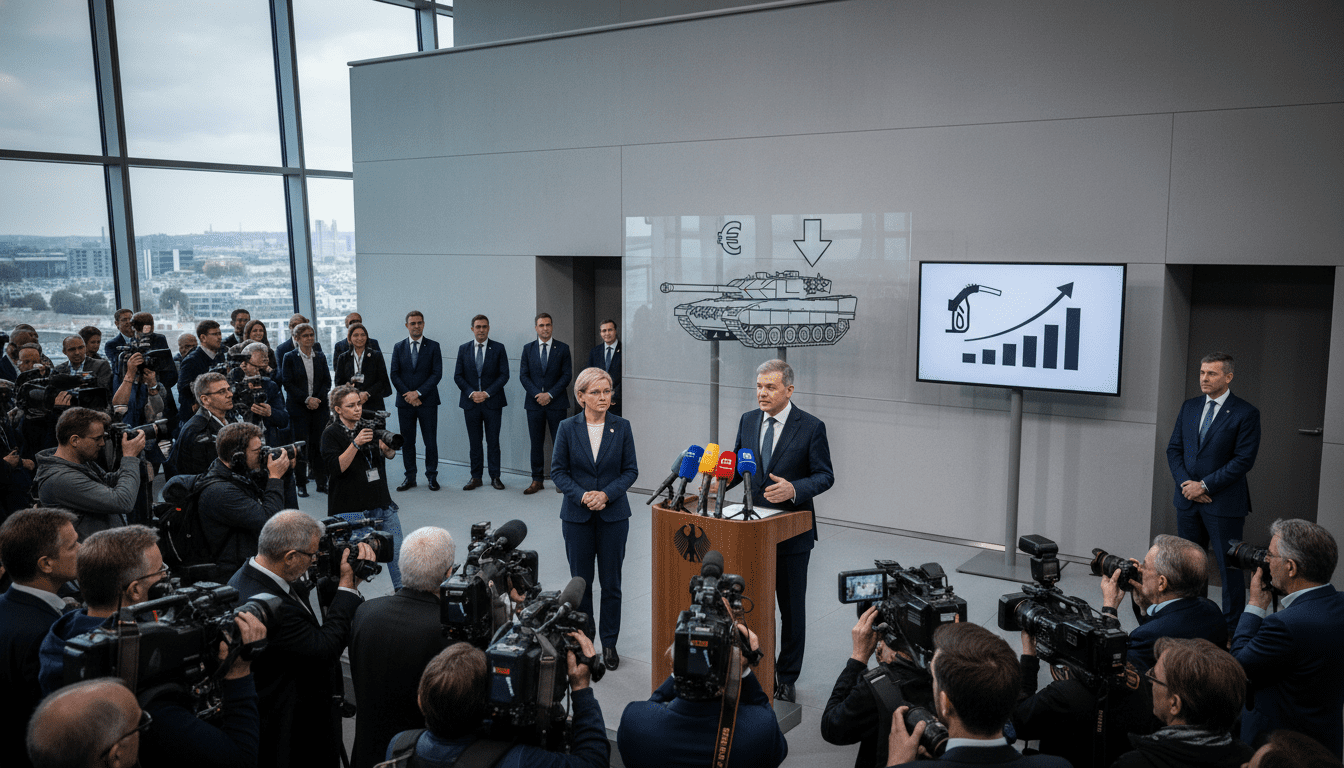
Germany’s tank discount shows only partial effect at pumps in first hours
Germany’s two-month tank discount (Tankrabatt) began May 1, but initial price displays reflected only part of the cut as authorities press retailers to pass savings to drivers.
The tank discount was visible at many stations early on, but consumers and market monitors reported incomplete pass-through in the opening hours. Officials from the transport club ADAC and Economy Minister Katherina Reiche urged the oil industry to pass the full reduction on to motorists. The government will fund the measure for about two months to ease rising pump prices that followed recent geopolitical tensions.
Partial Price Drops Visible at Pumps
In the morning after the discount took effect, many fuel stations showed roughly two-thirds of the expected reduction on price boards. ADAC data indicated a modest average decline compared with the same time the previous day, but not the full 17 cents per litre that motorists had been promised.
Industry analysts and consumer groups noted that some pumps were still dispensing fuel purchased before the tax change, which limited immediate reductions at the forecourt. Market participants warned that visible prices can lag when stock bought at earlier, higher costs remains in circulation.
Government Demands Full Pass-Through
Economy Minister Katherina Reiche publicly called on oil companies and retailers to transfer the tax relief directly to consumers. Officials framed the request as an expectation rather than a mere recommendation, stressing that swift pass-through is central to the policy’s relief objective.
The federal measure is temporary and intended to provide immediate relief to households and businesses after a period of elevated pump prices. Authorities signalled close monitoring and said they would coordinate with competition enforcers to detect and address any failure to pass on the benefit.
How the Discount Is Calculated
Lawmakers cut the energy tax on petrol and diesel temporarily by 14.04 euro cents per litre for two months. When the reduced energy tax and the resulting lower value-added tax are combined, the gross saving equals about 16.7 euro cents per litre, commonly rounded to 17 cents.
The two-month window is intended as a short-term buffer against recent price spikes driven by global oil market volatility. Officials estimate the fiscal cost of the measure at roughly 1.6 billion euros for the federal budget.
Morning Drops and Midday Rebounds
Early ADAC monitoring showed average petrol and diesel prices roughly eleven cents lower than the previous morning, but readings later in the day recorded price increases at some stations. Midday observations documented upticks in certain fuel grades, with E10 and diesel rising again during trading hours.
Market commentators attributed part of the fluctuation to broader oil-price volatility rather than retail behavior alone. The ADAC said that clearer evidence of the discount’s impact would emerge from daily averages reported after markets settle.
12:00 Price-Change Rule Under Scrutiny
Since early April, German stations have been permitted to change pump prices only once daily at 12:00, a rule meant to curb intraday volatility. Authorities and consumer groups say the single-change window has coincided with sharp price movements around noon on some days.
The Federal Cartel Office has monitored compliance and reported a significant number of deviations from the 12:00 timetable, though many appear to be technical or brief errors. Regulators maintain that enforcement powers rest with the Länder and have urged prompt correction of irregularities.
Cartel Office Investigation Temporarily Halted
The Bundeskartellamt confirmed it had to pause parts of an investigation into wholesale fuel pricing after a regional appeals court intervened. The suspension follows a court decision limiting the authority’s access to data from a commercial price-information service central to the probe.
Competition authorities had been examining whether market power at the wholesale level contributed to elevated retail prices and whether information services played a coordinating role. The temporary halt constrains the agency’s ability to gather certain evidence while legal questions are resolved.
Austria reduces its fuel price brake as Germany moves to temporary tax cut
At the same moment Germany introduced its tank discount, neighbouring Austria adjusted its own fuel support scheme by extending a pared-down price brake. The Austrian measure, originally offering a larger net reduction, has been scaled back and maintained at a lower level through the end of May.
Viennese officials said any excess value-added tax revenue from fuel sales could be redistributed to consumers in June if receipts exceed expectations. The contrast between Germany’s temporary tax cut and Austria’s revised brake highlights divergent regional responses to rising fuel costs.
The coming days will be decisive for determining whether the full tank discount reaches drivers at the pumps or whether further oversight and enforcement will be required. Consumers, watchdogs and ministries will track daily averages and compliance reports to assess the measure’s real-world effect.
