
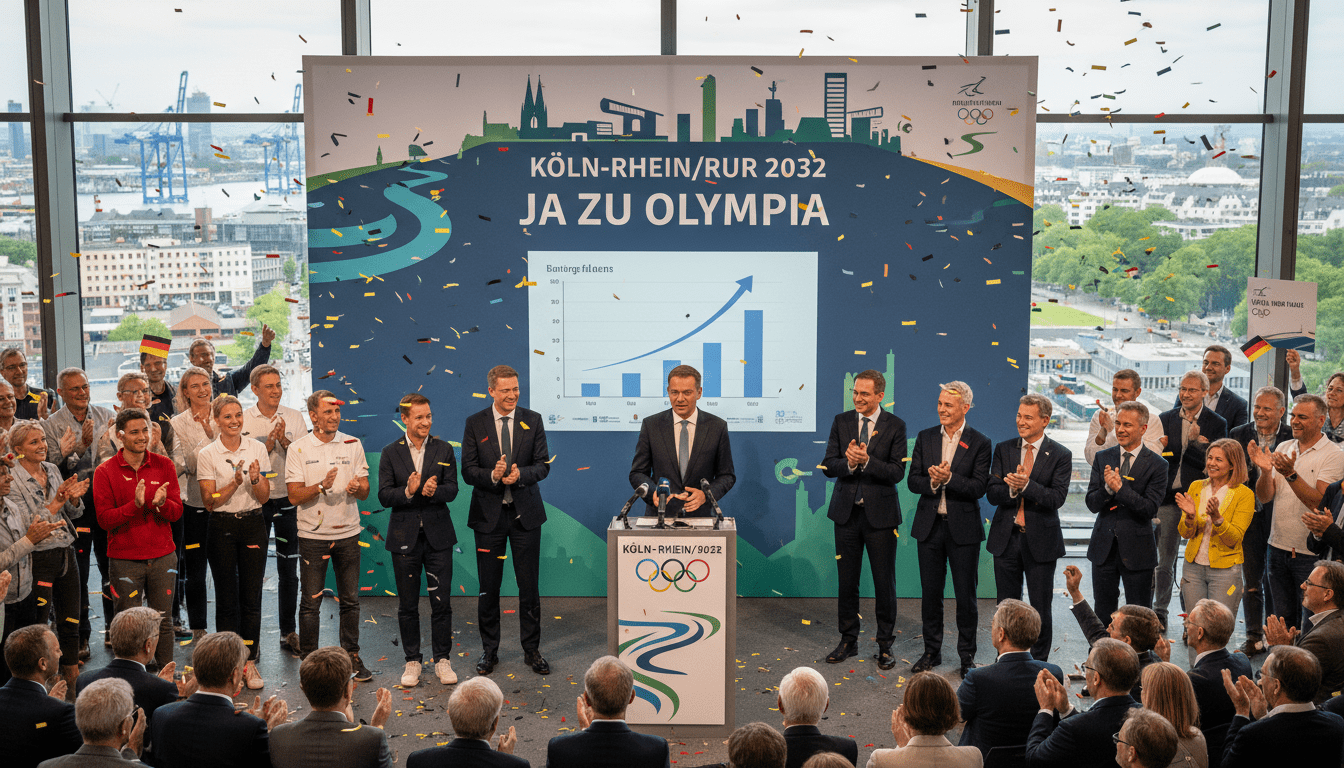
Cologne-Rhine/Ruhr Olympic bid advances after NRW referendum as roughly two-thirds vote in favor
Two-thirds of voters in North Rhine-Westphalia backed the Cologne-Rhine/Ruhr Olympic bid in a regional referendum, clearing a key democratic hurdle for a prospective bid for the Summer Olympic and Paralympic Games. The Cologne-Rhine/Ruhr Olympic bid (Köln‑Rhein/Ruhr) now moves forward after about 1.4 million of roughly four million eligible voters cast ballots across 17 municipalities. The vote opens the door for a national evaluation and keeps alive the possibility of hosting Games in 2036, 2040 or 2044.
NRW referendum yields strong majority
Preliminary results showed approximately two-thirds of valid votes in the participating municipalities favored joining the campaign to host the Games. Larger cities in North Rhine-Westphalia returned particularly high support, with several municipalities reporting more than 70 percent yes votes. The referendum covered 17 local authorities and was presented as a test of popular backing for a regional, multi-city concept centered on Cologne.
Turnout details and notable regional votes
Around 1.4 million residents took part out of an estimated four million eligible voters in the consulted areas, producing a substantial but not uniform turnout. In the northern port city of Kiel, which would host sailing events should Germany secure the nomination, 63.5 percent of participants voted in favor of the bid. The mix of urban and outlying communities underscores the campaign’s reliance on metropolitan infrastructure while also seeking coastal and peripheral venues for specific sports.
Herten excluded after missing quorum
One municipality, Herten in the Ruhr area, failed to meet the legally required turnout threshold and is therefore excluded from the proposed hosting concept. Herten had been slated to stage mountain-bike competitions under the campaign’s outline, and its absence will require organizers to revise venue allocations and transport plans. Campaign officials and municipal leaders now face a practical task of reconfiguring the proposal to account for the loss of that venue while preserving the overall regional balance.
How the DOSB will evaluate candidate bids
The German Olympic Sports Confederation (DOSB) treats citizen assent as a central evaluation criterion and will incorporate the referendum result into a broader assessment matrix. That matrix weighs public support alongside financial planning, venue readiness, sustainability and international appeal, all of which shape the DOSB’s recommendation to its delegates. Final selection of the German candidate to send to the International Olympic Committee will be taken by DOSB delegates, with a decisive meeting scheduled for 26 September in Baden-Baden.
Timeline and other German contenders
Hamburg is holding its own referendum process with votes to be tallied on May 31, 2026, while Berlin is not planning a public referendum and remains an interested but differently organized contender. Candidate plans may be adjusted through the DOSB’s window for updates, which the federation has indicated closes in early June 2026, allowing teams to refine venue lists and budgets. The DOSB has also cautioned that a final international award for the 2036 Games is not expected before 2027, reflecting an extended national and global selection cycle and significant international competition.
Immediate implications for the Cologne-Rhine/Ruhr campaign
Campaign leaders must now translate the referendum’s mandate into technical dossiers and formal submissions to the DOSB, sharpening cost estimates, transport arrangements and legacy commitments. Projected uses of existing stadia, new-build requirements and sustainability measures will be scrutinized to meet both national and IOC standards. Public endorsement strengthens the political case for investment, but organizers face a compressed schedule to incorporate the Herten change and to finalize a coherent, nationally competitive presentation.
Final preparations will focus on demonstrating that a dispersed, multi-city Cologne-Rhine/Ruhr concept can deliver athlete experience, spectator access and lasting urban benefits while meeting environmental and financial constraints. The referendum result provides momentum but not certainty; the campaign must now satisfy technical evaluators, secure stakeholder guarantees and compete against other German applicants for the DOSB nomination. The coming weeks of revisions and the DOSB’s September delegate vote will determine whether Cologne‑centered Germany advances to the international stage.
