
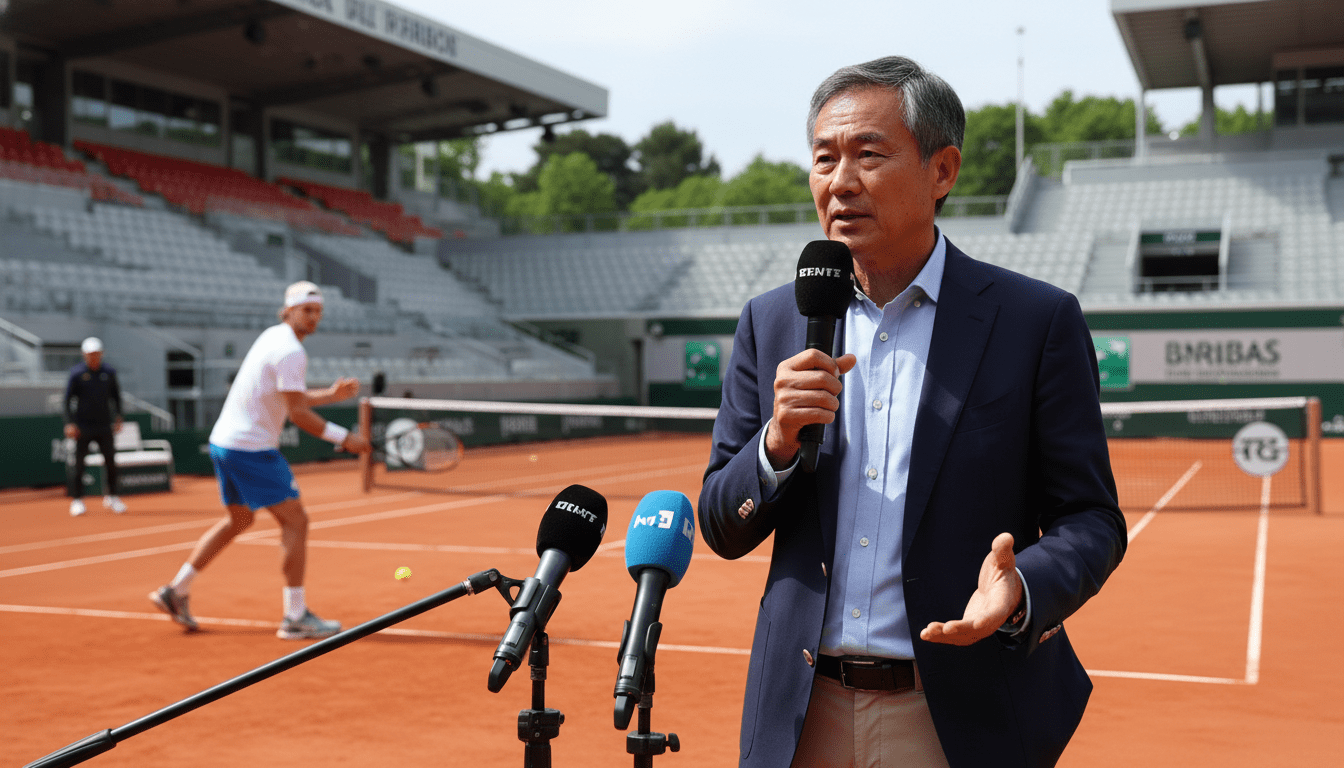
Michael Chang Returns to Paris Legends Event, Reflects on 1989 French Open and Zverev’s Chances
Michael Chang returns to Paris for a legends tournament, recalling his 1989 French Open win and assessing Alexander Zverev’s title chances and strategy.
Michael Chang, the American who became the youngest male Grand Slam champion at 17, is back in Paris this week for a legends tournament that reunites past champions and fan favorites. Chang highlighted the durability of his 1989 achievement and offered a concise assessment of Alexander Zverev’s prospects at Roland Garros as the event advances. His presence renewed attention on the tactical shifts that have reshaped elite tennis since his breakthrough nearly four decades ago.
Chang recalls 1989 French Open breakthrough
Michael Chang’s 1989 run at the French Open remains a defining moment in tennis history, capped by a five-set victory over Stefan Edberg in the final. At 17 years old, Chang set a record as the youngest man to win a Grand Slam singles title, a mark that still stands. He has spoken often about the relentlessness and focus required during that fortnight and the personal significance of returning to Paris.
Underhand serve changed the match versus Lendl
In the round of 16 that year, Chang faced Ivan Lendl and endured severe cramps that left him physically compromised during play. Faced with that adversity, he deployed an underhand serve and other unorthodox tactics that disrupted Lendl’s rhythm and helped swing momentum. The episode is frequently cited as an example of inventive match management under pressure rather than mere theatrics.
Back in Paris for the Legends tournament
Chang’s current appearance in Paris is part of a legends event that gathers retired players to play exhibition matches and engage with fans. The tournament provides a platform for past champions to reflect on their careers and the evolution of the game while offering spectators nostalgic and competitive displays. Organizers say such events also spotlight how training, equipment and analytics have altered preparation and on-court decisions since Chang’s era.
On Alexander Zverev’s Grand Slam prospects
During a brief conversation in Paris, Chang offered a measured view of Alexander Zverev’s chances at Roland Garros, noting that physical conditioning and match strategy will be decisive. He pointed to Zverev’s powerful serve and baseline game while stressing the importance of variety and point construction on clay. Chang emphasized that success in a Grand Slam today hinges not only on shot-making but on how players adapt tactically across matches.
Why strategy has grown central in modern tennis
Chang argues that modern tennis rewards players who blend power with strategic nuance, including varied serving patterns, court positioning and planned transitions to the net. The proliferation of data analytics and specialized coaching has accelerated that trend, pushing competitors to prepare more comprehensively for opponents’ patterns. As a result, tournaments increasingly become tests of both physical stamina and intelligent game plans.
Michael Chang’s visit to Paris serves as a reminder of how a single tournament can alter the sport’s narrative and how veterans can contribute perspective on its direction. His reflections connect a historic personal achievement with the tactical demands facing today’s contenders, offering a bridge between eras as Roland Garros continues to challenge both tradition and innovation.
