
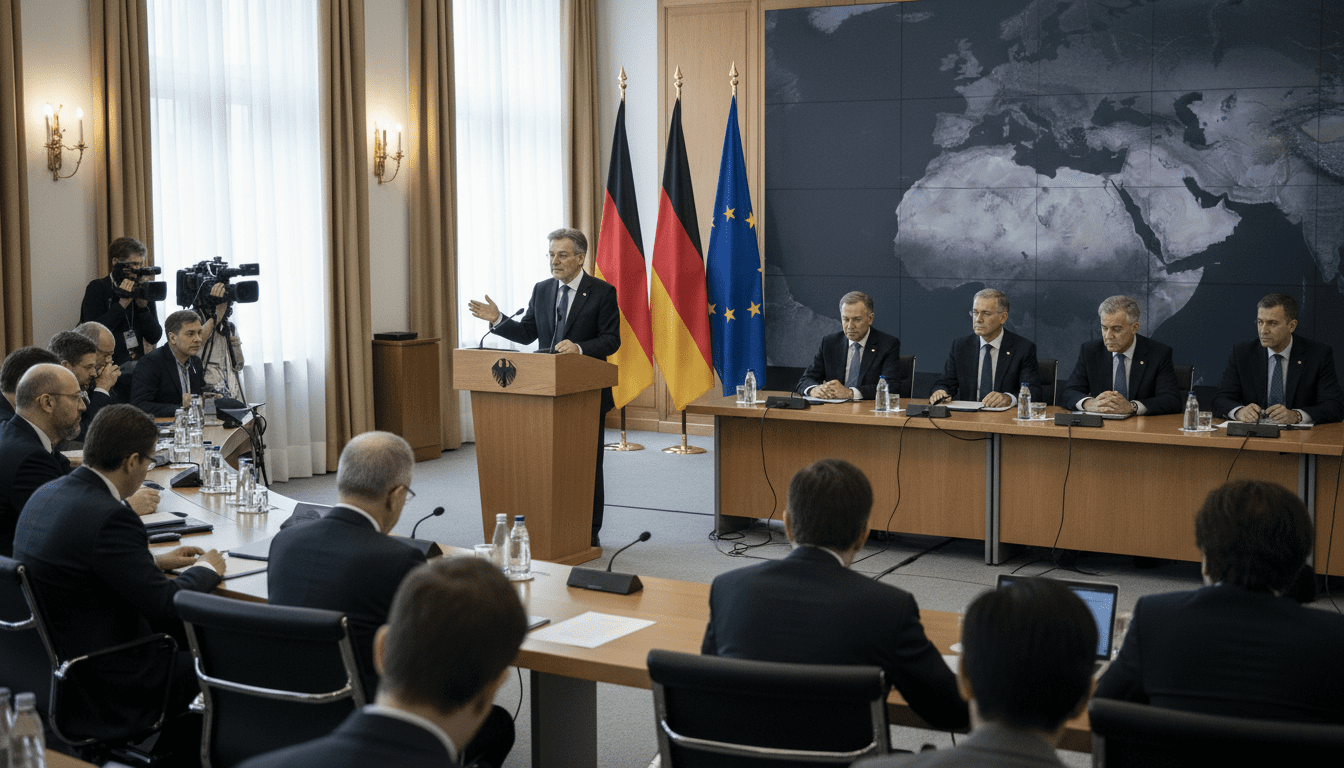
Merz Says US Has No Clear Exit Strategy in Iran War as Chancellor Warns of ‘Humiliation’
German Chancellor Friedrich Merz warned on April 27 that the United States appears to lack a clear exit strategy in its war on Iran, saying Tehran’s leadership is “humiliating” Washington as talks stall.
Merkel’s successor criticizes US approach
Chancellor Friedrich Merz used public remarks on April 27 to question Washington’s planning for the conflict, saying he did not see what “exit strategy” the Americans were choosing and stressing the difficulty of bringing the war to a convincing close. (WashingtonGazette.com)
Merz framed his comments as a caution about long-term entanglement and compared the current dynamics to previous Western campaigns that became drawn out and costly. He made the remarks while speaking to students in Marsberg, underscoring his intent to speak directly to domestic audiences as well as international partners. (apnews.com)
Accusation that Iran is ‘humiliating’ the United States
In unusually blunt language for a senior German leader, Merz said “an entire nation is being humiliated by the Iranian leadership,” singling out the Islamic Revolutionary Guard Corps for particular criticism. (WashingtonGazette.com)
The chancellor argued that Tehran’s negotiating posture and tactical gains have strengthened Iran’s regional position and complicated U.S. objectives, a claim that reflects growing European concern about the conflict’s trajectory. Analysts say such language indicates mounting frustration in Berlin over the pace and shape of diplomacy. (WashingtonGazette.com)
Questions over U.S. and Israeli objectives
Merz’s intervention highlighted broader uncertainty about what constitutes success for the U.S. and its regional partners, with critics warning that undefined goals increase the risk of mission creep. European leaders have repeatedly pressed for clarity on operational aims and exit conditions as hostilities affect trade and energy markets. (en.sedaily.com)
The chancellor referenced past conflicts in the Middle East as cautionary examples and urged Western capitals to avoid becoming mired in a prolonged confrontation without measurable political or security outcomes. Those comments echo warnings voiced by other NATO members in recent weeks. (en.sedaily.com)
Economic and domestic political ripple effects in Germany
Germany’s government has said the war has already had economic consequences, including pressure on energy prices and industrial supply chains, putting additional strain on Chancellor Merz’s coalition. Officials in Berlin worry that a prolonged conflict could deepen domestic divisions and slow efforts to stabilise the economy. (bundesregierung.de)
Political opponents have seized on the issue to challenge the government’s handling of foreign policy, while coalition partners disagree over how closely to align with U.S. military aims. The debate is further complicating efforts to present a unified European response. (lemonde.fr)
Diplomatic implications and regional risks
Merz’s comments are likely to add momentum to calls for renewed diplomacy and clearer multilateral frameworks to manage escalation risks across the Middle East. European capitals are increasingly advocating for channels that can both reduce immediate tensions and outline post-conflict arrangements. (WashingtonGazette.com)
Regional experts warn that without defined exit conditions, the conflict could expand, affecting shipping lanes such as the Strait of Hormuz and prompting wider economic disruption. International mediators have signalled interest in facilitating talks, but progress has been fitful. (indiatoday.in)
Potential next steps for Berlin and Brussels
Germany may intensify diplomatic outreach aimed at coordinating a European position that pushes for concrete cessation conditions and civilian protections, while also seeking to shield its economy from further shocks. Berlin’s approach will balance alliance obligations with calls for de-escalation. (bundesregierung.de)
EU institutions and member states are likely to press for greater clarity from Washington on operational plans and timelines, even as they explore humanitarian and crisis-response measures to mitigate fallout. The coming days will test whether criticism from allies translates into joint pressure for a negotiated pathway out of the conflict. (WashingtonGazette.com)
The chancellor’s remarks underscore a broader transatlantic debate about how to conclude the confrontation in a way that restores regional stability without open-ended military commitments. As diplomats and leaders consider next steps, the question of a practicable and credible exit strategy remains central.
