
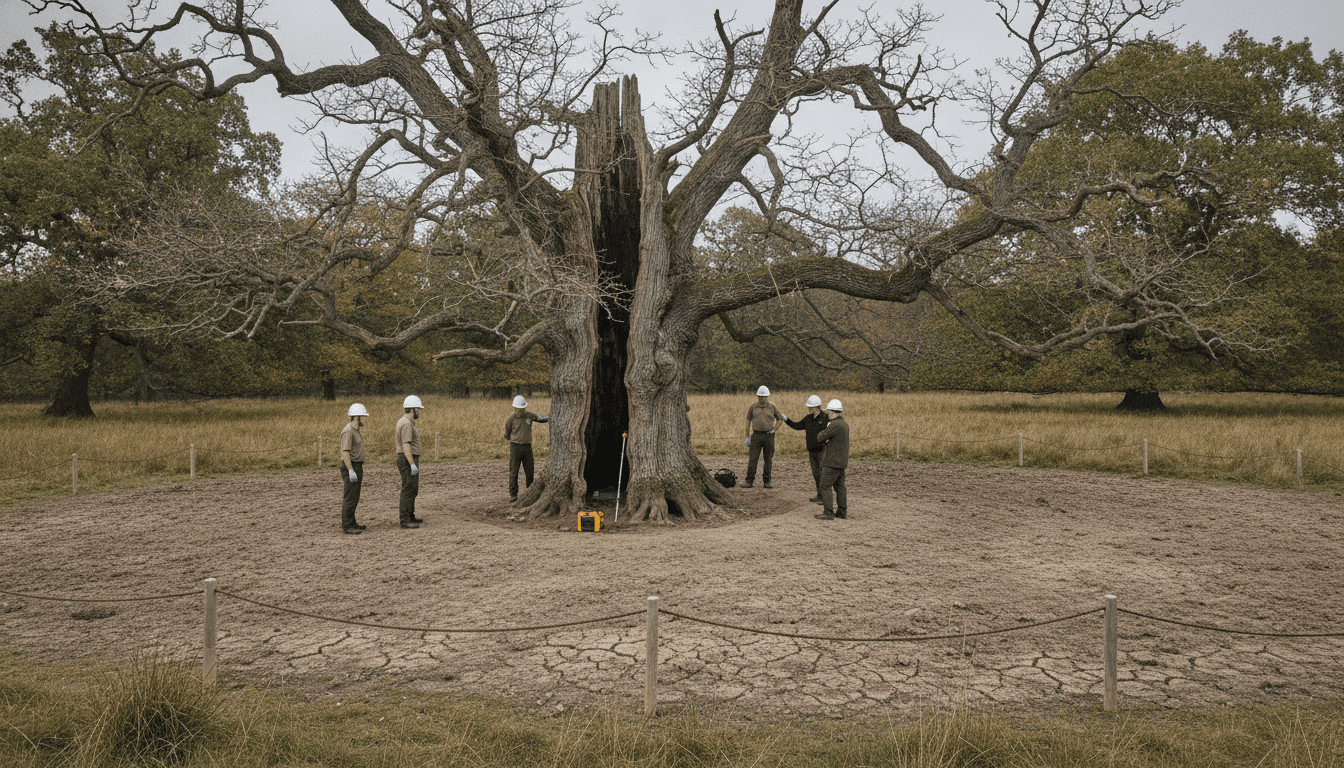
Major Oak in Sherwood Forest Confirmed Dead After Centuries
Ancient 1,200-year-old Major Oak in Sherwood Forest has died, the RSPB confirms; soil compaction, stabilization work and recent droughts are cited as likely contributors.
Major Oak Confirmed Dead in Sherwood Forest
The Royal Society for the Protection of Birds (RSPB) has confirmed that the Major Oak, a roughly 1,200‑year‑old tree linked to the Robin Hood legend, has died after failing to leaf out this spring. The declaration ends months of speculation and concern among conservationists and visitors who have long associated the tree with England’s cultural heritage. RSPB officials described the development as emotionally difficult for staff and the public alike.
The tree stood for centuries as a focal point for tourists and local history, located in the heart of Nottinghamshire’s Sherwood Forest. Its loss marks a significant moment for regional ecology and heritage tourism, prompting immediate review of management and visitor practices. Authorities say the announcement follows detailed assessments by tree specialists and conservationists.
RSPB Investigation and Expert Findings
RSPB-led examinations found that the Major Oak’s root system showed signs of severe decline and was effectively unable to sustain the tree. Experts reported that roots were weakened and deprived of necessary moisture and oxygen, undermining the tree’s ability to transport water and nutrients. While investigators cautioned that no single cause can be pinpointed with absolute certainty, they identified several interacting stressors.
The charity noted that observations this spring — including a complete lack of new leaves — were the decisive indicator that recovery was not forthcoming. Soil samples and root inspections conducted by arborists informed the conclusion that the tree had been fatally compromised. RSPB spokespersons emphasized the difficulty of distinguishing between long‑term decline and recent exacerbating factors.
Visitor Pressure and Soil Compaction Highlighted
Conservationists highlighted prolonged heavy foot traffic around the Major Oak as a major factor in the tree’s deterioration. For more than two centuries the tree attracted visitors who often stood and walked beneath its sprawling canopy, sometimes compressing the ground close to the trunk. Compacted soil reduces pore space, slowing water infiltration and constricting the root environment, making trees more vulnerable in dry spells.
Officials said that despite past attempts to manage visitor access, maintaining balance between public access and ecological protection proved challenging. Over time, the repeated pressure on the forest floor likely hindered the ability of rainwater to penetrate to the root zone. Park managers now face questions about how to better regulate visitor movement to protect remaining veteran trees.
Stabilization Work and Possible Unintended Consequences
In recent years, caretakers carried out stabilization measures on the Major Oak, including rigging and supports intended to preserve the trunk and limbs. While these interventions aimed to prolong the tree’s life and public safety, some specialists suggest the support work may have had unintended effects on the tree’s physiology. Mechanical supports can redistribute stresses but do not address underlying root decline.
Arborists warned that when roots are already compromised, above‑ground reinforcement can mask worsening below‑ground conditions. RSPB officials acknowledged the complexity of managing a living historic specimen and said future interventions will be guided by lessons learned. They stressed that any post‑mortem review will aim to improve practice for other veteran trees.
Climate Stress and Recent Droughts Cited
Climate factors, notably heatwaves and drought episodes in recent years, were cited as additional pressures that likely accelerated the Major Oak’s decline. Prolonged dry periods increase competition for water among roots and exacerbate the effects of compacted soils. Scientists have documented growing stress on ancient trees as weather patterns shift, making sustained health more precarious.
The RSPB and other conservation groups linked the tree’s final deterioration to this interplay of human and climatic pressures. They urged that protecting remaining veteran trees will increasingly require integrated approaches that account for changing climate risks. The situation at Sherwood Forest is being framed as a case study for broader conservation planning.
Cultural Loss and the Robin Hood Connection
The Major Oak has long been entwined with the Robin Hood story, traditionally described as a hiding place for the outlaw who stole from the rich to give to the poor. Its gnarled trunk and broad crown became iconic images used in literature, film and tourism promotion. Local businesses and heritage groups said the tree’s death will be felt deeply across communities that rely on Sherwood’s historic identity.
Officials and residents voiced sadness at the loss while noting that the mythology and traditions tied to Robin Hood transcend any single living specimen. Museums, visitor centers and cultural bodies are considering ways to commemorate the Major Oak and interpret its story for future generations. Plans may include new signage, digital exhibits and community planting initiatives.
Conservation Response and Future Management
The RSPB said it will launch a formal review of management practices at Sherwood Forest, with input from arborists, ecologists and local stakeholders. Immediate steps are expected to include restricting visitor access around the Major Oak’s footprint to allow natural processes to proceed and to protect nearby veteran trees. Longer‑term measures may involve soil remediation, targeted planting and revised public access strategies.
Officials emphasized that preserving ancient woodlands requires ongoing investment and adaptive stewardship, particularly as climate pressures increase. Conservation groups called for stronger protections for veteran trees nationwide and for funding to support professional tree care and habitat restoration. The Major Oak’s passing is likely to sharpen calls for proactive measures to safeguard remaining heritage trees.
The loss of the Major Oak underscores the fragility of living cultural monuments and the complex intersection of tourism, conservation and climate change, prompting renewed focus on how best to protect ancient trees for future generations.
