
JNIM attacks in Mali leave dozens dead as local officials report higher tolls
JNIM attacks in Mali: jihadist group claims deadly assaults on central villages, with initial reports of at least 30 killed and local officials warning casualties may be higher.
The al‑Qaida‑linked jihadist militia Jama’at Nusrat al‑Islam wal‑Muslimin (JNIM) has claimed responsibility for coordinated attacks on villages in central Mali that local authorities say killed dozens of civilians. Security and administrative sources reported deadly assaults on Kori Kori and Gomossogou, and subsequent local statements indicated the toll could be substantially higher than initial counts. (apnews.com)
JNIM claims coordinated assaults on central Mali villages
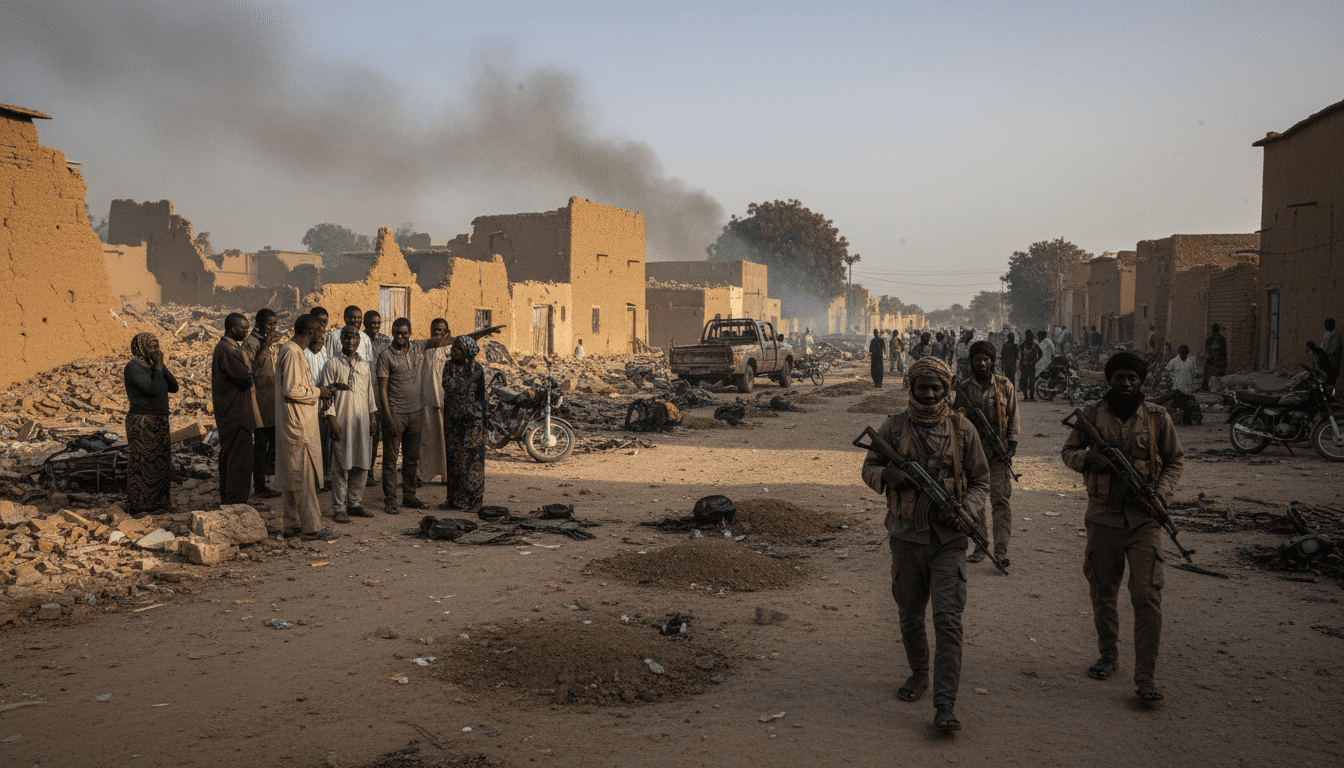
Residents and security officials said the attacks occurred in the late afternoon and were near‑simultaneous, targeting small settlements in the Bandiagara area. JNIM posted a statement claiming the strikes and said its fighters had targeted pro‑government militias in the zone. The group is widely assessed by analysts and governments to be affiliated with al‑Qaida and to have expanded operations across central Mali and neighboring Sahel states. (apnews.com)
Initial toll: at least 30 killed in Kori Kori and Gomossogou
Agence France‑Presse and local reporting cited by multiple outlets put the immediate death toll from the strikes on Kori Kori and Gomossogou at more than 30 people, with figures ranging in early accounts from about 30 to 35. Eyewitnesses and a local youth representative described scenes of burned compounds and several wounded being evacuated to nearby health posts. Authorities did not initially release a single consolidated casualty count, and hospital and community sources provided varying numbers. (boursorama.com)
Local reports point to higher casualties after further attacks
Local journalists and region‑focused monitoring networks reported that additional attacks in nearby localities over the following days may have pushed the overall toll higher, and provisional tallies from community monitors suggested at least dozens more victims. One regional monitoring group compiled a provisional count that put the number of villagers killed in related incidents above 50, and some local spokespeople warned the total from a string of assaults could be significantly greater. Discrepancies in the counts reflect the difficulty of access and communication in the affected rural areas. (rimweb.net)
Governor’s office and military response described as limited
The Bandiagara governor issued a public communiqué condemning the “lâche et barbare” attacks and said administrative and security delegations had been dispatched to the scene to assist victims. The governor’s statement acknowledged multiple fatalities and injuries but emphasized that preliminary field assessments were ongoing. The Malian military said it conducted targeted operations in the area intended to neutralize assailants, though official releases provided few operational details and did not reconcile the differing civilian casualty counts. (malijet.com)
Context: escalation after larger offensives in late April
Analysts and international reporting place these village attacks within a broader surge of violence that followed large‑scale offensives by JNIM and allied rebel groups at the end of April. Those earlier operations involved coordinated strikes on military positions and urban targets and prompted sharp accusations that the junta’s control over key areas had been weakened. Observers warn that the recent pattern — combining high‑profile assaults with attacks on rural communities — reflects a tactic to both seize territory and punish local actors perceived as aligned with state forces. (apnews.com)
Humanitarian impact and displacement concerns
Beyond fatalities and injuries, local sources and security monitors reported that villages were looted and some residences set alight, prompting fear and displacement among survivors. Humanitarian access to the affected localities is constrained by insecurity, and relief organizations face logistical challenges reaching remote communities without secure corridors. Regional protection actors have repeatedly warned that a spike in intercommunal reprisals and militia activity often accompanies jihadist operations, increasing the risk of broader civilian suffering. (rimweb.net)
International agencies and regional partners are monitoring the situation and calling for accurate, verifiable casualty reporting and humanitarian access, while authorities continue piecing together the sequence and scale of the attacks amid a volatile security environment.
