
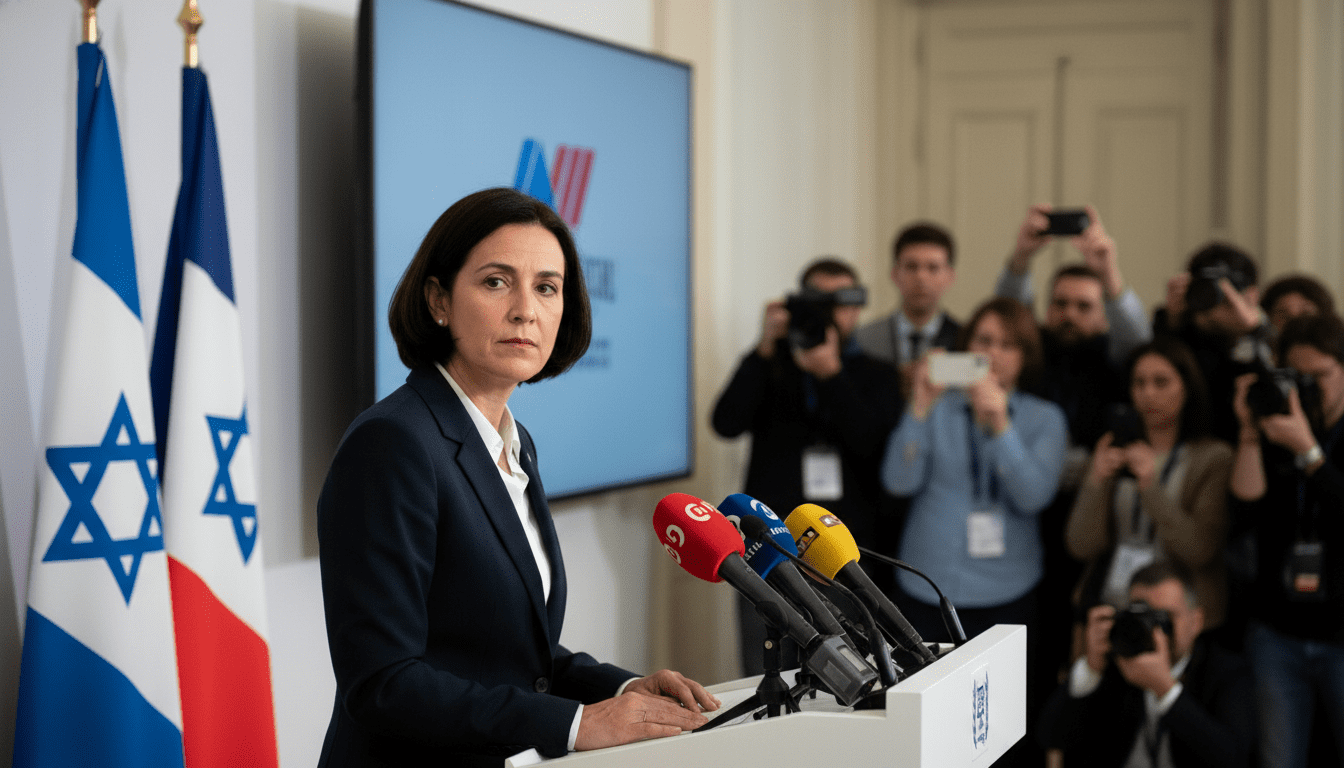
Israeli ambassador to France accused of “foreign interference” after anti‑Mélenchon remark
Israeli ambassador to France Joshua Zarka faces cross‑party backlash after saying he prefers anyone over Jean‑Luc Mélenchon in the 2027 presidential race
The Israeli ambassador to France, Joshua Zarka, has come under fire after telling a television interviewer he would rather see “anyone rather than Jean‑Luc Mélenchon” elected president in 2027, a comment that French politicians across the spectrum called foreign interference. Zarka also disclosed a recent meeting with Marine Le Pen, the leader of the National Rally, drawing renewed scrutiny over diplomatic neutrality and contacts with the French far right. The remark provoked immediate condemnation from lawmakers and party officials who said the envoy had breached expected norms for diplomats serving abroad.
Diplomatic remark prompts rapid political blowback
French political figures from both left and right publicly criticized Zarka’s comments within hours of the interview being broadcast. Manuel Bompard, national coordinator for La France Insoumise, labelled the statement “blatant foreign interference,” arguing that no foreign envoy should comment on domestic electoral preferences. Other lawmakers framed the remark as a direct challenge to France’s sovereign political process and its long-standing expectation that diplomats remain neutral in the countries where they are posted.
Ambassador confirms meeting with Marine Le Pen
In the same interview, Zarka confirmed a meeting last month with Marine Le Pen, whose National Rally has in recent years sought to broaden its appeal beyond its historical far‑right base. He suggested that the party had evolved since its days under the name National Front, which he characterised as having “antisemitic tendencies” in the past. That assertion, and the open admission of contact with Le Pen, fuelled criticism that Israeli officials were showing preferential engagement with France’s nationalist right.
Cross‑party reactions underscore diplomatic norms
Senior figures in the Socialist and centrist camps joined accusations of inappropriate intervention. Olivier Faure, leader of the Socialist Party, described the comments as “unacceptable interference,” adding that French voters must be free to decide their own future. Nathalie Loiseau, a member of the European Parliament from the Horizons party, called the ambassador’s remarks “totally inappropriate” and said they violated the basic rules governing foreign representatives’ conduct in host countries.
LFI leaders demand formal rebuke and neutrality
La France Insoumise officials were among the most forceful in demanding a formal reaction from Paris, with Arnaud Le Gall saying Zarka had breached the neutrality expected of diplomats. LFI emphasised that an ambassador stationed in France should refrain from influencing electoral debate and should focus on managing bilateral relations. Party spokespeople and allied MPs asked the French foreign ministry to issue a statement and consider diplomatic measures to reassert the principle of non‑interference.
Broader implications for Israel‑France ties
Observers say the incident may complicate an already sensitive chapter in Israel‑France relations, especially at a time when Middle East policy and domestic politics intersect in European capitals. Diplomatic exchanges with political factions considered controversial can expose envoy appointments to public scrutiny and risk politicising bilateral ties. Analysts note that even offhand remarks by accredited diplomats can prompt formal démarches, public statements and calls for clarification from the host government.
Possible responses from Paris and diplomatic options
French authorities have several tools at their disposal if they choose to respond, ranging from summoning the ambassador for clarification to issuing a public condemnation or requesting a private apology from the sending state. In more severe cases, a government can request that an ambassador be recalled, though such measures are typically reserved for sustained or egregious interference. Officials in Paris will weigh the political cost of escalating the dispute against the need to defend France’s electoral sovereignty and the conventions of diplomatic conduct.
The dispute sparked by Joshua Zarka’s remarks highlights the delicate balance diplomats must strike between representing their government’s interests and respecting the political autonomy of their host country. As France’s political class presses for answers, the episode may prompt clearer guidance on engagement between foreign missions and national political actors in the run‑up to the 2027 presidential contest.
