
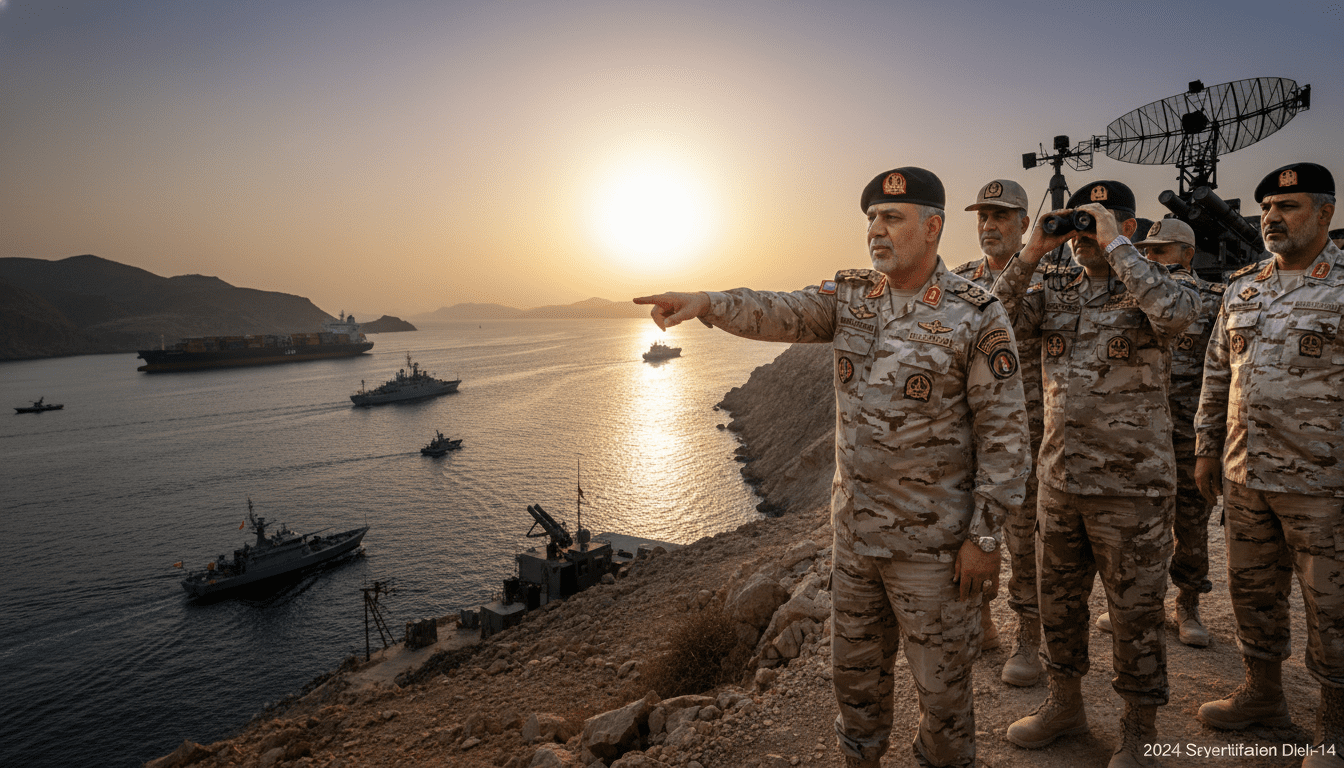
Iran Halts Talks with U.S., Warns of Full Strait of Hormuz Blockade
Iran reportedly stopped negotiations with the United States and has warned it could fully block the Strait of Hormuz, Tasnim news agency says. The move, tied by Tehran to ongoing Israeli strikes in Lebanon, raises the prospect of a major disruption to one of the world’s busiest oil chokepoints. The announcement threatens to escalate regional tensions while complicating international efforts to mediate the wider conflicts in the Middle East.
Iran ends negotiations, cites Israeli strikes in Lebanon
Iran’s state-affiliated Tasnim agency reported a suspension of talks with the United States, attributing the decision to continued Israeli military actions in Lebanon. Iranian officials framed the halt as a direct response to what they described as escalating attacks on Lebanese territory. The announcement does not specify whether the pause is temporary or a permanent break, leaving diplomatic channels in uncertainty.
Threat of a Strait of Hormuz blockade elevates energy and shipping risks
Iran’s warning that it could block the Strait of Hormuz has immediate strategic significance because a large share of global oil shipments transit the narrow waterway. Even the prospect of closure can drive volatility in energy markets, increase shipping insurance costs and prompt naval redeployments by regional and extra-regional powers. Analysts and traders routinely treat statements about the strait as a red flag for global supply chains, given its outsized role in energy flows.
Israel expands Lebanon offensive, captures Beaufort
Separately, Israeli forces intensified operations in southern Lebanon over the weekend and took control of the historic Beaufort fortress. The seizure marks the deepest Israeli incursion into Lebanon in about 25 years, according to the reporting. Military advances on this scale are likely to complicate ceasefire efforts and have already been cited by regional actors as a reason for hardening positions in diplomacy and security.
Impact on international mediation and U.S. strategy
The concurrence of Iran’s diplomatic break and Israel’s expanded offensive presents a challenge for international mediators attempting to de-escalate multiple, overlapping conflicts. U.S. negotiators and other intermediaries now face a narrower window to persuade Tehran to return to talks, particularly if Iranian officials tie progress to a halt in Israeli operations. The situation raises questions about how Washington will balance deterrence, diplomatic outreach and the security of commercial navigation through Hormuz.
Broader regional moves and economic reverberations
The developments come amid a string of related regional and global shifts. Moscow has reportedly suspended kerosene exports in response to attacks on its energy infrastructure, a measure meant to stabilize domestic fuel markets. Such export controls in major energy-producing countries can compound the effects of any disruption near Hormuz and feed into higher costs for airlines and broader logistics chains.
Domestic and international headlines juxtaposed
Meanwhile, attention at home and abroad has focused on several non-conflict stories that shape the broader political and economic environment. Germany recorded a sharp drop in net immigration in 2025, with the Federal Statistical Office reporting a roughly 45 percent decrease to 235,000 people. Train punctuality figures in Germany improved in April and May, with 61.3 percent of long-distance services on time in May despite a record number of track works, according to Deutsche Bahn statistics. Economists also noted notable fuel-price declines in May, with retail petrol and diesel falling compared with April, reflecting policy measures and market movements.
Pivotal domestic legal and scientific developments were reported as well: a government decision to suspend a military travel restriction was later judged unlawful by a legal review, and early clinical data on a Moderna mRNA cancer vaccine signaled a potential breakthrough if late-stage trials confirm earlier results. These items underscore how domestic politics, public policy and scientific advances remain intertwined with the international security picture.
The coming days will be critical for whether Tehran re-enters negotiation channels and whether military action in Lebanon stabilizes or further inflames regional tensions. International stakeholders will be watching naval movements, diplomatic communiqués and energy-market indicators for signs that the situation is moving toward de-escalation or escalation.
