
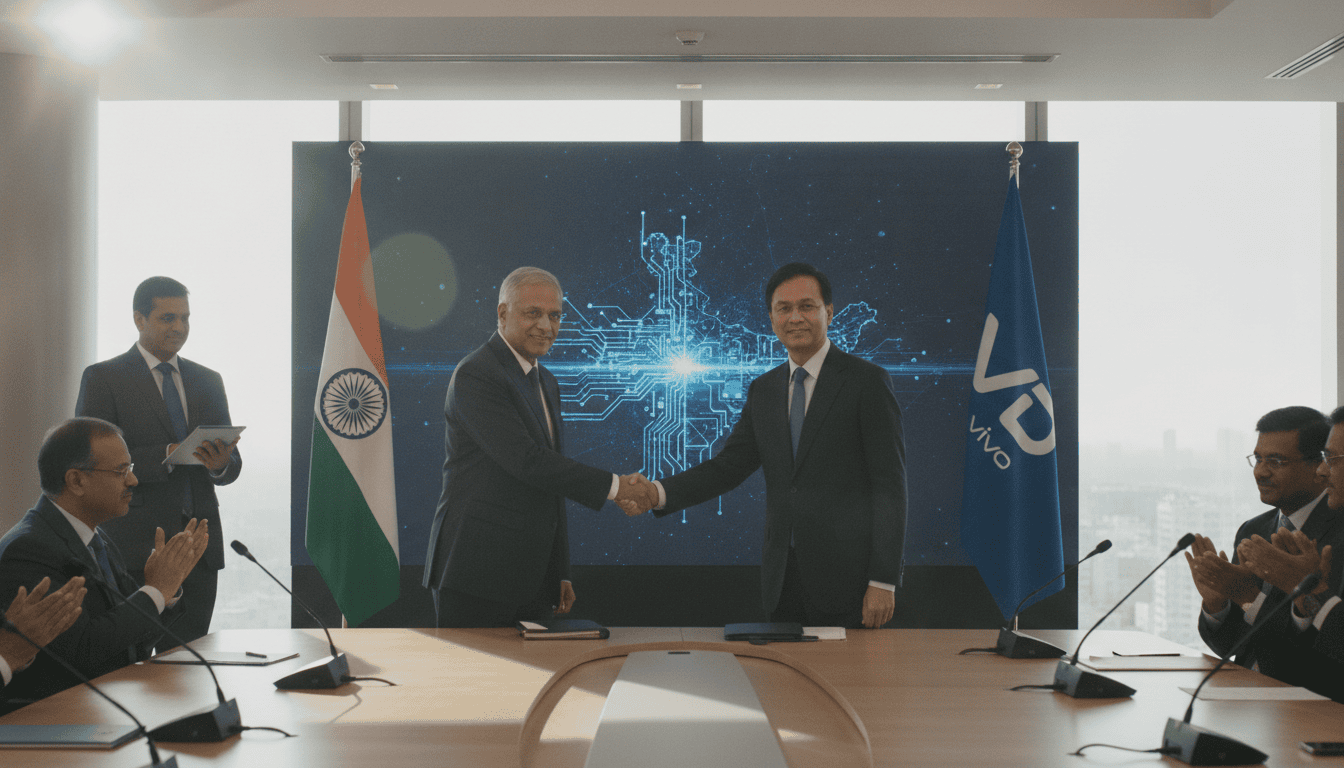
India Approves Dixon-Vivo Joint Venture to Expand Smartphone Manufacturing in India
India clears Dixon-Vivo joint venture to make Vivo smartphones locally, boosting production capacity, exports and India’s smartphone manufacturing growth.
India’s commerce authorities have approved a long-delayed Dixon-Vivo joint venture that will move a significant portion of Vivo’s smartphone assembly into a majority Indian-owned structure. The 51/49 venture, with Dixon Technologies holding the majority stake, was first announced in December 2024 and clears regulatory scrutiny under rules that require extra review of investments from countries that share a land border with India. The deal allows the new firm to acquire Vivo manufacturing assets, produce part of Vivo’s order book in India and make devices for other brands.
Regulatory approval and ownership details
The government approval follows tighter investment screening measures introduced in 2020, aimed at scrutinizing inbound capital from neighboring countries. Under the approved terms, Dixon will own 51% while Vivo retains 49%, a format designed to align with India’s policy emphasis on local control of strategic manufacturing. Officials and company documents indicate the arrangement was structured specifically to meet the government’s expectations while preserving Vivo’s operational role in local production.
Production capacity and projected volumes
Dixon has indicated the venture could add roughly 20–22 million smartphones of annualized manufacturing volume based on Vivo’s current sales levels. That volume represents a material uplift for Dixon, India’s largest electronics manufacturing services provider, and would strengthen the company’s ability to supply both domestic and export markets. The plant is expected to handle portions of Vivo’s Indian demand and potentially shift more component assembly and value-add activities into the country.
Implications for exports and the wider supply chain
Analysts point out that the Dixon-Vivo pact could accelerate efforts by Chinese brands to export from India rather than export only from their domestic factories. Apple’s expansion in India has shown how onshore assembly can translate into export volumes, with suppliers driving much of that growth. Industry data cited by market researchers show a gap between Chinese brands’ domestic market share and their contribution to Indian smartphone exports, suggesting room for significant export upside if manufacturing is scaled and integrated with global supply chains.
Why Chinese brands are opting for local partnerships
The majority-Indian ownership model reflects strategic caution by many Chinese smartphone firms after a period of heightened regulatory scrutiny and investigations in India. Several companies in recent years have faced customs, tax or regulatory probes, prompting a shift toward partnerships that increase local accountability and compliance. Observers say ceding controlling stakes to Indian partners helps these firms secure operating stability while accessing incentives and supply-chain advantages offered by New Delhi.
Benefits for Dixon and the domestic electronics sector
For Dixon, the venture diversifies its customer base and cements its role as a key contract manufacturer for global and Chinese handset makers. The company already assembles devices for other brands and is positioned to scale up local component sourcing and assembly lines. Increased volumes could support more local value addition, spur investments in testing and quality control capacity, and create additional factory-level employment in regions hosting the facilities.
Analyst views and potential risks
Industry researchers see the Dixon-Vivo model as a possible template for other Chinese manufacturers seeking to expand in India without running afoul of investment restrictions. The structure balances foreign operational expertise with Indian ownership and could be replicated in other smartphone and electronics deals. At the same time, risks remain: geopolitical tensions, changes to investment policy, or shifts in global component supplies could affect timelines and export goals, analysts warn.
The approval of the Dixon-Vivo joint venture marks a notable pivot in India’s smartphone manufacturing story, broadening the field beyond the Apple-led expansion of recent years. Implementation will be the next test: how quickly the partners transfer assets, scale production and move toward exports will determine whether the arrangement simply deepens domestic assembly or helps convert India into a larger hub for finished-device exports.
