
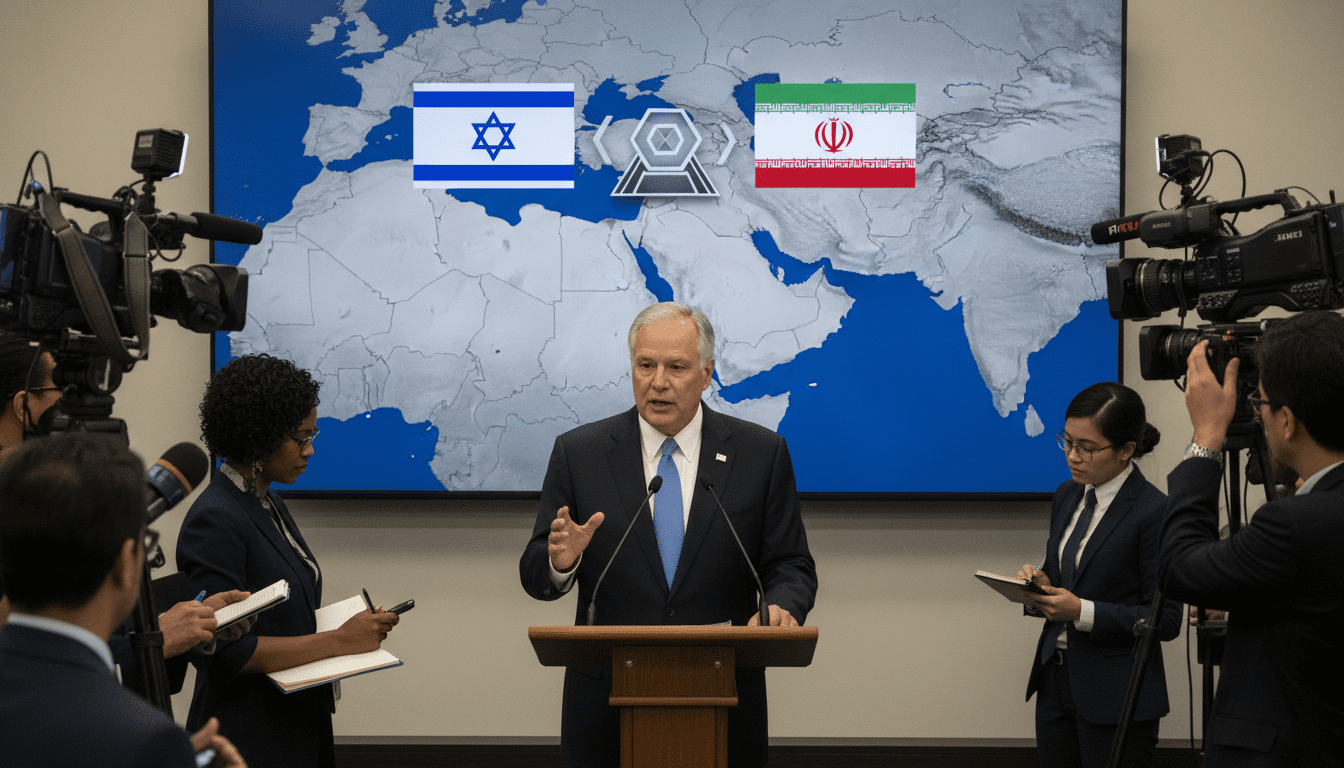
Huckabee Urges Gulf States to Make a Choice Between Israel and Iran as Regional Conflict Intensifies
US ambassador Mike Huckabee warns Gulf states to choose between Israel and Iran amid a 40-day US‑Israeli campaign; Israel confirmed sending air defenses to UAE.
The US ambassador to Israel, Mike Huckabee, told Israeli television that Gulf states must “make a choice” between Israel and Iran as the region reels from a 40-day US‑Israeli campaign and retaliatory strikes. Huckabee’s comments — delivered in an interview in Tel Aviv — also included on-the-record confirmation that Israel deployed air-defence batteries and personnel to the United Arab Emirates. The remarks come as the Gulf confronts widespread attacks attributed to Iran and mounting domestic and international fallout.
Huckabee’s warning to Gulf states
Huckabee framed the dilemma for Gulf capitals as a binary calculation between vulnerability to Iranian attacks and the benefits of deeper ties with Israel. Speaking to presenter Hila Korach, he contrasted Israel’s support for US-aligned partners with Iran’s strikes, saying regional governments must decide who presents the greater threat.
The ambassador, a former governor and Baptist minister, also expressed confidence that the Abraham Accords would attract additional signatories despite public anger across the Arab world over recent Israeli actions in Gaza. He positioned normalization as a security and diplomatic hedge for Gulf states confronting Iranian aggression.
Confirmation of Israeli defense support to the UAE
For the first time on the record, Huckabee confirmed that Israel sent Iron Dome anti-missile batteries to the UAE and provided soldiers to operate them during the period of heaviest strikes. Israeli assistance to the Gulf had been reported previously by news outlets, but his statements constitute direct acknowledgment by a senior US envoy.
News reports have also indicated that Israel dispatched experimental laser systems and other layered defences to the Gulf to counter drones and cruise missiles. Officials in the US and the UAE have not publicly detailed the full extent of the assistance, reflecting the sensitivity of covert and coordinated defence arrangements.
Scale and impact of Iranian strikes on the UAE
Gulf authorities say the UAE endured a campaign of hundreds of ballistic and cruise missiles alongside thousands of unmanned aerial systems during the recent period of hostilities. Most interceptors succeeded in shooting down incoming threats, but the barrage inflicted material damage on strategic infrastructure and undermined a sense of invulnerability in the Gulf.
Abu Dhabi’s national oil company announced that a main natural gas processing facility, Habshan, was operating at roughly 60 percent capacity after being hit and would not be expected to return to full output until 2027. The disruption has raised concerns about energy security and the durability of the UAE’s position as a regional financial and tourism hub.
UAE’s alleged offensive actions and regional escalation
Media reports this week attributed a covert strike on Iran’s Lavan Island installations in early April to Emirati forces, an action said to have damaged refinery infrastructure and prompted a large fire. The UAE has not publicly taken responsibility for the reported operation, and Tehran described the episode as an “enemy attack.”
Iran responded to earlier incidents with a large-scale campaign of missiles and drones against the UAE and Kuwait, officials say, escalating a cycle of strikes and counterstrikes that has broadened the conflict beyond direct US‑Iran exchanges. The interplay of covert operations, public denials and reprisals has complicated diplomatic efforts to de‑escalate.
Gulf alignment, US partnership, and the Abraham Accords
Gulf states initially opposed the US campaign on Iran in formal settings but largely remained aligned with Washington during the fighting, valuing long-standing security ties. Saudi Arabia, for example, provided basing and overflight access while simultaneously supporting mediation efforts led by partners such as Pakistan.
Abu Dhabi’s posture has appeared more hawkish, lobbying for sustained strikes and seeking to limit mediation between the US and Iran. Huckabee argued this environment increases incentives for other Arab states to formalize ties with Israel under the Abraham Accords, a prospect that remains politically contentious given popular reactions to the Gaza conflict.
Security, economic and diplomatic fallout
Analysts say the strikes and subsequent defence responses have forced Gulf governments to reassess their risk calculus, balancing commercial openness against hard security needs. Deployments of foreign air-defence systems and closer military cooperation signal a recalibration of regional deterrence, but also expose states to new political costs at home.
Economic shocks from damaged energy nodes, higher insurance costs, and reduced tourism could have lasting effects if insecurity persists. At the same time, the crisis may accelerate diplomatic realignments, spur third-party mediation offers, and prompt deeper defence pacts between Gulf capitals, Israel and Western partners.
The next phase will hinge on whether escalation can be contained and whether Gulf governments choose closer security integration with Israel or renewed engagement with Iran, outcomes that will shape regional stability and the future of the Abraham Accords.
