
Property renovation in Germany faces high costs and hidden risks
Property renovation in Germany faces rising costs, hidden hazards like asbestos, and energy upgrades; experts recommend coordinated planning and energy audits.
Property renovation across Germany is becoming more complex as owners weigh higher prices, unpredictable health hazards and the need for energy-efficient upgrades. Homeowners, landlords and investors are finding that motivations for refurbishment range from basic repairs to barrier-free adaptations and smart-home installations. Rising material and labor costs combined with structural unknowns are prompting many to delay or scale back projects while seeking expert advice.
Motives driving property renovation
Many renovation projects begin for clear reasons: structural damage, wear and tear, or outdated fittings that no longer meet occupants’ needs. Owners also pursue barrier-free access, level-entry showers and other adaptations to make homes suitable for aging residents. At the same time, digitalisation and demand for connected devices push some toward modernisation aimed at convenience and long-term maintenance savings.
Costs and scheduling complexities
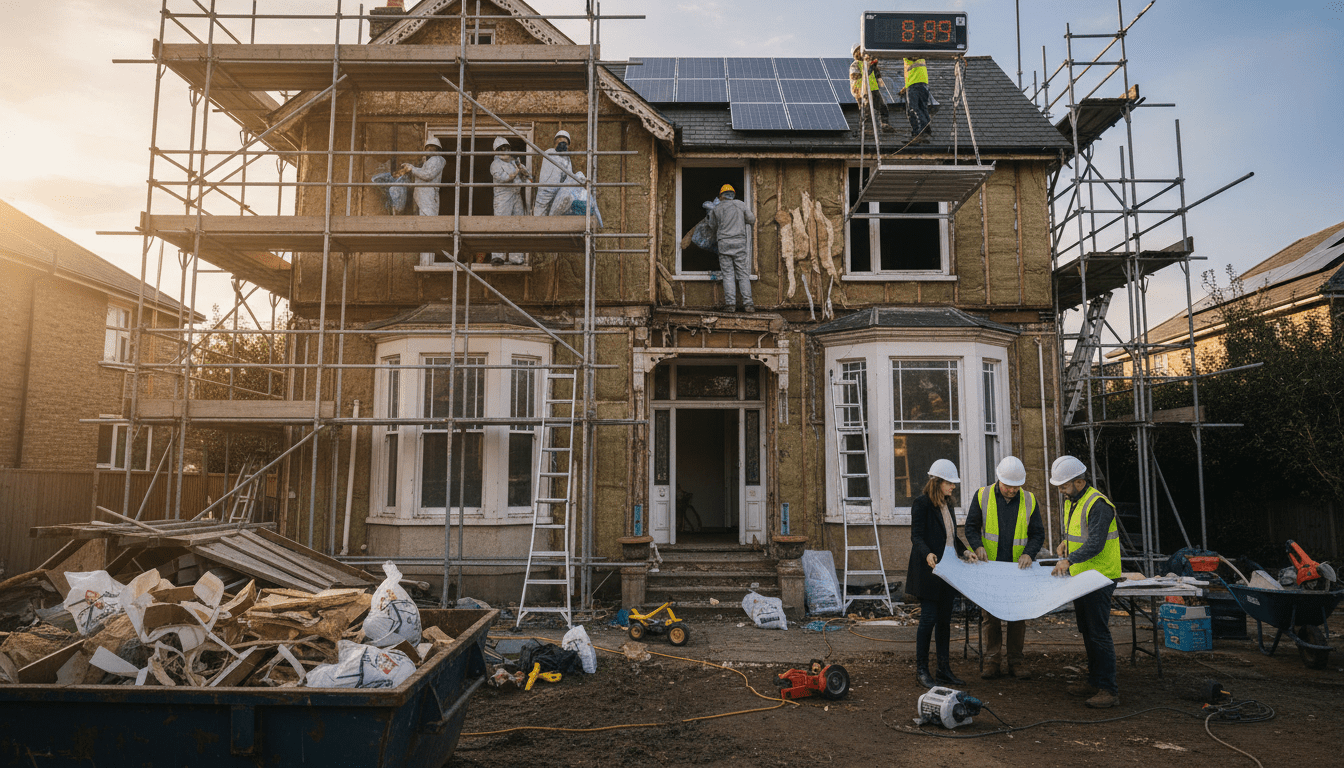
Budgeting for property renovation has grown more difficult because costs can escalate when separate tasks overlap or reveal new issues. Contractors and advisors often recommend coordinated scheduling: for example, using scaffolding erected for exterior painting to plan future roof work as well. That approach can reduce repeated mobilization costs, but it requires accurate long-term planning and contingency reserves for unexpected findings.
Energy retrofits and heating as a focal point
Reducing greenhouse gas emissions is a central justification for many retrofits, and heating systems represent a primary target for savings. Replacing old boilers, insulating envelopes and upgrading to more efficient ventilation or heat-pump systems are common measures. Those interventions can deliver lower energy bills and improve property value, but they also demand careful assessment of the building fabric and financial support options to be cost-effective.
Asbestos and other hidden hazards
A significant complication for properties built or renovated between the 1930s and early 1990s is the possible presence of asbestos in construction materials. Discovering asbestos during refurbishment can force work stoppages and specialist abatement, adding unpredictable costs and timelines. Owners therefore face a trade-off between proceeding quickly and commissioning thorough material surveys or expert assessments before work begins.
Role of certified energy advisors and professional surveys
Certified energy advisors and building assessors play a growing role in guiding renovation decisions and prioritising measures. A professional audit can identify the most effective sequence of works, estimate savings and flag hazardous materials such as asbestos. Advisors can also point to public incentives or financing programs and help owners judge whether investments will likely yield acceptable returns in their local market.
Renovation strategies frequently balance immediate needs with longer-term objectives. Some owners focus first on measures that preserve or increase resale value, while others prioritise health, safety or energy efficiency improvements that reduce running costs. In either case, realistic budgets should include allowances for unseen repairs and the cost of specialist remediation when required.
Coordinating trades, timing scaffold and planning for sequential upgrades often reduces total expense and disruption. Practical steps include obtaining condition reports early, grouping compatible tasks and securing fixed-price quotes where possible. For investors, documented energy improvements and hazard remediation can also make properties more attractive to tenants and buyers.
Property renovation decisions are ultimately influenced by building age, local regulations and market conditions, as well as the personal priorities of owners and occupants. With rising input costs and the potential for costly discoveries such as asbestos, owners in Germany are increasingly turning to certified professionals to navigate choices, sequence works efficiently and secure available subsidies.
Owners considering major work should start with a professional inspection, obtain multiple bids and factor in contingencies for both costs and time. Thoughtful planning and an emphasis on energy and safety measures can reduce long-term operating costs and protect asset value while minimising surprises during renovation.
