
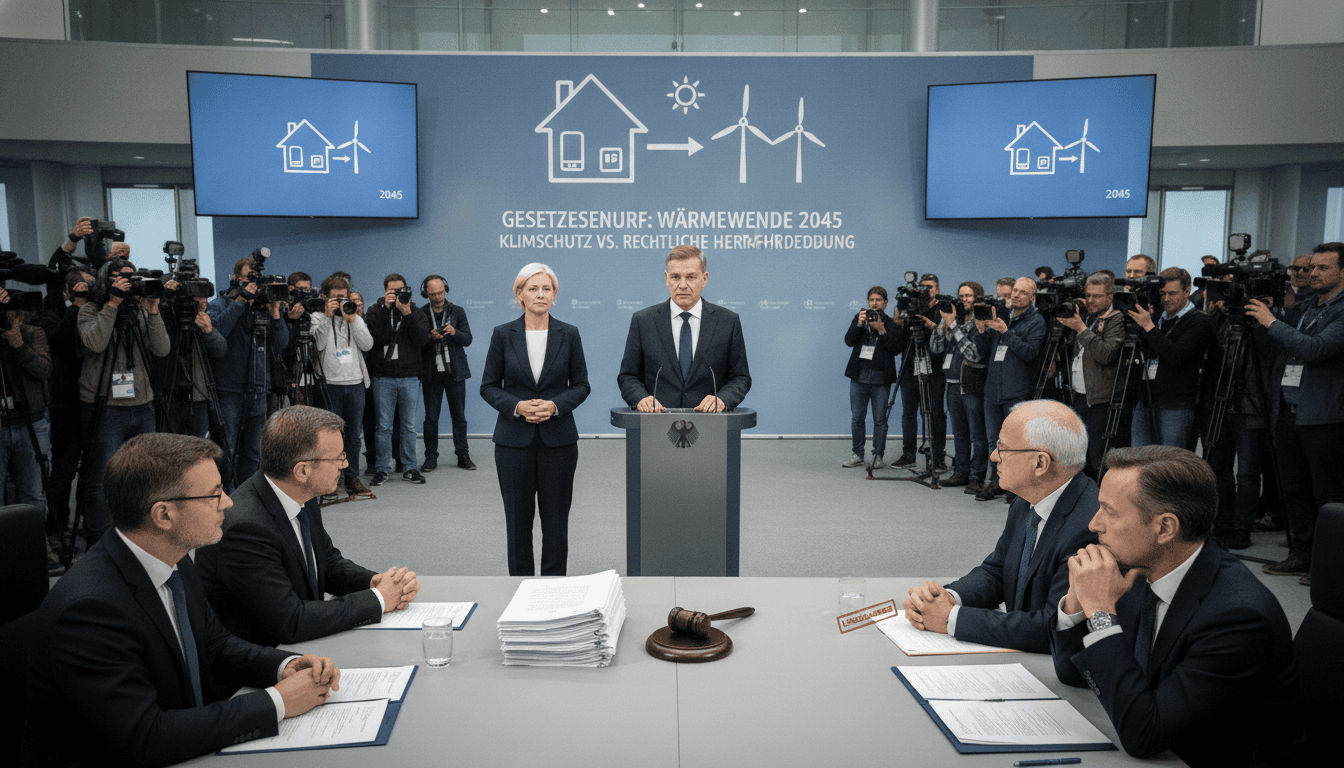
Coalition pushes major rewrite of Germany’s Heizungsgesetz, triggering legal challenge
Coalition parties propose sweeping amendments to the Heizungsgesetz, removing the 65% renewables requirement and prompting a court challenge that may delay the bill.
The governing Union and SPD parliamentary groups have submitted a package of amendments that would significantly alter the planned Heizungsgesetz, Germany’s contested heating law. The changes include scrapping the existing 65 percent renewables requirement for new heating systems and allowing new oil and gas boilers under conditions that critics say weaken climate safeguards. The draft also envisages a separate law this year to steer oil and gas systems toward alternative fuels by 2045, a dual track that has intensified political debate.
Coalition proposes amendments to the Heizungsgesetz
Lawmakers from the CDU/CSU and SPD filed the amendment to the broader Gebäudemodernisierungsgesetz, aiming to replace what they call a prescriptive approach with greater technology openness. Under the proposed text, new heating installations would no longer be bound to achieve a 65 percent share of renewable energy at the point of installation. Supporters say the revisions are intended to preserve choice for building owners and to ease immediate cost pressures.
The proposal would permit the continued installation of oil and gas boilers if these systems are able to gradually incorporate CO2-neutral fuels such as biomethane. Coalition supporters presented the package as a pragmatic recalibration rather than a retreat, arguing it maintains incentives for decarbonisation while avoiding rigid mandates.
Constitutional lawsuit risks delaying the bill
The Left parliamentary group has lodged a constitutional complaint with the Federal Constitutional Court and submitted an urgent petition that could force a decision before the Bundestag resumes full work after the summer recess. Reports citing coalition sources indicate the legal move could push consideration of the bill beyond the summer break if the court accepts the emergency request. Court action raises the prospect of weeks of uncertainty for a measure the coalition had hoped to advance quickly.
Left figures argue the complaint seeks to ensure parliamentarians have full access to information about the law’s climate impacts and legislative history before voting. The court could decide on the urgency application this week, a timetable that would shape the legislative calendar and political messaging ahead of any plenary debates.
Greens and experts warn of backsliding on climate goals
Green Party lawmakers and environmental groups have been outspoken in their criticism, saying the amendments amount to a retreat from the previous government’s more stringent rules. Greens’ parliamentary sources describe the revised approach as insufficient and warn that allowing new fossil-fuel appliances will lock in emissions and perpetuate uncertainty for tenants and installers. Independent analyses commissioned by the Greens earlier flagged potential constitutional concerns about deferring emission reductions into the future.
Experts who testified at hearings raised questions about whether the new text displaces emission reductions unreasonably and whether it respects legal obligations under federal climate policy. Opponents say removing explicit end-dates for fossil-fuel use undermines clarity and could complicate long-term planning for both the construction sector and energy markets.
Key policy shifts in the amendment
A central change in the draft is the elimination of the current rule that requires newly installed heating systems to derive 65 percent of energy from renewable sources. That provision, a cornerstone of the prior Gebäudeenergiegesetz, would be replaced by a technology-neutral pathway that permits fossil-fuel systems to remain in certain cases. The earlier 2045 prohibition on operating boilers with fossil fuels would also be omitted from the amended bill.
Instead, the coalition envisages a follow-up law to manage the transition of oil- and gas-fired systems toward alternative, low-emission fuels by 2045. Critics view that sequencing as problematic: removing immediate statutory prohibitions while promising future rules risks eroding investor and consumer confidence in the heating transition.
Implications for tenants, trades and energy markets
Tenant groups, small businesses and craft associations have warned the revisions could increase costs or displace obligations unevenly. Greens and left-leaning critics highlight that the current draft lacks targeted tenant protections for self-employed occupants and small commercial users who often face higher retrofit costs. Trades organizations say the uncertainty could damp demand for heat pumps and complicate workforce planning for installers.
Industry voices sympathetic to the coalition argue the amendments preserve flexibility during a period of constrained supply chains and rising equipment prices. They contend that a gradual pathway to renewable fuels will allow time for scaling biomethane and hydrogen production without forcing immediate, costly replacements.
Parliamentary path and next steps
With party groups negotiating the text, the bill’s timetable now hinges on both parliamentary agreement and the Constitutional Court’s response to the Left’s challenge. If the court accepts the emergency motion, lawmakers may be unable to vote before a ruling, lengthening the process into the autumn. Coalition leaders say they intend to use the summer pause to refine the text and secure broader support.
Opponents are preparing amendments and public messaging to press for reinstating stricter timelines and safeguards, while pro-coalition stakeholders emphasize preserving technological choice. The debate is likely to remain intense as Germany balances near-term affordability concerns with legally binding climate commitments.
The Heizungsgesetz rewrite has escalated from a technical amendment into a political flashpoint, with legal, economic and environmental consequences that will shape Germany’s building decarbonisation strategy for years to come.
