
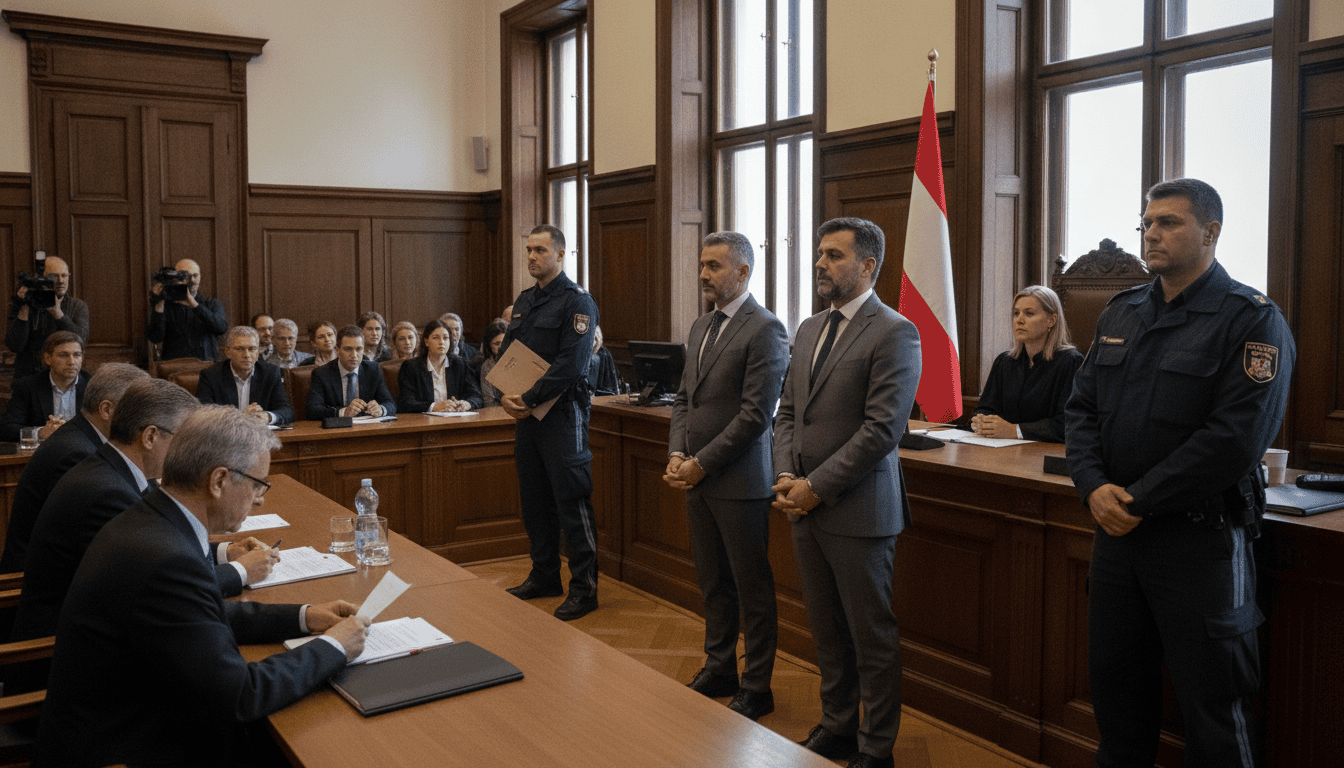
Vienna Court Sentences Two Former Syrian Officers to Eight Years for Raqqa Torture
A Vienna court on July 6, 2026, sentenced two former Syrian security officials to eight years each for torture and sexual violence in a Raqqa prison between 2011 and 2013, marking a key application of universal jurisdiction.
Verdict and Sentences
The Vienna Regional Court found the two men guilty of systematic mistreatment and sexual assaults against civilians detained in Raqqa during the early years of the Syrian conflict. Each defendant received an eight-year prison sentence after judges concluded they bore responsibility for severe abuses committed in a detention facility between 2011 and 2013.
The court described the abuses as organized and deliberate, assigning legal accountability not merely for isolated acts but for a pattern of state-directed violence. The decision is not yet final and may be subject to appeal under Austrian law.
Charges and Evidence Presented
Prosecutors charged the defendants with crimes against 21 Syrian civilians who were detained, beaten and in some cases sexually assaulted while held in the Raqqa prison. Over the course of 13 trial days, numerous victims testified in person, recounting sustained physical and psychological abuse.
The prosecution relied heavily on survivor testimony and on the legal principle that serious crimes against humanity can be pursued by national courts regardless of where they occurred. Judges said the weight of the evidence established both individual acts of violence and supervisory responsibility.
Defendants’ Roles and Background
The court identified one defendant as the former head of Division 335 of Syrian military intelligence and the other as the former chief of Raqqa’s criminal police. Both men had left Syria during the civil war and sought asylum in Europe, where they were later investigated and prosecuted.
One of the defendants, the former intelligence chief, had initially sought refuge in France and was subsequently transferred to Austria in 2015 in a covert operation reportedly conducted at the behest of Israeli intelligence. Austrian investigators later opened inquiries under international criminal law provisions.
Court’s Finding on Systematic Torture
Judges concluded the acts met the threshold of “state-organized, systematic torture” and held the defendants jointly responsible for conduct committed within the detention complex. The court emphasized that leadership roles carry affirmative duties to prevent abuse and to protect detainees under one’s control.
The presiding judge said the defendants could have taken measures to improve prisoners’ conditions and prevent violence, but had failed to do so, thereby contributing to the continuation of abusive practices. At least one instance was judged to involve direct physical violence by the former intelligence head, while the other defendant was found to have committed multiple assaults.
Prosecutors’ Case and Survivor Impact
The prosecution catalogued allegations that included beatings, humiliations and sexual assaults aimed at deterring dissent and suppressing demonstrations against the regime. Victims testified that the mistreatment was inflicted to extract information and to intimidate communities opposing the government.
Survivor testimony played a central role in shaping the court’s view of both the nature and consequences of the abuse. Judges noted that some victims suffered long-term physical and psychological harm, and that the cumulative testimony supported a finding of systemic repression.
Legal Significance and Next Steps
The verdict is notable for its use of Austria’s jurisdictional provisions to try alleged international crimes committed abroad, a legal route increasingly invoked in European courts. The case underscores national prosecutors’ willingness to pursue accountability for wartime atrocities when local remedies are unavailable.
Because the ruling is not final, defense lawyers may lodge appeals and the matter could advance to Austria’s higher courts for review. The outcome will likely be watched by human rights groups and families of victims for its implications on accountability for abuses committed during the Syrian conflict.
The court’s decision adds to a sequence of cross-border prosecutions addressing alleged crimes from the Syrian war, reinforcing the message that senior officials can be held accountable in foreign courts when domestic justice is lacking.
