
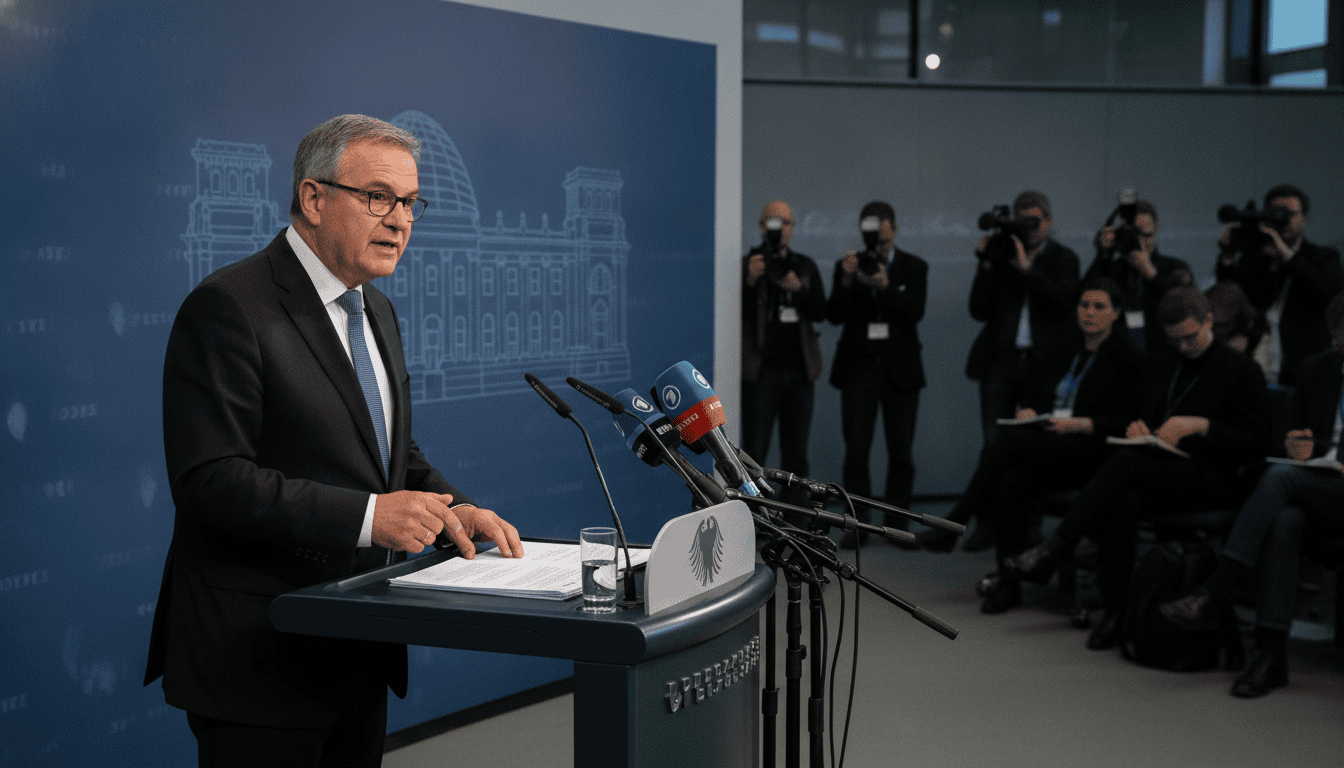
German healthcare savings law defended by minister as reforms provoke wide opposition
Germany’s health-care savings law faces fierce resistance from hospitals, doctors and industry, but the health minister says the German healthcare savings law is a necessary, historic correction to close a €30 billion financing gap and stabilize contribution rates. The minister framed the package as a paradigm shift that implements the majority of a commissioned finance commission’s recommendations while promising targeted relief for patients and providers. Lawmakers and state governments hammered out late concessions in the Bundesrat, and legal challenges have already been signalled as the bill moves toward final parliamentary votes.
Minister calls the bill a historic correction
The minister described the German healthcare savings law as the largest savings instrument ever proposed for the health sector, aimed at closing an imminent structural deficit. She said the package implements 51 of 66 recommendations from an expert finance commission and will restore a revenue-oriented spending discipline intended to prevent large contribution rate hikes. The ministry argues the approach balances fiscal responsibility with protections for vulnerable groups.
Core measures in the savings package
Key elements include adjustments to partner co-insurance, changes in the contribution assessment ceiling for earned income, and targeted reductions in certain fixed-cost allowances for outpatient practices. The bill increases the federal payment for social assistance recipients gradually — from about €144 now to €174 in 2027 and to roughly €240 by 2031 — while tightening rules on over-financing for high-volume practices. The ministry says these measures, together with other reforms, will prevent an estimated jump in supplemental contribution rates to nearly 3.9 percent in 2027.
Late federal-state compromise and political trade-offs
Negotiations with the Länder produced last-minute concessions as the government worked to secure Bundesrat approval, reflecting state concerns about hospital viability during transformation. The minister acknowledged that compromises were necessary to preserve regional care and avoid abrupt closures, even if that required additional federal engagement. She framed the concessions as part of the democratic process in a federal system that demands alignment between Bundestag and Bundesrat decisions.
Pushback from hospitals, doctors and the pharmaceutical sector
Hospitals, physicians’ groups and pharmaceutical companies have publicly criticized the bill, warning of service cuts, tighter margins and fewer resources for patient care. Medical associations fear that reining in expenditure growth could exacerbate staffing pressures and accelerate rural clinic consolidation. The minister rejected claims of intended wage reductions and said tariff increases up to an anticipated threshold above 3.5 percent will still be refinanced, stressing that protecting staff incomes remains a priority.
Effects on earners and insurance choices
Raising the contribution assessment ceiling and altering the insurance-obligation threshold are intended to broaden the revenue base, but critics warn wealthier insured people may increasingly consider private alternatives. The government plans to increase the threshold at which switching to private insurance becomes possible to reduce migration, though it concedes some will still opt out. The ministry notes private premiums are also rising, and any switch will not be a simple escape from higher costs.
Sick leave rules, telemedicine and primary care changes
The coalition wants to curb perceived abuse of telephone sick notes and considers reinstating stricter requirements for early attestations, though the exact form is still under discussion. The minister emphasised that telemedicine and video consultations will remain an acceptable route for medical assessment, and that the intention is to reduce misuse without forcing sick patients into unsafe work attendance. The plans include stronger digital triage and expanded telehealth as part of a broader primary-care and emergency-room reform.
Structural reform and digitalisation timetable
Beyond immediate savings, the ministry intends to press ahead with structural reforms to modernise primary care, expand the role of pharmacies in prevention and vaccination, and create a new academic nursing profession. A draft of the primary-care overhaul is expected in the autumn, with the cabinet due to consider broader measures in July according to the ministry’s timeline. Recommendations from the financial commission on further structural adjustments are slated for delivery by year-end, with the goal of steering resources to need-based, team-oriented care.
The minister defended the package as necessary and balanced despite its unpopularity, arguing that a failure to act would have led to substantially higher contribution demands on insured people next year. As the German healthcare savings law proceeds through parliamentary debate and potential court scrutiny, the outcome will determine whether the sector can both contain costs and pursue planned modernisation without undermining access, particularly in rural areas.
