
German women’s tennis under scrutiny as Seidel struggles and Stuttgart field exposes depth gap
German women’s tennis faces renewed scrutiny after Ella Seidel’s high-profile loss in Stuttgart and disappointing national results, prompting calls for structural reform to rebuild the talent pipeline.
The Stuttgart indoor tournament has put German women’s tennis sharply in the spotlight after a string of high-profile withdrawals and the visible absence of established national contenders on promotional posters. Young players such as Ella Seidel were thrust into the public eye amid a depleted field, and recent team defeats in Oeiras have intensified debate about the sport’s trajectory in Germany.
Stuttgart draw reveals dependence on late changes
The tournament in the Porsche Arena kept its reputation for elite competition despite several late absences by top-ranked players, including the world number one, who withdrew shortly before the event. Those withdrawals opened spaces for lower-ranked Germans and wildcards, making the domestic presence more noticeable but also underscoring the gap to the world’s best.
Organizers still promoted a star-studded field around the city, but the composition of the main draw highlighted how tenuous German entries have become; several home players gained entry only after late pullouts, illustrating the national circuit’s reliance on fortunate circumstances rather than a deep, self-sustaining cohort of top-tier players.
Ella Seidel emerges as focal point of concern
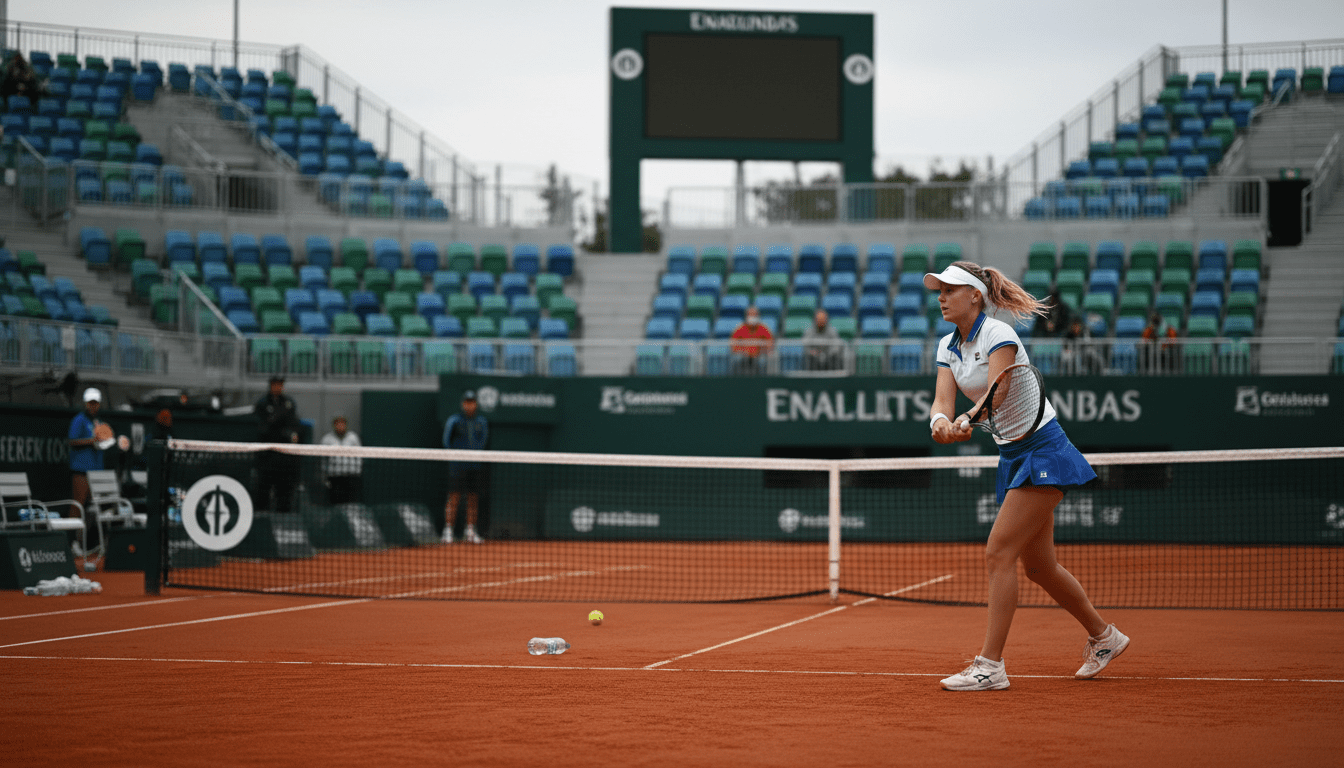
At 21, Ella Seidel has long been viewed as one of Germany’s more promising talents, but her first-round defeat to the experienced Belgian Elise Mertens left a harsher impression than many expected. Seidel’s match contained bright passages, yet she fell 6-3, 6-4, and observers noted that nerves and inconsistency surfaced in key moments.
Her recent role in Germany’s disappointing run in Portugal — where the national side suffered unexpected losses — has turned Seidel into an unintended symbol of a broader problem: talented individuals are present, but translating potential into consistent international success appears uneven.
Former champions and current stars voice blunt criticism
Prominent figures from Germany’s tennis community reacted strongly in the aftermath, arguing that systemic shortcomings contribute to underperformance. Veterans and pundits pointed to organizational missteps, insufficient integration of emerging players, and gaps in tactical training, especially in doubles play.
Public comments from former and current players have framed the debate bluntly, with calls for clearer leadership and improved structures to nurture young prospects rather than leaving them to navigate the professional circuit without coordinated national support.
Wildcards and rankings tell a sobering story
Several German entrants reached the main draw through wildcards or late openings created by other players’ withdrawals, a dynamic that paints a mixed picture. Established names such as Laura Siegemund, competing at an age where experience is her primary asset, earned spots largely thanks to ranking protection and late reshuffles rather than a sustained surge of rising compatriots.
Younger players, including those who received wildcards, now face immediate pressure to perform at high-level events without the gradual step-ups that consistent challenger-level success typically provides. That pressure can accelerate development for some but also expose fragile match-readiness in others.
Calls for reform center on a new DTB performance concept
The national federation has acknowledged the diagnosis and already approved a revised performance concept months earlier that officials say addresses many identified weaknesses. The plan focuses on improving training conditions, talent identification, and the competitive pathway so that promising juniors encounter stronger development environments.
Implementation will be the critical test. Observers note that strategy documents are necessary but insufficient unless accompanied by coherent coaching pipelines, targeted doubles education, and clearer incentives to keep top talents within the national framework through formative years.
Immediate steps and longer-term indicators to watch
In the short term, monitoring how Germany’s young professionals respond on the tour will indicate whether the current cohort can weather pressure and convert potential into ranking stability. Tournament entries, wildcard usage, and early-round performances in both singles and doubles will be telling metrics over the coming months.
Longer term, the success of the federation’s program will hinge on measurable outcomes: more players breaking into the top 100, competitive showings in team events, and a resurgence of German names on promotional materials that once again reflect genuine depth rather than symbolic representation.
German women’s tennis now faces a clear crossroads: the presence of talented players is not in question, but the structures around them must change to ensure those talents flourish on the world stage. Only sustained improvements in coaching, competition opportunities and organizational support will return German players to consistent prominence.
