
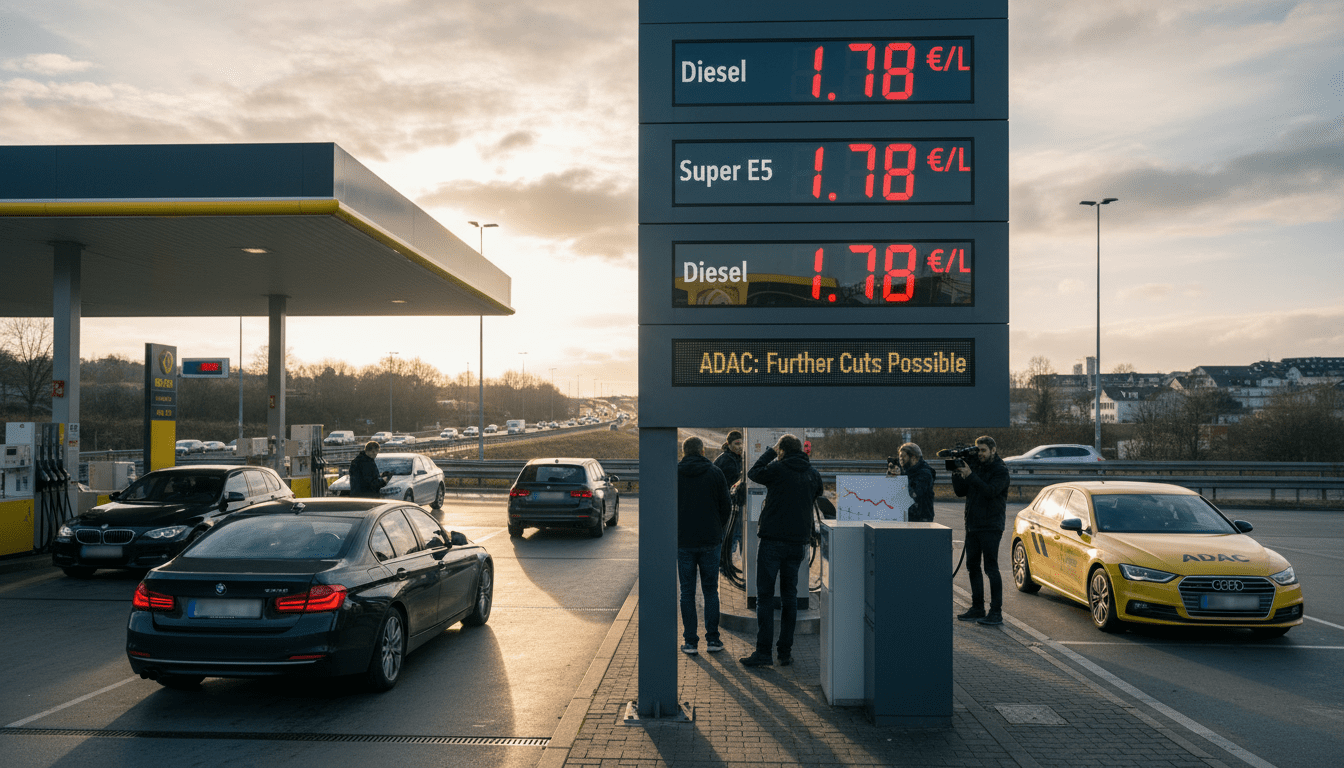
German diesel prices fall sharply as ADAC says further declines are possible
Diesel prices in Germany fell to €2.13/l on average, down 15.7 cents week‑on‑week; ADAC says prices may fall further despite higher Brent crude and new rules.
The price of diesel at German service stations has fallen markedly in the past week, with the national average now around €2.13 per litre, according to the ADAC. That represents a reduction of 15.7 cents compared with seven days earlier, while petrol is trading at roughly €2.06 per litre. The decline in diesel prices is the latest movement in a volatile market driven by crude oil and currency shifts.
National averages and weekly change
The ADAC’s weekly survey shows diesel averaging €2.13 across the country, a notable drop week‑on‑week of 15.7 cents. Petrol, measured by Super E10 and other grades, remains near €2.06 per litre, leaving the gap between fuels relatively small. Regional variations persist, with urban stations and motorway forecourts typically reporting higher pump prices than local outlets.
Crude oil and exchange rates remain key drivers
Industry analysts point to the Brent crude price and the dollar‑euro exchange rate as the principal cost factors behind retail fuel prices. Brent traded at about $98 per barrel in recent sessions, a level above last week’s reading even as pump prices for diesel fell. A stronger dollar or higher crude can increase refinery and distribution costs, but other market dynamics and local competition can offset those pressures at the pump.
ADAC says fuel still overpriced relative to market signals
Despite the fall in diesel prices, the ADAC argues fuel remains more expensive than market fundamentals suggest it should be. The association highlighted that the price of Super E10 a month earlier was lower even though crude was higher and the exchange rate less favorable at that time. That discrepancy leads the ADAC to conclude there is scope for further price reductions for motorists if wholesale and retail margins adjust downward.
Austria model changes daily pricing behaviour at pumps
Since the introduction of the so‑called Austria model on 1 April 2026, dealers in Germany have faced new constraints on price movements that have changed consumer behaviour. Under the model, petrol stations are permitted to raise pump prices only once a day, while reductions and discounts remain allowed at any time. The ADAC notes this has concentrated refuelling demand around certain times, with evidence suggesting the best time to fill up is shortly before 12:00 noon, when stations tend to lower prices ahead of the single allowed increase.
Impact on motorists, fleets and commuters
Lower diesel prices offer partial relief for individual drivers, long‑distance hauliers and company fleets that consume diesel at scale. For commuters, the change translates into modest weekly savings but does not erase the larger cost pressures households face from rising energy bills in other sectors. Freight operators say even small per‑litre shifts can significantly affect operating costs over a month, and many are monitoring wholesale and retail trends closely to adjust routing and fuel purchasing strategies.
How forecourts set prices under the new rules
Retailers now manage pricing with an eye on the once‑daily upward adjustment and the flexibility to deploy discounts, loyalty pricing and targeted promotions. That has led to more pronounced intraday price patterns, as stations try to attract customers before the permitted increase or use timed reductions to undercut competitors. Observers caution that while discounts can lower the price at the pump temporarily, the daily average price has moved higher since the model took effect, reflecting a new equilibrium between retail strategy and market costs.
Looking ahead, market participants expect continued interaction between oil markets, currency moves and retail pricing rules to determine diesel prices in the near term. If wholesale rates ease and retail margins compress, motorists could see further declines at the pump, but a sustained fall will depend on how quickly forecourts adjust to shifting wholesale and competitive pressures.
