
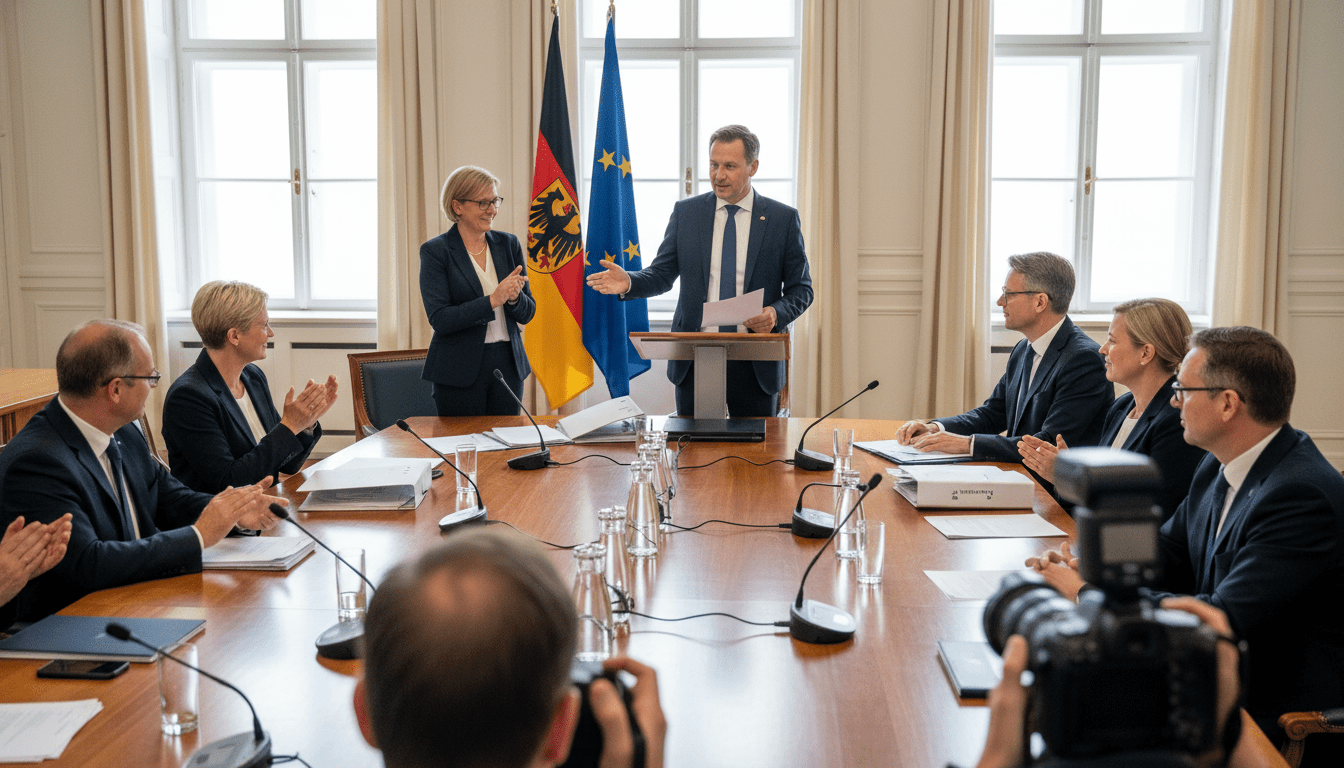
CDU Mecklenburg-Vorpommern unveils nine-point program as party seeks recovery ahead of campaign
CDU Mecklenburg-Vorpommern launches nine-point program prioritizing family housing grants, business one-stop services and school rules amid low poll ratings.
The CDU Mecklenburg-Vorpommern presented a new, programmatic platform this weekend aimed at reversing the party’s slide in the state and refocusing the campaign on economic and social issues. The package, framed as a continuation of the party’s 2019 state principles, includes a nine-point plan targeting family housing support, streamlined services for companies and changes to school and youth digital policies. Party leader Peters described the agenda as practical and rooted in the party’s stated commitment to human dignity, while acknowledging the difficult political backdrop in the state.
Peters frames the campaign around Christian human dignity
Peters told delegates the program translates the CDU’s foundational principles into concrete measures intended to improve everyday life in Mecklenburg-Vorpommern. He said the party will run a campaign without fear or anger and emphasized a forward-looking agenda that addresses economic growth, health, safety and education. Peters also warned that after four and a half years of the current state government, political extremes had approached plurality in some polls, but insisted voters still had a clear choice over policy direction.
Nine-point plan commits to specific, time-bound measures
The nine-point plan anchors the CDU’s proposals with targeted commitments that party officials say are actionable rather than aspirational. Central elements include direct financial support for young families buying owner-occupied homes and administrative reforms to reduce bureaucratic hurdles for businesses. Party spokespeople argued the plan is intended to deliver tangible improvements to citizens’ lives and to restart economic momentum in the state.
Family housing subsidy fails in state parliament
One headline measure — a subsidy of €15,000 per child for families purchasing owner-occupied homes paid over ten years — was rejected in the Schwerin state parliament this week. Peters expressed disappointment at the vote, saying the decision would make the prospect of homeownership more distant for many young families in the region. The parliamentary setback highlights the political friction the CDU faces in translating its program into legislation under the current composition of the Landtag.
Business service hub and administrative reforms proposed
A prominent administrative proposal calls for a centralised business service centre to consolidate all essential public procedures for companies. The CDU argues such a one-stop solution would cut red tape and make Mecklenburg-Vorpommern more attractive for investment and job creation. Party officials say implementation of a central point of contact is a priority measure within the nine-point plan and would be accompanied by other efficiency-focused reforms.
Education and youth measures seek to limit early social media access
The program contains several education and youth-focused items, including a proposal to ban private mobile phones in schools up to grade ten and to restrict access to social media platforms for children under 13. The CDU also advocates removing gender asterisks from public administration documents, framing the measure as a return to standardised administrative practice. These education and social media proposals are presented as steps to support learning environments and protect young people’s wellbeing.
Merz expected to visit Linstow and Laage as party holds board elections
Federal CDU leader and Chancellor Friedrich Merz is scheduled to visit Linstow to address delegates and will inspect the Laage air base on the Day of the Bundeswehr, events party officials said will align with the regional campaign launch. The party also plans board elections on Saturday, with Peters standing for re-election to the state chairmanship; he first won the post in April 2024 with a large share of the vote and faces no declared rivals so far. The leadership events are understood as a bid to galvanise regional activists ahead of the next electoral tests.
Polls show CDU support at historic lows in the state
Recent polling cited by party and media observers suggests the CDU’s support in Mecklenburg-Vorpommern has weakened, with an Infratest dimap survey for the NDR in May placing the party at around ten percent. That figure represents a decline from earlier in the year and is below the 13.3 percent the CDU recorded in the 2021 state election, its worst result to date in Mecklenburg-Vorpommern. Party strategists say the new program is intended to arrest this decline by offering concrete policy answers to voter concerns about housing, employment and schooling.
The CDU’s regional agenda sets out clear policy choices and concrete commitments, but the program’s political impact will depend on how effectively it can be advanced in the Landtag and how voters respond in the months ahead. The coming weeks — featuring high-profile visits, internal elections and continued public debate over the homeownership subsidy and school measures — will test whether the CDU Mecklenburg-Vorpommern can convert its new platform into electoral momentum.
