
Austrian military service reform: Government agrees on six-month basic service plus three months militia training
Austria strikes deal on Austrian military service reform: six months basic service, three months militia training, €1,000 monthly pay and civil-service changes.
The coalition reached a last-minute agreement on the Austrian military service reform at a summer cabinet meeting in Salzburg, settling a months-long dispute over the future of conscription. The compromise establishes a six-month basic Wehrdienst augmented by three months of militia exercises, introduces a €1,000 monthly allowance and sets new rules for civilian service. Party leaders hailed the deal as a step toward strengthening the Bundesheer, while critics warned the outcome was an uneasy political compromise.
Last-minute accord in Salzburg
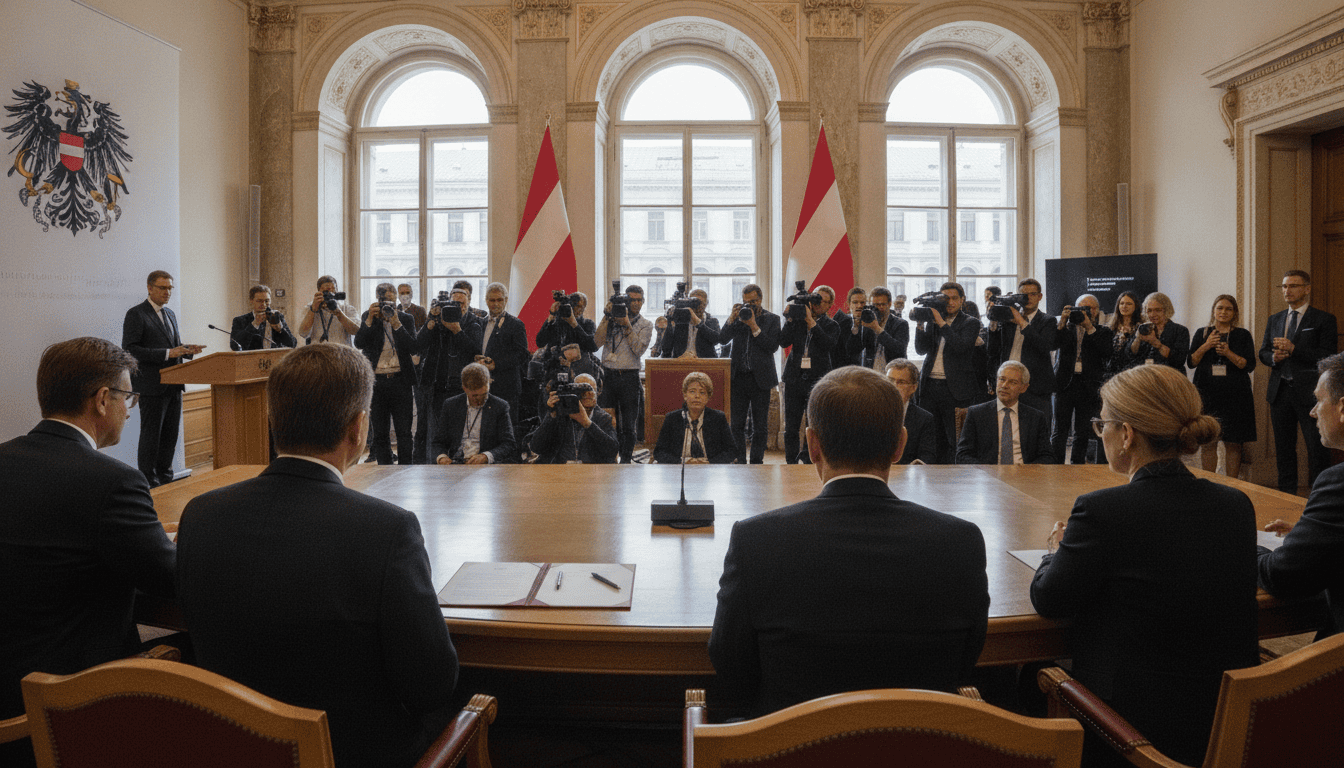
The government announced the compromise shortly before a scheduled press conference on Monday at the Schwarzenbergkaserne in Salzburg. Ministers and party chiefs had negotiated intensively over weeks, with the final agreement only reaching the public in the hours immediately preceding the briefing.
Chancellor Christian Stocker and Defense Minister Klaudia Tanner framed the settlement as the result of protracted talks across the coalition, while Vice-Chancellor Andreas Babler emphasized concessions that, he said, would make mandatory service more attractive to recruits. The last-minute nature of the decision reflected persistent disagreements within the governing parties.
Terms of the 6+3 model and service benefits
Under the agreement, basic Wehrdienst will remain six months, supplemented by three months of Miliz (reservist) exercises whose distribution across training blocks remains to be specified. The government also committed to a monthly pay of €1,000 for conscripts and the introduction of paid leave days during service.
A parallel measure extends civilian service from nine to eleven months on a voluntary basis for now, with a constitutional amendment required to make that extension mandatory. The coalition set a trigger — to begin applying in 2028 — that would make the eleven-month civilian service compulsory if annual recruit numbers drop by more than 7.5 percent below a baseline of 15,000.
Coalition tensions and political reactions
The compromise reflected deep divisions inside the governing coalition. The ÖVP had backed a stronger return to militia capacity and pushed for broader changes proposed by an expert commission, known as “Austria Plus,” which recommended an 8+2 model and a longer civilian service. The SPÖ expressed reservations about prolonging compulsory service and preferred keeping Wehrdienst as short as possible, while the NEOS advocated for a professional army.
Chancellor Stocker briefly sought a referendum on competing models, including a Swiss-style alternative, but that move failed to win support from partners. SPÖ leader and Vice-Chancellor Andreas Babler welcomed the pay increase and vacation provisions as measures to improve recruitment, while the chairman of the expert commission, Erwin Hameseder, described the outcome as a step forward though “not optimal.” The right-wing FPÖ condemned the package as a weak compromise and voiced sharp opposition.
Strategic context shaped by security concerns
Debate over conscription resurfaced in the wake of Russia’s invasion of Ukraine, which revived questions about Austria’s readiness and the viability of a Miliz-based defence. Historically, Austria retained a model of short compulsory service followed by periodic militia training, but those exercises were scaled back after the Cold War and largely became voluntary.
Military planners have warned that mobilization capabilities suffered after years of limited collective training, calculating that the Bundesheer would currently need around two months to mobilize effectively. Proponents of increased militia training argued the compromise restores some capacity to move beyond a purely symbolic system and to improve unit cohesion in crisis scenarios.
Implementation hurdles and legislative pathway
Key details of the agreement remain to be worked out in legislation, including how the three months of Miliz training will be scheduled and funded. The civil-service extension requires a constitutional change, meaning the coalition will need support from other parties — notably the Greens — to pass that measure.
Budgetary implications will also be scrutinized because the pay increase and expanded training will require additional resources for personnel, equipment and employer compensation for released workers. The government has signalled a plan to present implementing bills in the coming parliamentary session, with timelines for rollout to be clarified in follow-up negotiations.
The compromise is likely to keep the issue politically salient as parties and interest groups weigh in during the legislative drafting process. Public debate over the balance between national defence needs and the social and economic costs of expanded service is expected to continue.
The agreement marks a politically negotiated attempt to shore up Austria’s defence posture without fully adopting the longer service terms recommended by experts. Lawmakers now face the task of converting the political pact into concrete statutes and budgets while managing dissent both inside and outside the coalition.
