
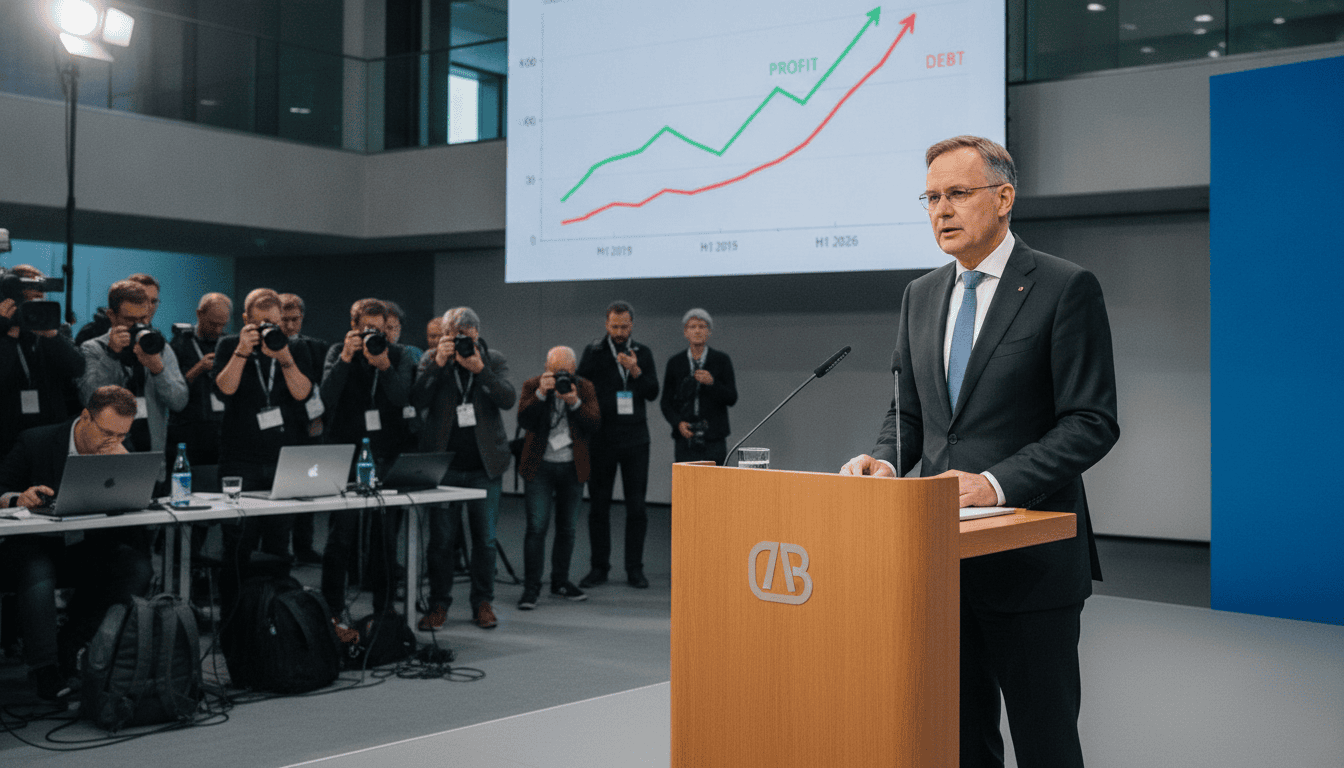
Deutsche Bahn profit returns in H1 2026 as restructuring and investment lift results
Deutsche Bahn posts a €147m first‑half profit in 2026, driven by restructuring and higher ridership; debt rises as investment in the rail network grows.
The company reported a return to a positive result in the core business for the first half of 2026, recording a post‑tax profit of €147 million and citing operational improvements and increased passenger volumes. Deutsche Bahn profit reversed a year‑earlier loss of €760 million, while revenues edged up 1.8 percent to €13.6 billion. Management said higher investment and a major corporate restructuring underpinned the improved bottom line even as group debt grew.
Profit recovery in core operations
Deutsche Bahn’s core business moved back into the black for the first time since 2019, a development executives described as a milestone for the group. The €147 million post‑tax result contrasts sharply with the prior‑year first‑half loss of €760 million and reflects both cost measures and stronger demand for rail travel. Company statements attribute the swing to disciplined cost management and the initial effects of a wider transformation program.
Despite the positive headline result, executives cautioned that the turnaround remains fragile and that profitability must be sustained across the full financial year. The firm highlighted that all business units either maintained or improved their operating results in the period, but stressed that further work is needed to secure long‑term stability.
Passenger numbers and revenue trends
Passenger traffic rose modestly in the first six months, with roughly 960 million journeys recorded—an increase of 1.8 percent year‑on‑year. That rise in ridership supported the revenue gain to €13.6 billion and helped offset some cost pressures linked to higher investment levels. Management framed the passenger growth as confirmation that demand for rail services remains resilient despite ongoing service quality challenges.
Analysts note that small percentage gains in ridership can produce meaningful revenue effects for a large operator, but they also warn that sustained improvements in punctuality and network condition will be required to convert ridership into durable financial strength. Deutsche Bahn has tied parts of its turnaround plan to longer‑term investments in capacity and reliability.
Investment surge and rising group debt
Investments accelerated in the first half of 2026, contributing to a roughly €1 billion increase in consolidated debt to €21.6 billion. The company said higher spending on infrastructure and rolling stock was responsible for the increase, as Deutsche Bahn and the federal government press ahead with network upgrades. Management argues that elevated borrowing is a deliberate trade‑off to modernize the rail system and support future growth.
However, the rising debt load drew attention from observers who said the group must balance investment needs with strict cost control to avoid future financial strain. Executives maintain that the current borrowing supports critical works on the rail network that are intended to improve reliability over the coming decade.
Restructuring measures and the DB 2035 strategy
The company has launched a broad restructuring program that includes central management cuts, reductions among internal service providers and a push toward decentralization across business units. Deutsche Bahn says these changes are already delivering cost savings and are central to the DB 2035 strategic plan, which aims to rebuild performance and operational resilience. Management presented the restructuring as a necessary step to realign the group after years of operational setbacks.
CEO Evelyn Palla described the results as an important step but stressed that she would only be satisfied once daily service quality and punctuality consistently meet customer expectations. Executives have warned that achieving those operational improvements will take time and significant continued investment.
Uneven performance across divisions
Results across Deutsche Bahn’s units were mixed: long‑distance services reported a profit of €148 million, and DB Regio posted €89 million in the black, while DB Cargo remained close to break‑even with a loss of roughly €1 million. The cargo division’s persistent weakness is a particular concern because repeated losses could trigger scrutiny from European competition authorities. Management said turnaround plans for freight are underway but acknowledged that market conditions remain challenging.
Company officials indicated that progress in passenger services has so far been stronger than in freight, and that targeted measures will aim to restore DB Cargo to sustainable profitability. Observers say achieving that will require both operational changes within the division and supportive policies at the EU and national levels.
Political response and next steps
Newly appointed Federal Transport Minister Steffen Bilger welcomed the figures and signalled an early review of the company’s plans, saying he would meet the CEO and union leaders to discuss the results and next steps. The ministry’s engagement reflects the state’s continuing role as a major stakeholder in Deutsche Bahn and its interest in seeing investments translate into better network performance. Bilger’s meetings are expected to focus on infrastructure spending, punctuality targets and the social impact of restructuring.
Several media outlets reported the positive balance before the company’s formal release, prompting comments from both management and political figures about transparency and market communication. Deutsche Bahn said it will continue to present quarterly updates as it executes its transformation agenda.
The result marks a first step in reversing multi‑year losses but leaves open significant challenges: maintaining profit momentum, reducing the environmental and operational costs of investment, and delivering tangible improvements to network condition and punctuality will define the company’s progress through DB 2035.
