
Ceuta migrant arrivals surge as more than 1,500 reach Spanish exclave by sea
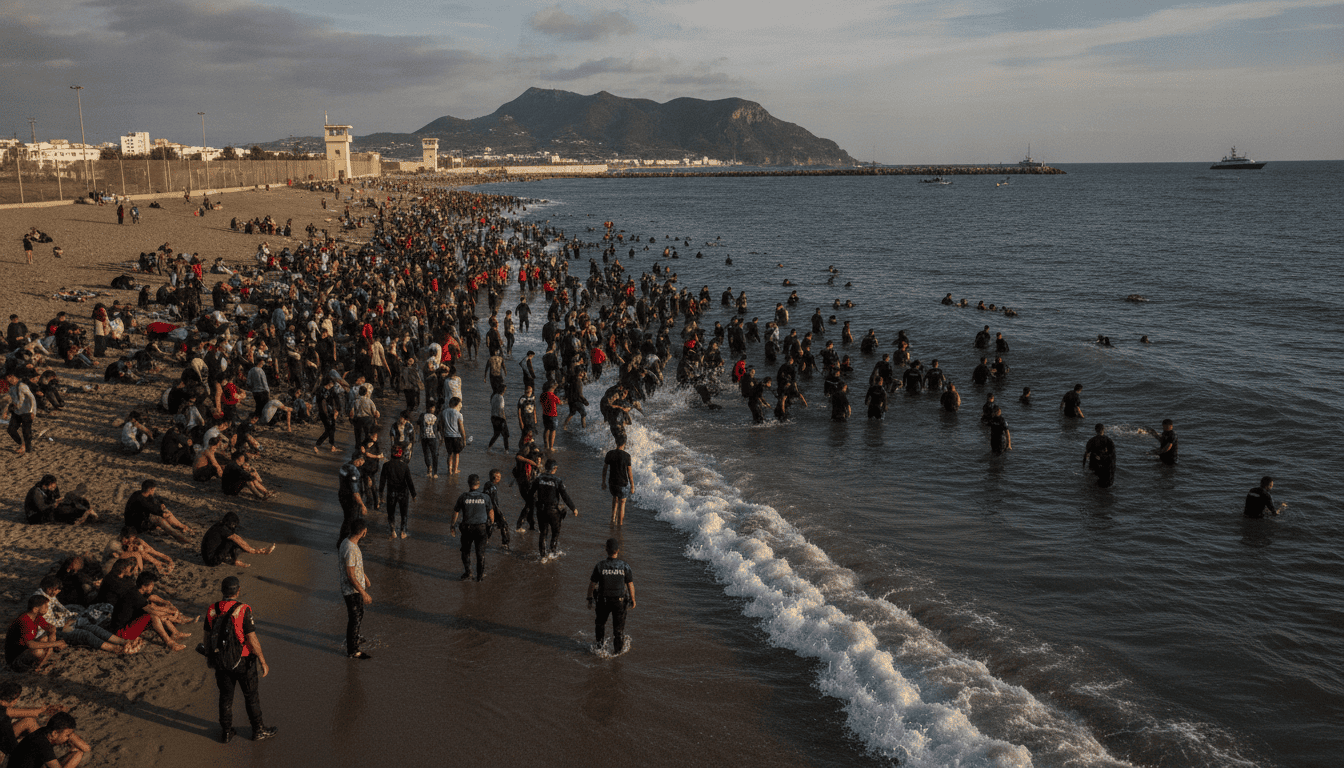
Over 1,500 migrants in Ceuta reached Spanish soil by sea within a week, overwhelming reception centers and prompting Madrid to send troops, divers and police.
Mass arrivals since July 23, 2026
Since July 23, 2026, more than 1,500 migrants have entered the Spanish North African exclave of Ceuta, mostly by swimming from Moroccan shores, regional authorities said. Hundreds of people arrived again in the past hours, according to local reports citing the regional government and state broadcaster RTVE. The influx has reignited concerns about border control, humanitarian capacity and the safety of those attempting the crossing.
Breaches of barriers and security dynamics
Video and eyewitness accounts show groups of migrants overcoming the fence lines that ring parts of Ceuta, entering areas that were reportedly not guarded at the time. Moroccan security forces at the scene withdrew as arrivals reached the shore, and Spanish police confirmed a mass influx without immediately releasing precise totals. Witnesses say some migrants shouted “Viva España” upon reaching the territory, underlining the political and symbolic dimensions of the crossings.
Government orders and planned military support
Juan Jesús Vivas, the head of Ceuta’s regional government, asked Madrid on Thursday to declare a state of emergency and to deploy the military along the land border with Morocco. The Spanish interior ministry responded by ordering reinforcements: by Friday, July 31, 2026, three trains carrying 20 soldiers each, a diving unit and a naval vessel were to be dispatched, while police special units will be increased to 200 officers. The government framed the measures as immediate steps to restore control and assist rescue operations.
Human cost and rescue operations
The sea route to Ceuta is perilous; migrants must circumvent coastal fences and often spend hours in open water. In recent days, four young migrants drowned while attempting the crossing, and in one night rescuers from the Red Cross, Spain’s maritime rescue service and both Spanish and Moroccan border units saved more than 100 people from drowning. Most of those attempting the passage are reported to be young Moroccans, though authorities say nationals from Algeria and Sudan are also among the arrivals.
Strain on reception centers and street conditions
Local officials say reception facilities in Ceuta are at breaking point, with hundreds of migrants forced to sleep outdoors on city streets. Regional authorities have described reception centers as “completely overwhelmed,” highlighting shortages of shelter, medical care and processing capacity. The sudden and concentrated arrivals have complicated efforts to provide basic services and to carry out identification and asylum procedures in an orderly manner.
Legal shift linked to increased crossings
Officials and analysts link the recent surge to a legal change: a ruling by Spain’s Supreme Court on July 16, 2026, that banned the practice of pushing back migrants at sea — so-called “pushbacks” or hot returns. The court’s decision clarified that migrants who arrive by swimming cannot be subject to immediate maritime pushbacks because they do not cross an existing physical fence. Spain had previously relied on a separate European Court of Human Rights decision that, under certain conditions, permitted immediate returns for those who forcefully cross border fences; the Supreme Court ruling narrowed the circumstances in which returns at sea may be carried out.
The ruling reduced a deterrent that had been applied in recent years and, according to regional officials, contributed to expectations among migrants that reaching Ceuta by sea would now lead to reception rather than near-immediate return. Legal experts note that the decision creates new operational and legal challenges for Spanish and European authorities balancing human-rights obligations with border management.
The arrivals have prompted debate in Madrid about policy and procedure, with the government defending the deployment of security forces while opposition figures and rights groups call for increased humanitarian support and clearer legal pathways to process claims.
The humanitarian and security pressure in Ceuta comes amid broader migratory flows across the Western Mediterranean, where changeable weather, organized smuggling networks and evolving legal frameworks continue to drive irregular crossings. Local hospitals, aid groups and municipal services in Ceuta face mounting demands while national authorities seek to coordinate a rapid response with Moroccan counterparts.
Communities in Ceuta report a mix of solidarity and strain as civil society groups mobilize to assist arrivals, but municipal resources remain finite. Regional officials have urged Madrid for longer-term solutions that include expanded reception capacity, accelerated processing and enhanced cooperation with Morocco to address the root causes and logistics of the crossings.
The recent wave has underscored the limits of emergency responses when legal, operational and humanitarian pressures converge, and it has placed Ceuta back at the center of Spain’s and the EU’s migration policy debates.
