
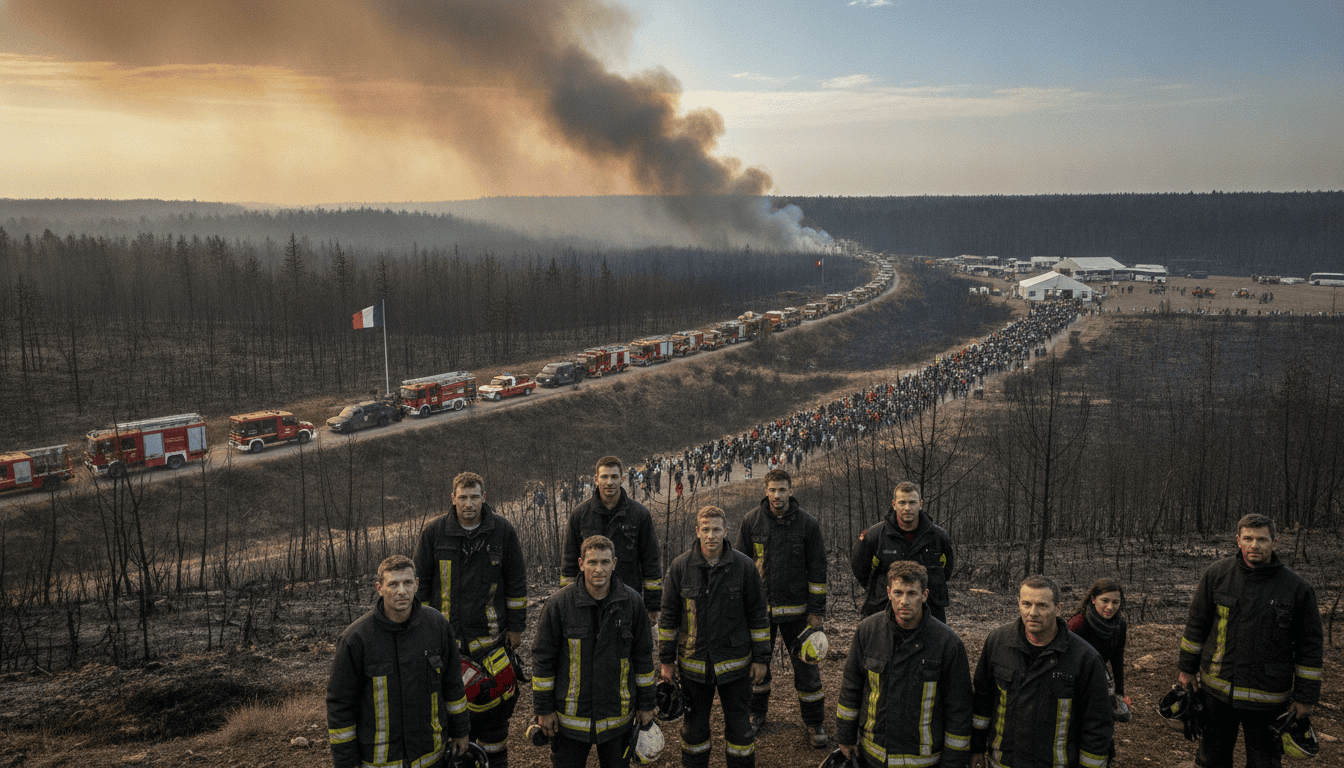
Gironde wildfires: First “somewhat optimistic day” as firefighters gain ground and 220,000 evacuated
Gironde wildfires see ‘first somewhat optimistic day’ as crews report gains; 220,000 people evacuated on July 31.
The Gironde wildfires entered a rare lull on July 31 as regional authorities described the day as the “first somewhat optimistic day” since fires erupted more than a week earlier, even while firefighters continued to battle blazes that have forced the evacuation of some 220,000 residents. The prefect of Gironde said containment efforts made visible progress, offering a cautious reprieve after consecutive days of intense flames and shifting winds.
Evacuations and displacement figures
The mass evacuations have affected urban, suburban and rural communities across the Gironde department, with authorities prioritising vulnerable populations and emergency shelters. Local officials reported that approximately 220,000 people were moved from at-risk areas, with reception centres set up in nearby towns and municipalities to provide temporary housing and basic services.
Volunteer organisations and municipal teams have been coordinating transport and logistics, focusing on families, elderly residents and those with mobility needs. Authorities have warned that while immediate shelter is available for many, prolonged displacement remains a significant challenge for local councils and aid groups.
Firefighting operations and reported gains
Firefighters from across France, supported by specialised units and equipment, mounted extensive ground and aerial operations to slow the spread of the fires. Crews concentrated on establishing containment lines and protecting inhabited zones, reporting localized successes that led the prefect to describe the day as more optimistic than previous ones.
Aerial water drops and coordinated ground assaults targeted the most active fronts, while teams used backburning tactics in select areas to remove fuel ahead of advancing flames. Officials stressed that gains were fragile, noting that crews remained on high alert for any sudden changes in weather that could reignite blazes or open new fronts.
Weather conditions and remaining risks
Weather conditions played a pivotal role in the day’s improvement, with lower temperatures and reduced wind speeds easing immediate spread in some sectors. Meteorological services warned, however, that the situation remained volatile: forecasted heat, gusts, or overnight changes could quickly reverse progress and complicate containment.
Officials emphasised that even with temporary improvements, the region’s dry vegetation and accumulated fuel loads kept the overall fire risk high. Fire managers cautioned against complacency and reiterated evacuation orders and access restrictions in affected zones to minimize civilian exposure to danger.
Impact on infrastructure and local services
The fires have inflicted widespread disruption on transport, utilities and local services, with roads closed and power networks under strain in several areas. Authorities are assessing damage to homes, businesses and critical infrastructure as containment slowly advances and teams begin initial reconnaissance of affected communities.
Hospitals and emergency services have been operating under contingency protocols to cope with displaced patients and increased demand, while municipal authorities mobilised extra resources to maintain essential sanitation and supply lines in reception centres. Long-term recovery needs, including housing repairs and restoration of public services, are expected to place sustained pressure on local budgets.
Government coordination and emergency response
Regional and national authorities have coordinated the response, deploying reinforcements and tapping reserve resources to bolster firefighting capacity. The prefecture has been issuing regular situation updates and working with municipal leaders to prioritize evacuations, sheltering and relief distributions.
Ministry-level support and offers of international assistance were being evaluated, with officials underscoring the need for a measured, intelligence-driven response as conditions evolve. The emphasis remained on ensuring civilian safety, stabilising frontlines and preparing for a transition from emergency operations to recovery planning.
Humanitarian aid and community mobilisation
Local charities, volunteer brigades and community groups have played a key role in immediate aid, supplying food, medical assistance and information to displaced residents. Reception centres have sought to coordinate with health services and social workers to address trauma, chronic care needs and the logistics of reunification for separated families.
Community leaders reported strong civic solidarity, with neighbouring regions sending supplies and offers of temporary accommodation. Still, aid organisations warned that sustained support would be necessary if evacuations persist or if large-scale rebuilding becomes unavoidable in the coming weeks.
The coming days will be critical for the Gironde wildfires, as firefighters attempt to convert recent operational gains into durable containment while authorities manage the complex humanitarian consequences for some 220,000 people who have been uprooted. Continued monitoring of weather, steady resourcing of firefighting efforts and swift coordination of relief services will determine whether the “somewhat optimistic” turn on July 31 can be consolidated into lasting progress.
