
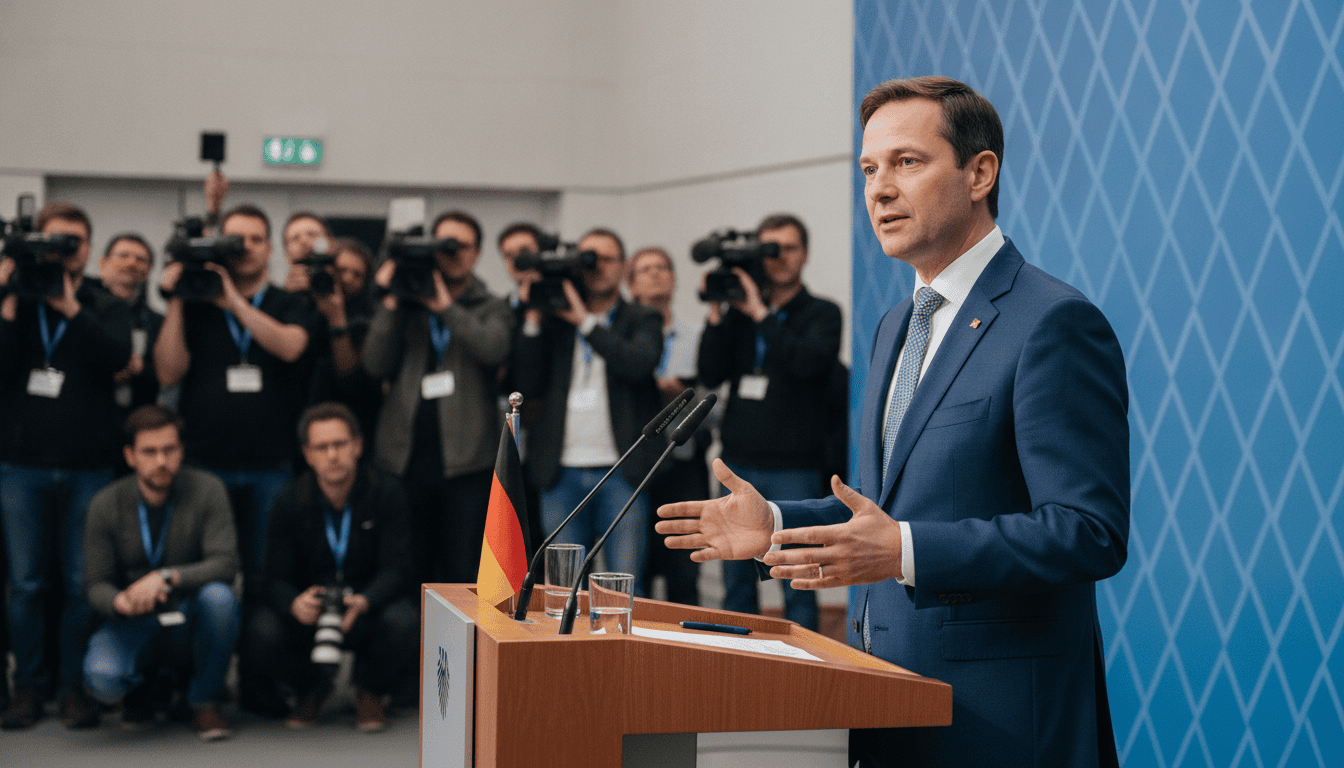
Willingmann Clarifies Stance as Debate Over 3% Electoral Threshold Reignites in Saxony-Anhalt
SPD minister rejects claim he proposed a 3% electoral threshold, saying the idea merits discussion after former judge Hans-Jürgen Papier’s suggestion amid concerns over vote wastage.
The SPD minister for Saxony-Anhalt, Reiner Haseloff’s successor, publicly denied proposing a change to the electoral law after media reports linked him to calls for a 3% electoral threshold. He said his comments were a response to a question about a proposal by former constitutional judge Hans-Jürgen Papier and stressed he had not tied the idea to the upcoming state election. The clarification comes as the wider debate over lowering Germany’s five-percent barrier resurfaced ahead of an intensive regional campaign.
Willingmann rejects proposal attribution
Willingmann told reporters he simply reacted to an inquiry about Papier’s earlier suggestion and did not originate or apply it to the state vote. He emphasized openness to discussing the idea in principle while rejecting portrayals that he had advanced the change for tactical reasons. The minister said the topic should be debated on its merits, not as a maneuver for immediate electoral advantage.
Former constitutional judge’s suggestion rekindles debate
Hans-Jürgen Papier, a respected former constitutional court president, proposed reducing the threshold from five to three percent, prompting renewed public and legal scrutiny. Papier’s standing as a jurist gives weight to the proposal and has pushed politicians to reconsider how electoral rules shape representation. The minister noted the issue is already being discussed at the European level after the constitutional court suspended the barrier for European Parliament elections, making the conversation timely rather than speculative.
Legal legitimacy and democratic trade-offs
Proponents of a lower threshold argue a 3% electoral threshold would reduce the number of votes that effectively disappear when parties fall short of five percent. Critics counter that thresholds protect parliamentary functionality by limiting fragmentation and ensuring stable majorities. Willingmann framed the dilemma as balancing representational fairness with institutional effectiveness and urged a calm, principle-driven debate rather than ad hoc changes tied to election cycles.
Party positions and political consequences
The suggestion has split opinion across the political spectrum. The Left has voiced support for lowering the barrier, while the right‑wing AfD has advocated abolishing thresholds entirely to maximize proportionality. For centrist and mainstream parties, any change would carry strategic consequences, potentially altering coalition math and legislative dynamics. Willingmann insisted that discussions about percentages should be dispassionate and not tailored to benefit a particular party in a specific race.
SPD’s standing in Saxony-Anhalt and campaign focus
Recent polling has placed the SPD in Saxony-Anhalt at around seven percent, a figure the minister described as stable but unsatisfactory. He stressed that the party’s campaign focus will be on concrete state issues—expanding childcare availability, strengthening local health services, and deepening ties between industry and regional research institutions. According to his remarks, the SPD will also press for federal attention to reforms that matter locally, underscoring the party’s intent to shift the conversation from electoral mechanics to policy delivery.
Pension reform highlighted as a local priority
Willingmann singled out pensions as a decisive issue for many voters in Saxony-Anhalt, urging adjustments to proposed packages from the federal pension commission. He called for clearer rules on how many contribution years are required to retire without deductions, framing the question as one of fairness for long-term wage earners in the region. The emphasis on social policy signals an attempt to reconnect with voters who may feel unrepresented by national debates about electoral thresholds.
The minister repeatedly warned against conflating a reasoned discussion about a 3% electoral threshold with last‑minute electoral engineering, saying reform should be considered on democratic and juridical grounds. As the campaign intensifies, the debate over thresholds is likely to continue, but Willingmann’s clarification aims to shift attention back to policy priorities and to a measured public deliberation on how best to balance representation and governability.
