
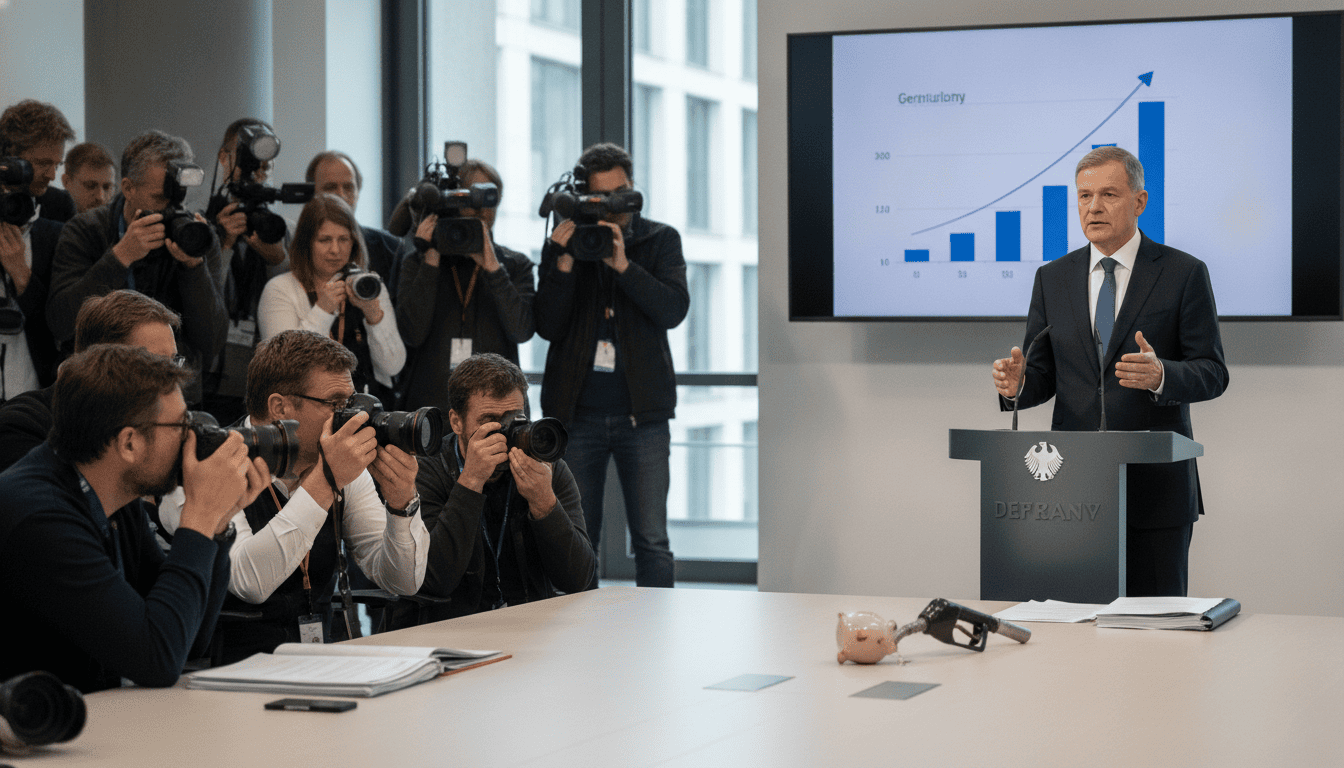
German inflation rises to 2.8% in July 2026 after fuel rebate ends
Germany’s inflation rate climbed to 2.8% year-on-year in July 2026, driven by higher energy costs after the fuel rebate ended and a jump in monthly prices.
Germany’s inflation rate rose to 2.8 percent in July 2026 compared with July 2025, the Federal Statistical Office said in a first estimate, with prices up 0.8 percent from June. The spike followed the expiry of the temporary fuel rebate that had lowered pump prices in May and June and coincided with a renewed rise in global oil prices.
Statistical Office releases first estimate for July
The Federal Statistical Office’s preliminary figures show headline inflation at 2.8 percent year-on-year for July 2026, up from 2.3 percent in June. On a month-on-month basis, consumer prices increased by 0.8 percent, signaling renewed upward pressure after a period of moderation.
Core inflation, which excludes volatile food and energy components, stood at 2.4 percent in July, indicating that price pressures are spreading beyond energy markets. Officials described the release as a first estimate and noted that final figures could be revised when more data are available.
End of fuel rebate lifted short-term price relief
The state fuel rebate, introduced to curb pump prices in May and June, expired ahead of July and removed a temporary cushion on household energy costs. The Bundesbank has estimated that the rebate reduced inflation by roughly a quarter of a percentage point during the months it was in effect.
With the rebate gone, fuel prices returned to market levels, contributing materially to the monthly rise in consumer prices. Analysts say the timing of the measure’s expiry amplified the impact of other upward forces on energy costs in July.
Energy prices surge as oil markets react to Middle East tensions
Energy prices jumped sharply in July, rising 8.3 percent compared with the same month last year, a marked acceleration from June’s 3.4 percent increase. Market participants pointed to renewed conflict in the Middle East and related supply concerns as factors lifting crude oil prices and, in turn, domestic energy bills.
The rebound in energy inflation was the largest driver of the overall uptick in consumer prices, exceeding the trends seen for many other goods and services. Economists caution that sustained volatility in oil markets could keep energy inflation elevated in the near term.
ECB stance and consumer sentiment show tightening risks
The European Central Bank has warned that price pressures may persist, with ECB President Christine Lagarde noting that uncertainty remains high and that the full effects of recent energy shocks have not yet been fully realized. The ECB has kept its deposit rate unchanged at 2.25 percent as it assesses incoming data.
At the same time, consumer sentiment weakened: the GfK and NIM consumer climate measure for August dipped slightly to minus 29.6 points, down 0.3 points. The slide reflects eroding purchasing power as households confront higher fuel and energy bills alongside broader price increases.
Households face higher costs at the pump and the checkout
For consumers, the combination of the rebate’s end and rising world oil prices has translated into visibly higher prices at petrol stations and increased energy bills at home. The growth in energy costs outpaced the general inflation rate by a wide margin in July, amplifying the effect on household budgets.
Rising energy prices also tend to feed through into other parts of the economy over time, pushing up transport and production costs and potentially lifting prices for services and non-energy goods. Economists say the immediate burden falls on lower-income households, who spend a larger share of income on energy.
Outlook and risks for the coming months
Policymakers and market observers will watch forthcoming data closely to determine whether July marks a temporary rebound or the start of a more persistent inflationary phase. The Federal Statistical Office’s first estimate provides a snapshot, but revisions and additional monthly detail will clarify sectoral dynamics.
Further developments in global oil markets, potential policy responses, and the pace of wage growth will shape inflation’s path. For now, the July rise underscores that the disinflationary trend seen earlier in the summer was not yet secure.
The Federal Statistical Office’s initial figures for July 2026 highlight renewed inflationary momentum, driven largely by energy, and leave policymakers balancing the risk of persistent price pressure against the goal of returning inflation toward the ECB’s two percent objective.
