
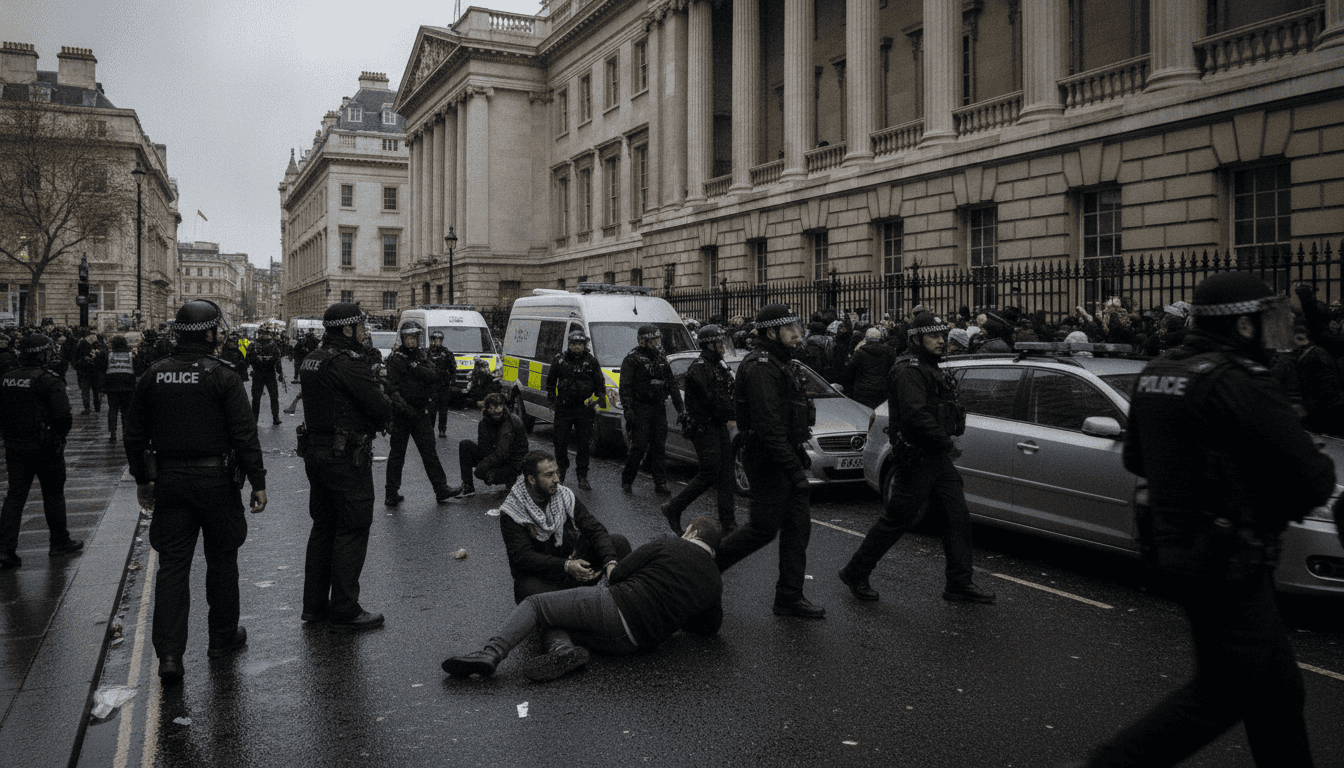
London arrests as crowds rally in support of Palestine Action outside Westminster court
Dozens arrested during protest outside Westminster Magistrates’ Court as supporters rally against the proscription of Palestine Action.
British police detained dozens of people on Thursday as crowds gathered outside Westminster Magistrates’ Court to show support for Palestine Action, a group proscribed under UK terrorism laws. The demonstration coincided with the first plea hearings for some of the thousands charged in relation to public expressions of support for the group.
Dozens detained outside Westminster Magistrates’ Court
Metropolitan Police officers said arrests began as demonstrators assembled to picket the hearings at the central London court. The force described the expression of support for Palestine Action as an offence under the Terrorism Act and said officers were enforcing that legislation.
Photographs and social posts showed groups of people, including several waving Palestinian flags, seated and standing outside the courthouse. Organisers’ estimates of attendance varied and police did not provide a confirmed figure for the size of the gathering.
Organisers frame action as defence of juries and protest rights
The demonstration was organised by Defend Our Juries, a campaign that says its aim is to protect the integrity of the legal process and oppose the criminalisation of political speech. In social media posts the group urged supporters to assemble and publicly contest the classification of Palestine Action as a terrorist entity.
Defend Our Juries and other participants argued the proscription represents an unprecedented restriction on protest rights, pointing to incidents they say highlight the penalties that can follow for vocal support. Campaigners noted that some attendees included elderly people and those with mobility needs, underscoring the breadth of opposition to the ban.
Police enforcement and the legal basis for arrests
Under the current legislation, expressing support for an organisation on the UK’s proscribed list can be treated as a criminal offence, and police action at public gatherings has increased since the designation. The proscription of Palestine Action was imposed by the Home Office in 2025, placing the group on the same statutory footing as other outlawed organisations.
Metropolitan Police spokespeople said officers were acting to uphold the law and maintain public order around the court. Legal experts and civil liberties groups have criticised the breadth of the offence and warned of chilling effects on legitimate protest and political debate.
Prime Minister Andy Burnham faces political scrutiny
Thursday’s rally was the first public demonstration in support of Palestine Action since Andy Burnham became prime minister earlier in July 2026. The protest underscored lingering tensions over the government’s stance on the Israel-Hamas conflict and the handling of related domestic dissent.
Burnham has sought to mark a shift in Labour’s foreign policy since his campaign, acknowledging earlier missteps on Gaza and offering an apology for past positions. Critics, however, say apologies are hollow without policy changes and point to other recent government decisions that they say complicate the picture.
Green Party leader demands reversal of proscription
Zack Polanski, leader of the UK Green Party, publicly called on the prime minister to rescind the proscription, arguing the move should be within executive power and that removing it would prevent further confrontations. Polanski described the scenes outside the court as “dystopian” and said they were incompatible with democratic principles.
Polanski, who is the Green Party’s first Jewish leader, has also said he faces targeted criticism from sections of the media over his positions on Israel and Palestine. His demand for a policy reversal aligns with broader calls from rights groups and legal advocates for a reassessment of counterterrorism measures applied to political activism.
Wider context: Gaza conflict, settler violence and legal fallout
Protesters and rights organisations tied the rally to almost three years of violence in Gaza and an uptick in settler attacks in the occupied West Bank, saying UK policy responses have failed to address reported abuses. Human rights groups have argued that rising settler violence is linked to official policies and have called for greater accountability.
The hearings in Westminster form the first stage of proceedings against dozens and are being watched as the opening phase of thousands of prosecutions related to public support for Palestine Action. Observers say the court outcomes will have implications for how vigorously the proscription is enforced and how far the government will go in applying terrorism laws to political expression.
The court process is expected to continue in the coming weeks as the judiciary begins to consider individual pleas and the wider legal questions raised by the prosecutions. As hearings proceed, the standoff between enforcement authorities, campaigners and political figures is likely to shape the public debate over protest rights and national security in Britain.
