
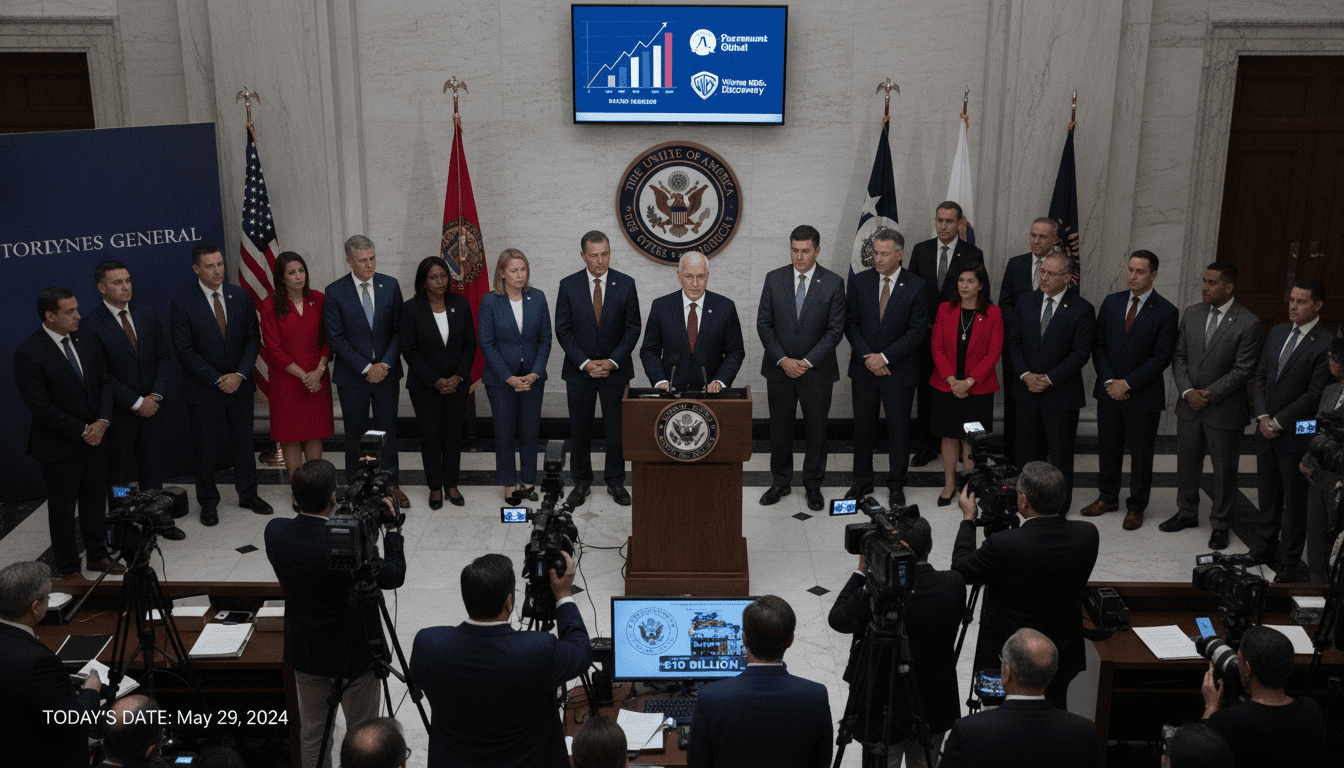
Paramount takeover of Warner Bros. Discovery faces antitrust lawsuit from a dozen states
A coalition of 12 U.S. states has sued to block the Paramount takeover of Warner Bros. Discovery, arguing the $110 billion deal would harm competition across film distribution and television markets.
States file antitrust suit in California
Twelve states led by California filed a legal challenge this week seeking to stop Paramount’s takeover of Warner Bros. Discovery. California Attorney General Rob Bonta, one of the plaintiffs, said the lawsuit aims to preserve “free and fair markets” and prevent the deal from distorting competition for cinemas, TV providers and distributors.
The complaint asserts the transaction would consolidate too much market power in theatrical and cable distribution channels, diminishing choices for program suppliers and potentially raising costs for downstream customers. The states asked a court to block the merger until a full review of competitive effects can be completed.
Justice Department approval draws scrutiny
The U.S. Department of Justice previously cleared the merger without conditions, concluding the deal would not harm competition or consumers across streaming, television and film production. That approval, however, has become a focal point for the states’ suit and for industry critics who say the decision was premature.
Reporting in national media has raised questions about how the approval was reached, noting the clearance came before some internal agency lawyers had issued formal recommendations. The timing and internal handling of the review have added political and legal pressure to a process already under intense public scrutiny.
Deal timeline, delay penalties and financial exposure
Legal experts say a court fight could stretch for months, potentially imposing significant costs and operational uncertainty on both companies. Paramount faces contractual obligations that could translate into substantial payouts if the merger is delayed past agreed deadlines.
Under terms disclosed by the companies, Paramount has agreed to pay Warner Bros. Discovery shareholders a quarterly compensation amount if the transaction is not completed by October, a provision that could cost the acquiring company hundreds of millions of dollars per quarter. The states’ suit requests Paramount to pause closing the transaction until the litigation is resolved, a move that would limit the parties’ ability to finalize the corporate combination while the case proceeds.
Ownership links and concerns about editorial independence
The ownership structure behind Paramount has intensified concerns among lawmakers and media analysts. The company is controlled by the family of billionaire Larry Ellison, a major donor to former President Donald Trump, prompting public debate about the potential influence of political affiliations on media outlets.
Critics warn that the takeover could affect editorial independence at Warner-owned news properties, notably CNN, which has been perceived as critical of the Trump administration by some observers. Regulators, journalists’ groups and industry figures say any change in corporate control raises questions about newsroom autonomy and public trust in major news brands.
Industry backlash and creative community objections
The merger has also drawn resistance from creative and industry communities worried about concentration in Hollywood. A high-profile open letter signed by actors and film professionals warned that the deal might stifle competition, reduce creative diversity and worsen labor conditions across film and television production.
Those concerns echo broader anxieties about consolidation in entertainment, where a handful of conglomerates already control significant libraries, franchises and distribution infrastructures. Signatories to industry protests argued that fewer owners translates into less bargaining power for creators and fewer platforms for diverse storytelling.
History of bidding and the assets at stake
The Paramount takeover emerged from a competitive bidding process that attracted interest from major players in the entertainment sector. Netflix had been an early contender with an offer focused on streaming and studio operations, while Paramount ultimately presented a bid for the entire Warner Bros. Discovery group.
Warner’s portfolio includes globally recognized franchises such as the DC superhero universe, the Harry Potter films, and the premium streaming backbone provided by HBO. Those assets were central to bidders’ evaluations and are cited by both supporters and opponents as the strategic rationale for consolidation.
Paramount and Warner executives have framed the acquisition as a way to scale content production and distribution in a rapidly evolving media landscape, arguing that larger-scale operations could better compete with streaming giants and new technology entrants. Opponents counter that scale alone does not justify the potential harms to competition and public-interest journalism.
The coming weeks will determine whether courts grant the states’ request to enjoin the transaction and how lingering regulatory and reputational issues will shape both companies’ strategies. For now, the Paramount takeover remains legally contested and politically charged, with significant financial stakes for shareholders and far-reaching implications for the media ecosystem.
