
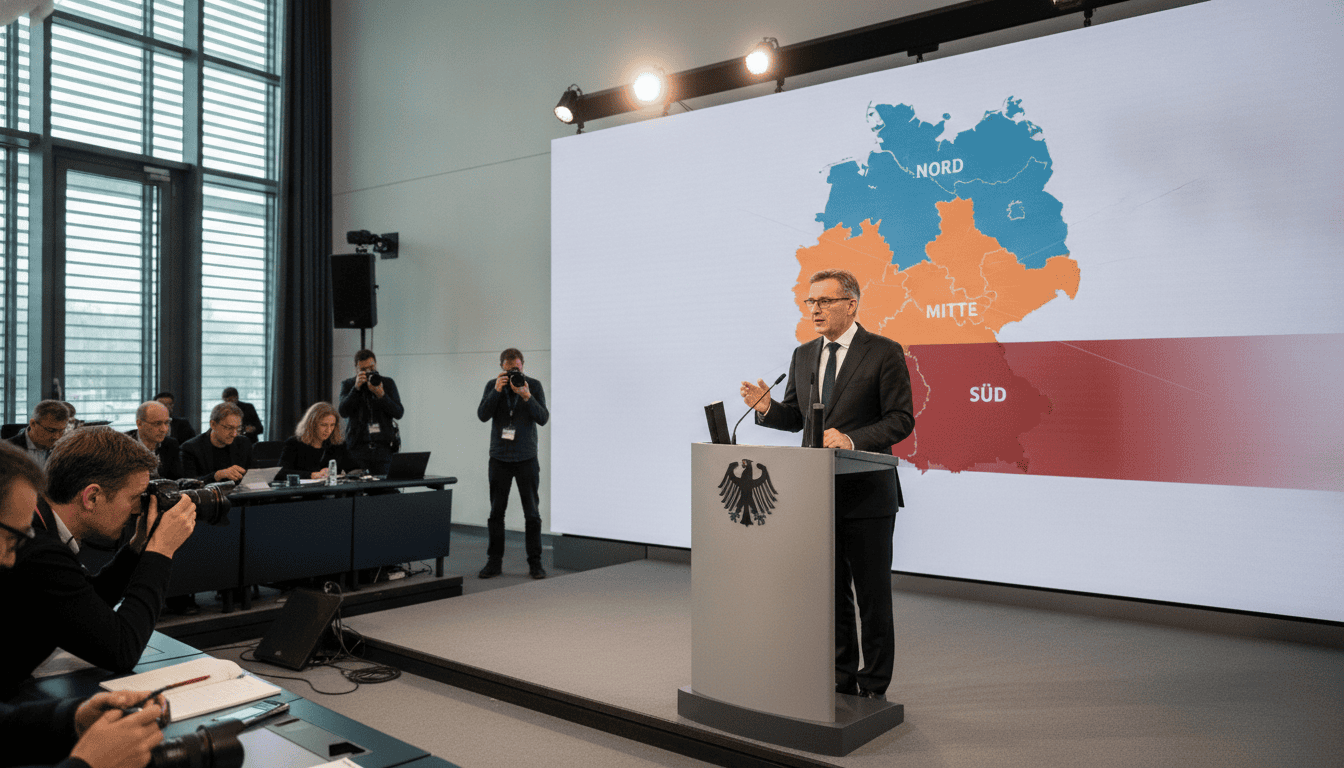
Woidke urges German electricity price zones to deliver cheaper power to industry near renewables
Brandenburg’s Premier Dietmar Woidke has proposed German electricity price zones to let companies close to wind and solar pay lower rates, arguing regional pricing would better reflect local generation costs and attract industry.
Brandenburg leader presses for regional pricing change
Dietmar Woidke, the Minister‑President of Brandenburg, said the country should consider German electricity price zones so that firms located near wind and solar parks receive lower tariffs. He argued regional price differentiation would allow local generation advantages to be captured where the power is produced, rather than being levelled out by a single national price. Woidke framed the proposal as a competitiveness measure aimed at keeping and luring energy‑intensive industry.
Brandenburg generation costs far below retail prices
Woidke highlighted a wide gap between wholesale production costs in renewables‑heavy regions and consumer prices paid today. He noted that generation from wind and solar in Brandenburg can cost as little as five to seven cents per kilowatt‑hour, while retail prices to businesses and households are roughly 25 cents per kilowatt‑hour. That discrepancy, he said, effectively wastes a local competitive edge and raises questions about where renewable electricity should be consumed.
Federal government warns of uncertainty and regional disparities
The federal economics ministry has defended maintaining a unified electricity market and has warned that splitting the grid into price zones would increase investment uncertainty in the energy sector. Officials argue a single price area supports predictable planning for transmission and storage projects and avoids sudden swings in consumer costs between regions. Critics of that view counter that significant regional differences in generation already exist and that current arrangements shift costs toward producers and consumers in certain parts of the country.
Industry relocation and competitiveness at stake
Proponents of regional pricing say lower local power costs could influence firms’ location decisions and reduce the risk of industry leaving Germany. Woidke emphasized that providing cheaper electricity where it is generated can make northern and eastern regions more attractive for energy‑intensive manufacturing. Supporters argue this approach would be preferable to building long high‑capacity transmission corridors that export cheap renewable power to other regions at the expense of local economic development.
Debate over cross‑border arrangements with Denmark
Some regional leaders have suggested exploring cross‑border price arrangements as an alternative to a fully zoned domestic market. The idea of closer electricity market alignment with neighboring Denmark has resurfaced as a way to reflect grid realities in the north and to coordinate generation and consumption across borders. Advocates say such mechanisms could lock in economic benefits for coastal areas while strengthening supply links with continental markets.
Political timeline and EU procedures ahead
The federal government submitted its position on market design to the European Commission in December, signalling that the debate will have to be reconciled at both national and EU levels. Any move toward formal German electricity price zones would require detailed regulatory design and consultations with network operators, regulators and industry stakeholders. Lawmakers and state governments will face trade‑offs between regional economic development, consumer protection and the stability of investment signals for the green energy transition.
Balancing regional advantages with an integrated grid will be central to the coming negotiations, and the outcome could reshape where industry locates and how renewable power is used across Germany.
