
EU-China trade relations take cautious turn after Wang Wentao’s Brussels visit
Wang Wentao met EU officials in Brussels to seek balanced EU-China trade relations, a stronger WTO and a joint observatory as German industry sheds jobs.
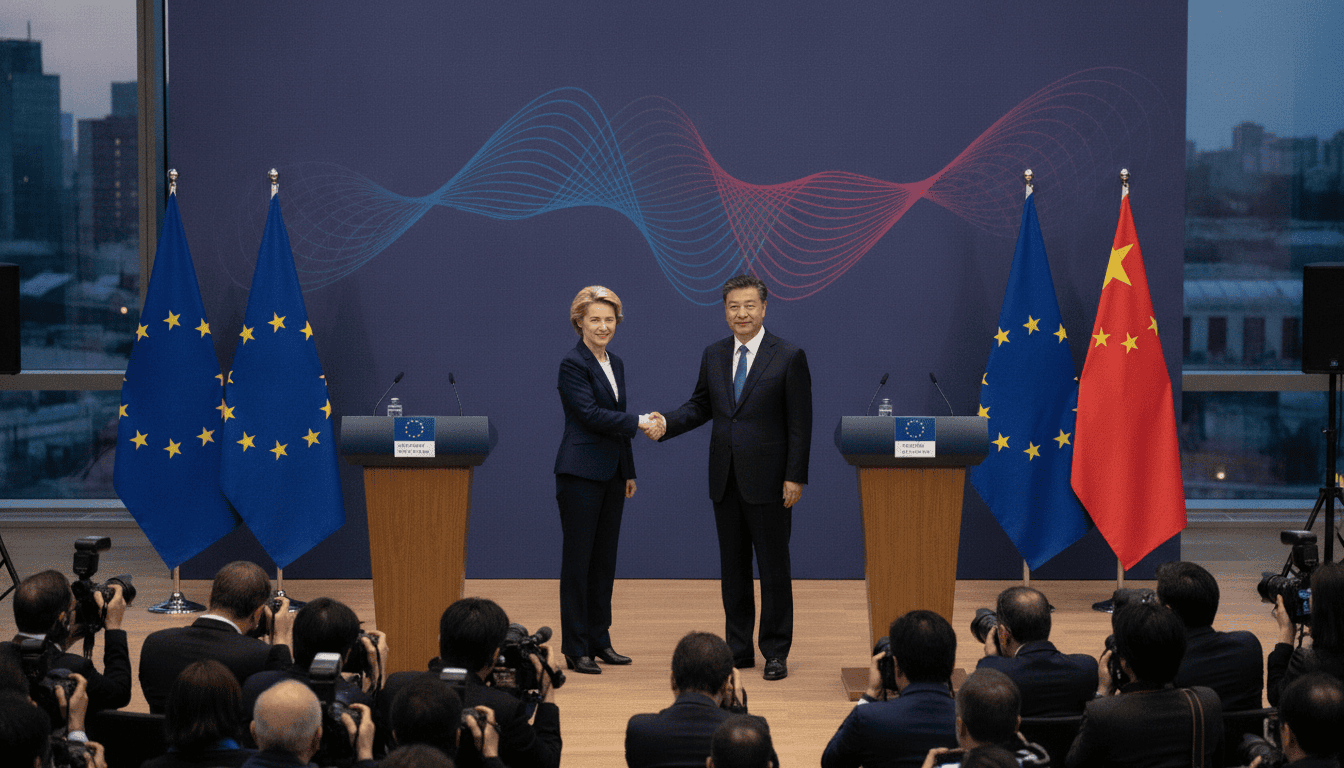
China’s commerce minister Wang Wentao traveled to Brussels and stood beside European Commission Vice-President Maroš Šefčovič to deliver a carefully negotiated message about EU-China trade relations. The two sides issued a joint statement calling for more balanced economic ties, a stronger World Trade Organization and the creation of a mechanism to monitor trade flows. Observers say the visit signals a pragmatic, if cautious, attempt to stabilise trade ties amid mounting economic pressures in Europe.
Wang Wentao Meets EU Officials in Brussels
Wang’s visit brought high-level contact between Beijing and Brussels at a moment when both sides are navigating competing priorities and public scrutiny. He held talks with senior European Commission officials focused on trade policy, market access and rules governing state support. The public posture during the visit emphasized cooperation and the need for predictable trade rules rather than immediate concessions.
Both delegations released a joint text describing shared aims, although officials left room for continued negotiation on specific measures. The tone in Brussels was measured: EU representatives framed the discussions as the start of a process to reduce frictions, while Chinese spokespeople described the meeting as constructive and forward-looking.
Focus on Balanced Trade and WTO Reform
A central element of the joint message was a pledge to pursue more balanced trade relations between the EU and China. Negotiators on both sides said they want to address large trade imbalances and competitive distortions that have strained industrial sectors across Europe. The communiqué also called for renewed support for the World Trade Organization as the primary forum for resolving disputes and managing global trade governance.
Reinforcing the WTO was presented as mutually beneficial: EU officials argued a more effective WTO would limit unilateral measures, while China framed multilateral rules as a way to secure stable market access. Both sides acknowledged that reforming dispute settlement mechanisms and improving transparency would be lengthy and politically sensitive tasks that require follow-through.
Proposal for a Joint Trade Observatory
One of the more concrete proposals agreed in principle during the visit was the establishment of a joint observatory to monitor trade flows. The proposed body would collect and share data on imports, exports, and investment trends to improve transparency and early warning of disruptive practices. Proponents say the observatory could help policymakers identify sectoral strains and reduce misunderstandings that escalate into trade restrictions.
Officials described the observatory as a confidence-building measure rather than an enforcement arm, with the aim of producing regular reports and technical analysis. Implementation details — including membership, data standards and how the observatory would interact with existing EU and Chinese institutions — remain to be negotiated.
Germany’s Industrial Strain and Job Losses
European officials framed the talks against a backdrop of acute industrial pressure in some EU member states, notably Germany. Domestic industry sources cited a persistent loss of competitiveness, with reports indicating roughly 10,000 job cuts per month in Germany linked in part to shifting global supply patterns and lower-cost production elsewhere. That level of job attrition has heightened political urgency for Brussels to seek measures that protect strategic industries and preserve manufacturing capacity.
EU policymakers are balancing calls for defensive measures with the risk that protectionism could further fragment supply chains and raise costs for consumers. German business groups urged more rapid implementation of measures to level the playing field, including clearer rules on subsidies, state aid and market access. At the same time, some economists warned that unilateral restrictions could slow investment and delay the structural changes European industry needs to regain competitiveness.
Next Steps and Diplomatic Signals
Both Brussels and Beijing emphasized that the agreements reached in principle will require detailed follow-up and verification. Negotiators have outlined a timetable for technical working groups to flesh out the observatory’s mandate, data-sharing protocols and possible pilot projects. The European Commission indicated it would consult member states and industry stakeholders before firming up proposals, while Chinese officials signaled readiness to continue talks on regulatory cooperation.
Diplomatically, the visit served several purposes: it calmed immediate tensions, created a platform for ongoing dialogue and signalled to global trade partners that both blocs prefer engagement over abrupt escalation. Analysts caution that rhetoric must be matched by enforceable commitments if the measures are to restore confidence among businesses suffering from disrupted markets.
The Brussels visit thus represents a cautious reset rather than a breakthrough, with officials from both sides acknowledging the hard work ahead to transform intentions into durable policy instruments.
