
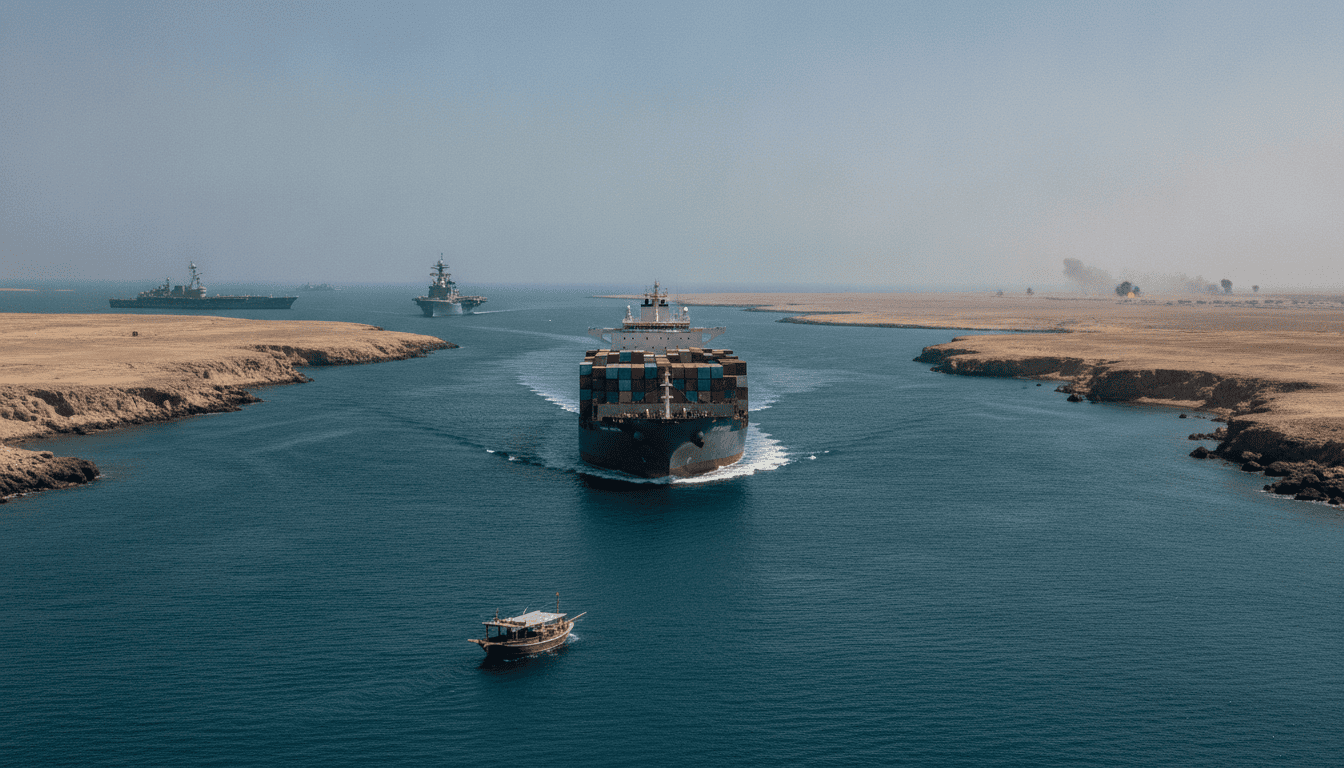
Strait of Hormuz Declared Open by U.S. as New Strikes and Iranian Attacks Escalate
U.S. President Donald Trump said the Strait of Hormuz remains open to commercial traffic amid fresh exchanges of strikes between Washington and Tehran, a claim backed by U.S. Central Command but contradicted by Iranian state media reporting new attacks in the waterway. (apnews.com)
U.S. President’s Statement and International Transit Claims
President Trump told NBC’s Meet the Press that the Strait of Hormuz is open to trade and that U.S. forces continue to facilitate safe passage for commercial shipping. (apnews.com)
U.S. Central Command reiterated on its social media channel that the strait is an international waterway and that Tehran does not have the unilateral right to control transit through it. The statement framed U.S. strikes as measures to protect merchant crews and preserve freedom of navigation. (rferl.org)
CENTCOM’s Justification and Targeting Overview
CENTCOM described its operations as intended to impose costs on forces that have targeted commercial vessels, saying U.S. forces had conducted several rounds of precision strikes in recent days. The command listed strikes on coastal radar, missile and drone sites, and naval capabilities among the objectives. (apnews.com)
U.S. officials said the strikes were guided by intelligence identifying assets used in attacks on ships transiting near the strait, and they emphasized efforts to avoid civilian casualties. CENTCOM also pointed to an ongoing provision of military escorts and guidance for merchant vessels using an alternate southern transit route. (apnews.com)
Scale of U.S. Strikes and Military Claims
U.S. forces announced that, over a series of operations this week, roughly 140 Iranian military targets were struck in a concentrated campaign along Iran’s southern coast. U.S. officials said the targeting was designed to degrade Iran’s capacity to threaten shipping lanes. (kpbs.org)
U.S. military statements noted that the strikes employed a mix of naval, air and unmanned assets, and that operations across several nights aimed to diminish missile and drone launch sites as well as storage and logistics facilities. The Pentagon described the actions as responsive to recent incidents affecting commercial crews. (kpbs.org)
Iranian Media Reports on Qeshm and Bandar Abbas
Iranian state media, citing provincial officials, reported that multiple rockets struck the southern island of Qeshm and that explosions were heard near the port city of Bandar Abbas. Tehran’s state agencies characterized the strikes as directed at alleged military targets and reported no immediate civilian fatalities. (apnews.com)
Independent confirmation of the full extent of damage and the number of casualties remained limited due to restricted reporting access in affected zones. International monitoring groups and regional governments continued to assess the impact on shipping and local infrastructure. (apnews.com)
IRGC Declaration and Incidents at Sea
The Islamic Revolutionary Guard Corps publicly declared the Strait of Hormuz closed “until further notice” after reporting that it had fired warning shots at a vessel it said had taken an unauthorized route through the waterway. Tehran framed such actions as defensive measures to enforce its demands. (argusmedia.com)
Iranian outlets also reported attacks against small boats associated with the Revolutionary Guard, while U.S. and allied sources said commercial crews had been endangered by recent missile and drone strikes on merchant vessels. The contrasting claims left shipping companies and insurers assessing heightened risk for transits. (argusmedia.com)
Regional Repercussions and State Responses
Officials in Jordan, Kuwait, Bahrain and the United Arab Emirates reported incoming fire and intercepts of missiles or drones in recent exchanges, and some Gulf capitals confirmed damage from strikes, though initial casualty reports were limited. Regional governments called for de-escalation even as they bolstered defenses and urged ships to avoid exposed routes. (apnews.com)
Major maritime organizations warned shippers to exercise caution and to follow guidance from naval authorities and insurance providers. Energy markets reacted to the uncertainty, with traders monitoring vessel movements and insurance surcharges as indicators of supply risk. (apnews.com)
Negotiations, the June Framework and How the Crisis Reignited
A framework agreement signed in June had briefly reduced the intensity of confrontations and opened the possibility of talks toward a more durable ceasefire, but negotiators have not finalized a comprehensive settlement. U.S. and Iranian officials traded accusations that the other side violated interim understandings during recent incidents. (apnews.com)
President Trump said in interviews that Tehran had been close to accepting terms before recent attacks reignited military responses, and U.S. officials have said progress in talks depends on demonstrable restraint by Tehran. Both sides’ public statements signaled continuing gaps over verification, sanctions relief and guarantees for maritime safety. (apnews.com)
The immediate situation remains fluid: U.S. commanders assert commercial corridors remain open and that strikes aim to deter further attacks, while Iranian authorities maintain they will defend perceived national interests and, for now, may restrict transit. International maritime operators and regional governments are monitoring movements closely as diplomats press for urgent talks to prevent further escalation.
