
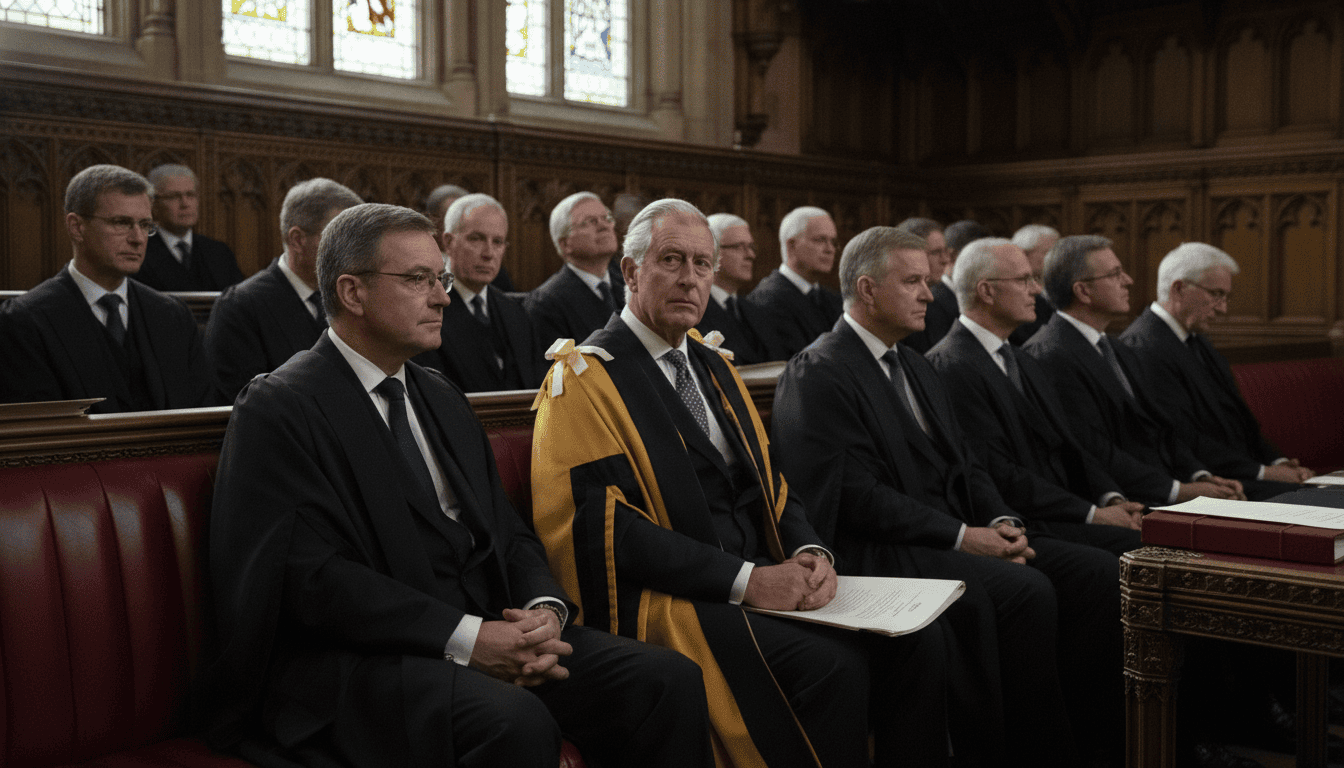
Duke of Wellington adopts new title in House of Lords amid reform and pledges further changes
Duke of Wellington adopts new title as Baron Wellington of Stratfield Saye amid House of Lords reform; he urges retirement age and stronger standards.
The Duke of Wellington has formally assumed the life peerage title Baron Wellington of Stratfield Saye as part of sweeping House of Lords reform that removed most hereditary peers, a change he accepts while warning that further restructuring is still needed. The Duke of Wellington, a scion of the historic Wellesley line who played a ceremonial role at King Charles III’s coronation, retains his family’s legacy even as he adapts to a chamber now reshaped by Labour’s agenda. His move underscores tensions between centuries-old tradition and a modernizing legislature that is redefining who sits on the red benches.
Wellington’s new title and place in the Lords
The ninth Duke’s new designation as Baron Wellington of Stratfield Saye formalizes his presence in the upper chamber as a life peer entitled to sit in the reformed House of Lords. The choice of “Stratfield Saye” echoes the historic family estate west of London and follows the modern convention by which newly appointed life peers adopt a territorial suffix. Although he has accepted the life peerage, in parliamentary practice colleagues continue to address him by the older hereditary title, reflecting the lingering cultural weight of aristocratic ranks within the institution.
Apsley House and the family collection
Apsley House, the Wellesley family’s London seat now open to the public as a museum, remains central to the Duke’s identity and public outreach, housing a trove of paintings, gifts and porcelain assembled by the first Duke. Many objects arrived after the Napoleonic Wars, including artworks once reclaimed from Napoleon and ceremonial porcelain sent by the Prussian court, and they frame a narrative of European diplomacy and military triumph. The present Duke has invested in careful restoration of the grand saloon and continues to host commemorative dinners that draw descendants of figures connected to the Battle of Waterloo, maintaining the house as a living monument to a complex transnational history.
Political journey from Tory heir to Crossbencher
Historically aligned with the Conservative party, the Duke departed the Tory grouping in 2019 and opted to sit on the Crossbenches, citing a constitutional breach he could not condone during the prorogation episode of that year. His political career also includes service in the European Parliament in the late 1970s and a professional life in business before returning to parliamentary debates in the Lords. That trajectory reflects a broader shift among some hereditary peers toward independent membership and a preference for the Crossbenches’ absence of party discipline, which the Duke says forces more deliberate and individual engagement on policy questions.
Focus on Europe and post‑Brexit legislation
Europe and trade remain central to the Duke’s legislative attention, with active participation on the House of Lords European Affairs Committee as it scrutinizes a proposed trade agreement on animal and plant products with the EU. He has criticized the UK’s decision to leave the EU as a mistake and describes his current work as damage limitation, aiming to smooth trade and regulatory frictions that affect farmers, food exporters and scientific collaboration. The Duke has raised specific technical concerns in committee, including the need for tailored provisions on genome editing, and he has noted the comparative lack of a dedicated European affairs forum in the House of Commons since Brexit.
Arguments for further reform of the upper chamber
While acknowledging the government’s mandate to reduce the presence of hereditary peers, the Duke has urged that abolition be accompanied by complementary measures to strengthen accountability and recruitment in the Lords. He has called for a formal retirement age—he suggests 80 years as a reasonable threshold—and for a codified set of sanctions for breaches of conduct, mirroring disciplinary mechanisms in the Commons. His interventions during debates on the reform emphasized that removing one form of privilege does not complete the task of modernizing the chamber; procedural safeguards, transparent appointment processes and enforceable ethics rules must follow.
Tradition, duty and the “good chap” ethos
Beyond policy, the Duke presents himself as a bridge between inherited duty and civic responsibility, embodying a family history that includes foreign titles and long-standing European ties as well as a personal commitment to public service. He has described a political temperament aligned with the “good chap” ethos—an informal standard of self‑restraint and decorum that some historians and peers argue underpins Britain’s uncodified constitutional practice. Even as he adapts to a lifer peerage and a reconstituted House, he invokes precedent, arguing that the upper chamber should not indefinitely frustrate legislation announced in the King’s Speech while also insisting that those who serve in the Lords meet clear standards of behaviour.
The Duke of Wellington’s transition from hereditary lord to life peer highlights the paradox at the heart of the current overhaul: a desire to shed vestiges of privilege while preserving institutional memory and expertise, and an urgent need to replace informal codes with enforceable rules that match the modern expectations of accountability and transparency. His position in the Lords, and the practical suggestions he has offered, make him a vocal participant in shaping how Britain balances history and reform as the upper chamber rebuilds its role for the twenty‑first century.
