
Iran Drone Attacks Hit Sites in Kuwait, Qatar and Bahrain, Military Says
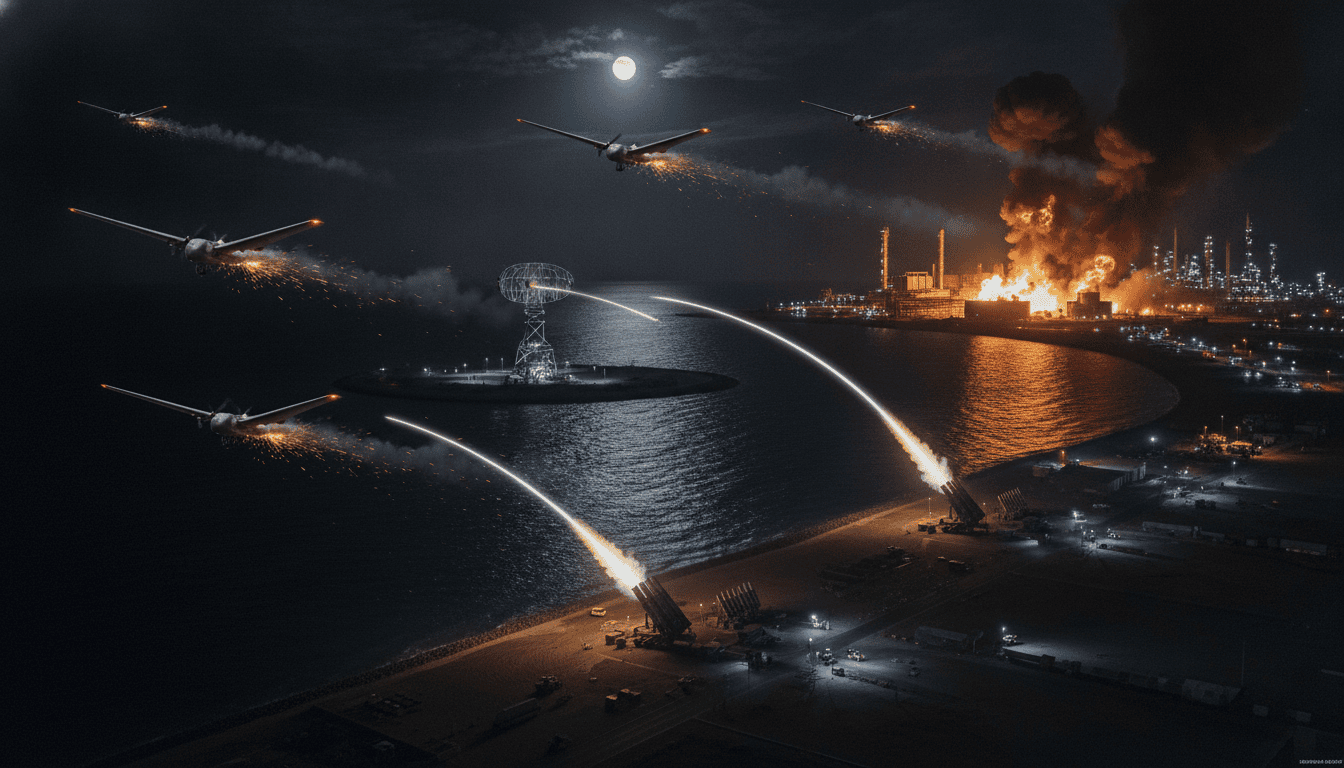
Iran says it launched drone attacks on sites in Kuwait, Qatar and Bahrain, targeting a Patriot interceptor, an early-warning radar and fuel tanks. Tehran said the strikes were carried out with a large number of kamikaze drones.
Iran’s military announced it had launched coordinated one-way attack drones against facilities in three Gulf states, saying the strikes hit a Patriot missile interceptor system in Kuwait, an early-warning installation in Qatar and fuel tanks in Bahrain. The statement described the unmanned systems as “kamikaze” or loitering munitions and said a variety of drone types were used. There was no immediate independent verification of damage or casualties, and regional authorities had not released comprehensive assessments at the time of the announcement.
Iran Says It Launched Coordinated Drone Strikes
Iran’s army said the operation employed a “large number of various types of army kamikaze drones” and named the three Gulf states as locations of the strikes. The military statement framed the action as a planned attack against strategic military and energy-related targets. Officials in Tehran presented the strikes as precise, singling out systems rather than broad population centers.
Kuwait: Patriot Interceptor Reported as Target
In its statement, Iran identified a Patriot missile interceptor system in Kuwait as one of the principal targets of the operation. Patriot air-defense batteries are widely used across the region and are often associated with U.S. and allied force protection. If true, a strike on such a system would signal an escalation in tactics aimed at degrading integrated air defenses in the Gulf.
Qatar and Bahrain: Radar and Fuel Installations Cited
Tehran said an early-warning system in Qatar and fuel tanks in Bahrain were also struck during the operation. Early-warning radars are central to national air-space awareness, while fuel storage is a sensitive part of energy infrastructure. Targeting such installations would reflect a focus on both military command-and-control and economic assets.
Drones and Tactics: ‘Kamikaze’ Munitions Employed
The Iranian military’s description emphasized one-way, or loitering, munitions—drones designed to strike on impact rather than return to base. These systems have become a prominent element of Iran’s arsenal and of several state and non-state actors in the region in recent years. Their use complicates defensive planning because they can be small, low-flying and relatively cheap to produce compared with cruise missiles or manned aircraft.
Security Ramifications for the Gulf and Beyond
The reported strikes are likely to heighten tensions across the Gulf, where international naval and air forces operate alongside regional militaries. Damage to air-defense assets or energy infrastructure could prompt a reassessment of deployment patterns by external partners and regional governments. Analysts warn that any increase in attacks against key systems raises the risk of miscalculation and wider confrontation.
Historical Context and Potential Escalation
Iran has previously demonstrated its willingness to use drones and ballistic missiles in regional confrontations, often in response to perceived threats or as deterrent signaling. The announcement of coordinated strikes on multiple states marks a notable assertion of capability and intent. Observers say such actions will be watched closely for follow-on steps by the targeted states, their security partners, and international organizations.
The immediate consequences remain unclear: independent verification of damage, casualty figures and the broader operational impact have not been established. Governments in the region and external military partners are expected to assess the reported strikes and consider diplomatic and defensive measures in response.
