
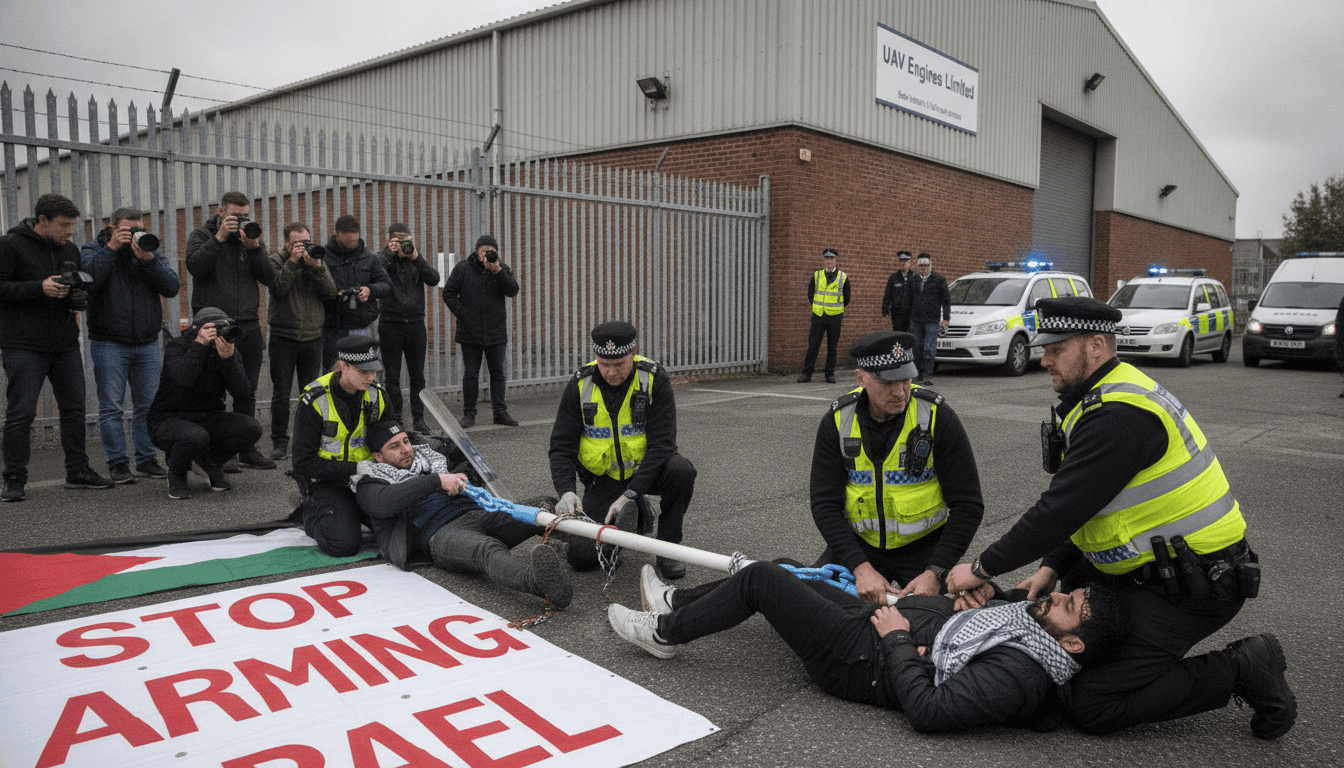
UK arrests activists who blockaded UAV Engines facility linked to Elbit Systems
Police arrested pro-Palestine activists who blockaded a UK facility run by UAV Engines Ltd, a subsidiary of Elbit Systems, amid Gaza protests.
Police detained a group of pro-Palestine activists on 9 July after they blockaded a UK facility operated by UAV Engines Ltd, a subsidiary of Israeli arms manufacturer Elbit Systems. The demonstrators said the action targeted the company because Elbit supplies drone engines and other systems they allege have been used in Israel’s military operations in Gaza. Local authorities moved in after the blockade disrupted access to the site, and arrests were confirmed by officers at the scene.
Police action and arrests at the facility
Officers arrived at the UAV Engines Ltd location after activists began physically blocking entry points to the compound, according to accounts from witnesses present during the protest. Police removed demonstrators and made several arrests on public order and obstruction-related grounds. Authorities said their immediate priority was restoring safe access to the site and ensuring the safety of staff and protesters.
Media crews and local residents reported a heavy police presence while officers processed those detained, and traffic in the surrounding area was temporarily affected. No detailed charge sheets were disclosed at the time, and police indicated investigations would determine any subsequent prosecutions.
Activists’ stated reasons and demands
Participants described the blockade as part of a wider campaign to pressure companies linked to Israeli defence suppliers over the Gaza war. Activists said they believe Elbit Systems’ drones and engines are being used in operations that have caused civilian harm, and they urged an end to commercial ties they view as facilitating the conflict. Organisers framed the action as non-violent direct action aimed at disrupting production and drawing public attention.
Campaign groups highlighted UAV Engines Ltd’s ownership structure as the rationale for selecting the site, pointing to the company’s role as a subsidiary of Elbit Systems and its position in the drone supply chain. Protesters called for transparency from local authorities and companies about contracts and exports tied to the wider conflict.
Company profile and industry context
UAV Engines Ltd is a subsidiary of Elbit Systems, a major Israeli defence contractor known for producing drone engines and other aerospace components. The company is regarded within the defence sector as one of the larger manufacturers of unmanned aerial vehicle propulsion systems, supplying engines and parts to a range of customers. Its operations in the UK have drawn scrutiny from campaigners who monitor arms industry links to international conflicts.
Industry analysts note that facilities involved in defence manufacturing often become focal points for protests because of their strategic role in supply chains. The presence of a subsidiary in the UK underscores how globalised defence manufacturing can attract local political actions.
Local officials and company response
Local police confirmed arrests but provided only limited detail about the number of people detained and the specific offences being considered while investigations continue. Police statements emphasised that officers sought to balance the right to protest with the need to keep sites operational and the public safe. No injuries were reported in the immediate aftermath of the operation.
UAV Engines Ltd and Elbit Systems did not issue an immediate public statement on the arrests in the material available during the protest. Companies in similar incidents commonly point to legal channels for grievances and reiterate compliance with export controls and regulations, while stressing the importance of protecting staff and facilities.
Legal and safety implications of the blockade
Legal experts say blockades that restrict access to private industrial sites can attract criminal charges including trespass, obstruction or public order offences, depending on the tactics used and the level of disruption caused. Police enforcement can lead to prosecutions, but outcomes vary with evidence, intent and whether occupiers accept liability. Civil litigation is also a potential avenue for companies seeking to recover costs related to disruption.
Safety concerns are frequently cited by authorities when protesters gather at industrial sites, particularly those with heavy machinery or hazardous materials. Both police and organisers typically point to the need for clear communication to prevent risks to demonstrators, workers and emergency services.
Protest movement and potential next steps
Campaign groups said the action at the UAV Engines facility was one in a series of targeted demonstrations planned around defence industry sites and financial institutions tied to arms suppliers. Organisers indicated that further protests could occur unless they observed policy changes or greater scrutiny of contracts connected to the Gaza conflict. The movement has sought to combine public demonstrations with calls for parliamentary inquiries and corporate transparency.
Observers said the arrests could galvanise supporters and attract wider attention, while also prompting debate among local stakeholders about the merits and limits of direct action. Authorities have signalled they will monitor forthcoming events closely and apply proportionate responses to maintain order.
The arrests at the UAV Engines Ltd site underscore a recurring flashpoint where international conflict, domestic protest and defence industry operations intersect, and they leave unanswered questions about how companies, authorities and campaigners will navigate disputes tied to arms supply chains.
