
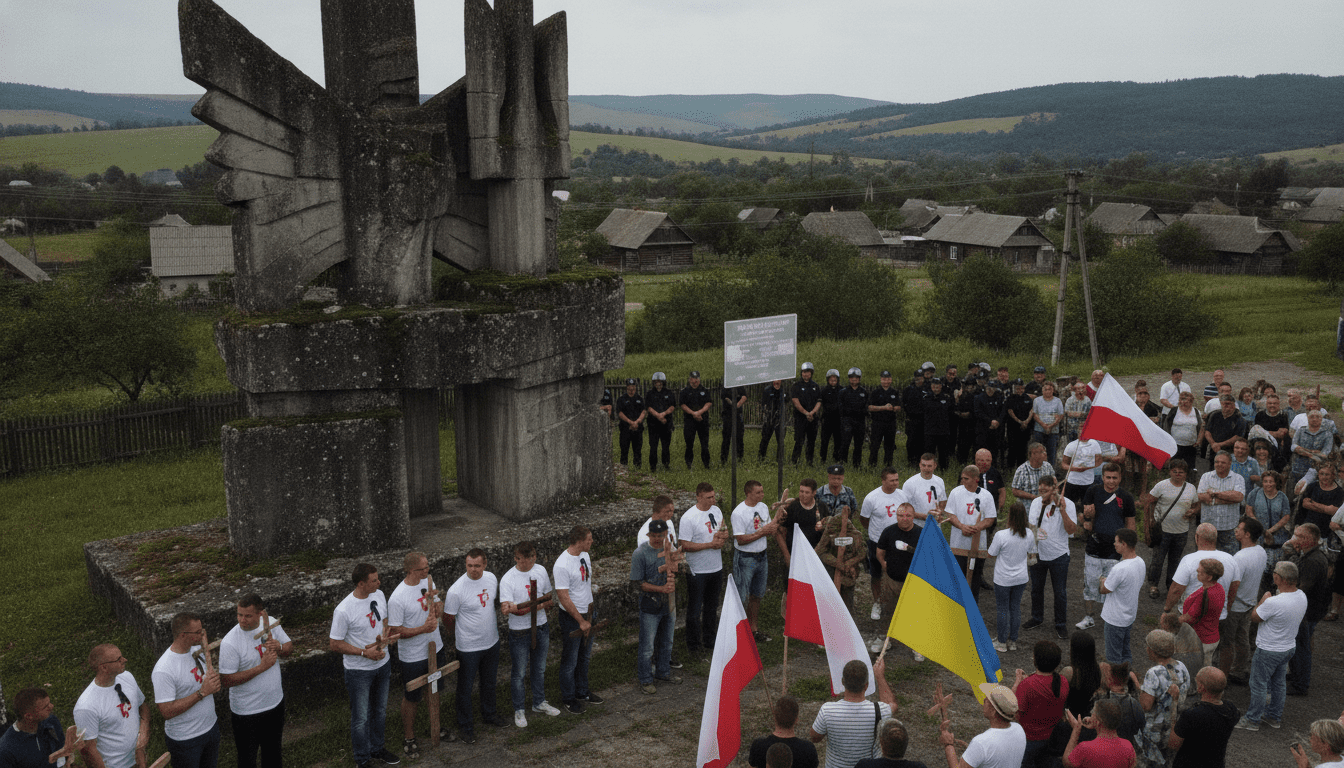
UPA legacy divides Ukraine and Poland as monuments and memory politics reignite historical disputes
Contested UPA legacy fuels tensions between Ukraine and Poland as monuments, historical interpretation and wartime crimes shape modern national identities.
The debate over the UPA legacy has resurfaced across Eastern Europe, driven by public monuments, legal recognitions and competing wartime narratives. Monuments erected in western Ukraine after the Soviet collapse and official policy shifts since the 2000s have made the Ukrainian Insurgent Army a flashpoint in bilateral relations with Poland. At the same time, memories of mass violence in Volhynia continue to shape Polish perceptions, leaving the UPA’s past deeply contested.
Post-Soviet memorialization in western Ukraine
Monuments to UPA fighters appeared widely in the 1990s as newly independent Ukraine opened public space for alternative historical narratives. Communities in Galicia and other western regions elevated guerrilla fighters who waged a postwar insurgency against Soviet rule, depicting them as defenders of national freedom. These memorials reflected a broader effort to reclaim history from decades of Soviet propaganda that had portrayed the movement in uniformly negative terms.
Public commemoration was part of a larger national project to honor victims of Stalinist repression and to assert continuity with pre-Soviet Ukrainian political traditions. For many families in western Ukraine the partisan fight against Soviet forces was lived history, accompanied by arrests, deportations and long-term trauma. That personal dimension helped fuel grassroots support for monuments and veterans’ recognition even where the movement’s record was contested.
Poland’s condemnation of wartime massacres
In Poland, the three letters UPA evoke the massacre of tens of thousands of Polish civilians in Volhynia and Eastern Galicia in 1943 and 1944. Warsaw has repeatedly framed those events as crimes of such scale and intent that they merit the strongest condemnation, including parliamentary resolutions that characterized the killings as genocidal. For many Poles the celebrations of UPA figures in Ukraine are thus deeply painful and politically charged.
Polish officials and veterans’ groups have pressed for historical accountability and recognition of civilian suffering, making the UPA a bilateral diplomatic issue. These demands intersect with broader debates about minority policy, postwar population transfers and responsibility for interethnic violence. As a result, remembrance of Volhynia remains a persistent diplomatic flashpoint between the two capitals.
Origins and wartime conduct of the UPA
The UPA emerged from a prewar Ukrainian nationalist movement that sought statehood in a region contested between Poland and Ukrainian activists after World War I. The organization’s early insurgent wing grew radicalized amid interwar repression and carried out attacks against Polish authorities during the 1930s. During World War II the group’s relationships with occupying powers and other armed formations were complex and at times collaborative, while in other periods the UPA engaged in combat against both Nazi and Soviet forces.
Historians note an evolution within the movement: some early ideological affinities with fascist currents gave way after 1945 to a program that, at least formally, acknowledged minority rights and sought broader support against renewed Soviet occupation. Whether that shift represented tactical adaptation or genuine ideological change remains debated among scholars and policymakers. The historical record thus contains episodes of resistance, collaboration and interethnic violence that complicate simple heroic or villainous portrayals.
State recognition and political shifts since 2004
Official Ukrainian attitudes toward the UPA have changed notably since the Orange Revolution of 2004 and again after Russia’s intervention in 2014. Kyiv progressively moved to rehabilitate some former insurgents, extending legal veteran status and recognizing their role in resisting Soviet domination. The national rhetoric that accompanied and followed Russia’s aggression helped reframe certain symbols linked to the UPA as emblems of contemporary struggle for sovereignty.
This state-level reassessment did not erase regional divisions. Outside the historic UPA strongholds, public opinion long retained a negative view of the organization, reflecting different wartime experiences and postwar memory cultures across Ukraine. Political leaders have often navigated a delicate line between honoring anti-Soviet resistance and addressing the moral and diplomatic costs of celebrating figures associated with wartime atrocities.
Public space, symbols and the politics of memory
Street names, plaques and statues serve as tangible expressions of contested memory, and they have repeatedly triggered local and international controversy. For some Ukrainians the black-and-red banners and insignia tied to the UPA now signify resilience against foreign domination and a reclaiming of silenced histories. For others, particularly in neighboring Poland and among minority communities, those same symbols recall episodes of ethnic cleansing and collaboration with occupying forces.
Municipal decisions about monuments can provoke protests, diplomatic notes, and acts of symbolic apology, underscoring how memory politics remain highly performative. The politics of recognition also extend to education, museums and commemorative ceremonies, where choices about language, emphasis and omission influence how new generations understand the wartime past.
Reconciling historical truth and national identity
Efforts to bridge divergent narratives have included joint historical commissions, academic exchanges and civil-society initiatives aimed at creating shared frameworks for understanding. Such approaches strive to separate commemoration of anti-Soviet suffering from uncritical glorification of wartime violence against civilians. Yet mistrust runs deep on both sides, and political uses of history continue to complicate reconciliation.
Scholars emphasize that confronting uncomfortable aspects of national pasts is essential for building stable interstate relations. That task involves transparent archival research, open public discussion and willingness to acknowledge mixed legacies rather than reduce the past to single, unambiguous stories. Progress in this area remains uneven and contingent on domestic politics and diplomatic priorities.
The UPA legacy will likely remain a potent symbol in Eastern Europe as long as memories of the 1930s and 1940s inform contemporary identity and policy. Reconciling recognition of anti-Soviet suffering with accountability for wartime crimes presents a persistent challenge for historians, politicians and communities on both sides of the Polish–Ukrainian border.
