
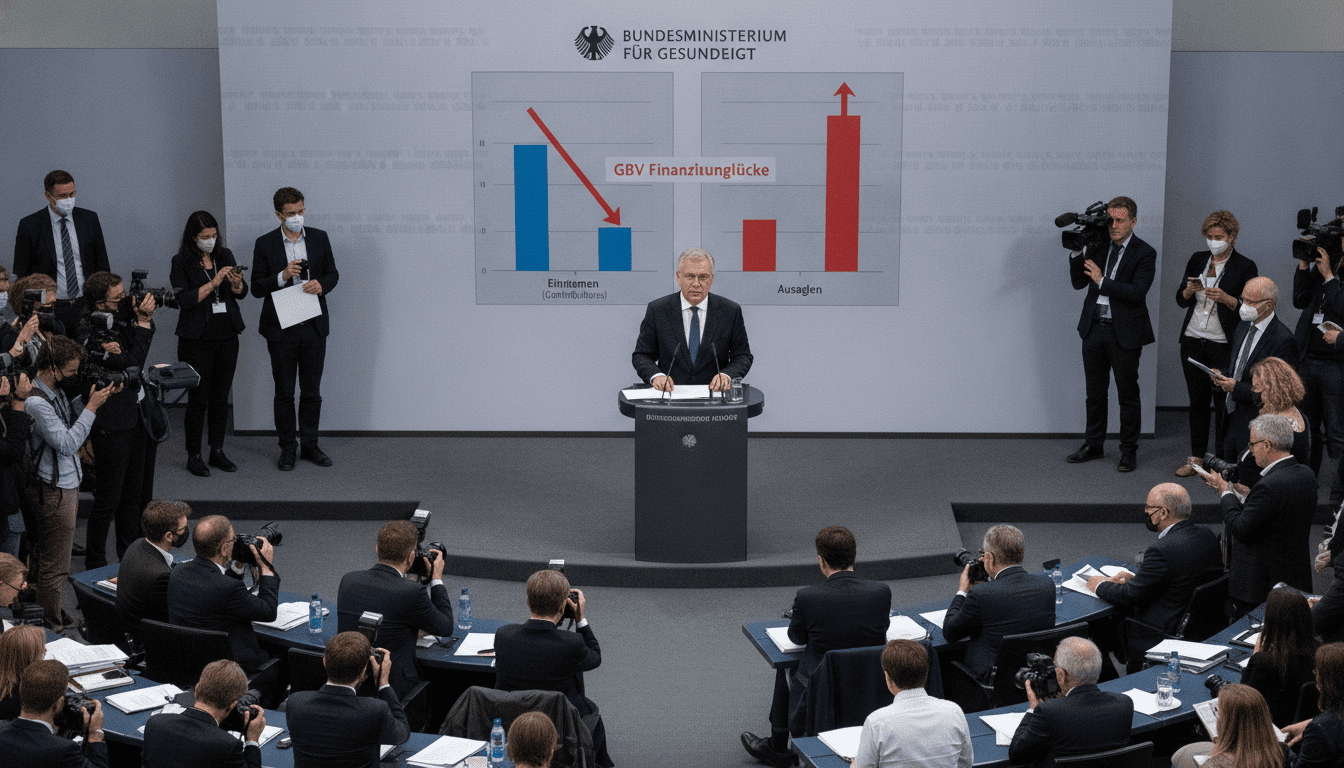
GKV contribution stabilization law under fire after opposition exposes funding imbalance
Opposition in the Bundestag says the GKV contribution stabilization law has a structural funding imbalance, prompting calls for the coalition to revise it.
The Bundestag debate on June 12, 2026 centered on the GKV contribution stabilization law, with opposition parties arguing the bill contains an overlooked funding gap that threatens statutory health insurance finances. The criticism, voiced sharply in speeches and questions to the government, forced the coalition to acknowledge a technical unbalance in how the measure allocates revenues and costs. Health Minister Nina Warken (CDU) defended the government’s approach while promising to work with partners to prevent shortfalls, but the exchange left lawmakers and stakeholders seeking concrete fixes.
Opposition identifies a legal and fiscal inconsistency
The opposition presented a detailed critique of the draft law, saying a clause in the text creates unequal treatment between revenue streams and expenditure responsibilities. Their argument focused on accounting mechanisms that, they contend, would shift costs onto the health funds rather than stabilizing the GKV contribution rate as advertised. Parliamentary opponents demanded amendments to close what they called a loophole that could force higher contributions or benefit cuts in coming years. The charge gained traction because it directly affects the perceived stability of contribution rates for millions of insured.
Minister Warken defends the bill and offers targeted adjustments
In response, Minister Nina Warken acknowledged the concern but said the government’s intent remains to preserve contribution-rate stability while ensuring comprehensive care. She argued that technical adjustments — not a wholesale rewrite — can remove the imbalance without undermining broader health-policy goals. Warken committed to convening experts from the finance and health ministries and to engage with umbrella organizations of the statutory health insurers. Her statement emphasized that changes would be made in a targeted manner to avoid unintended fiscal effects elsewhere in the social-security system.
How the funding mechanics would change GKV balances
At the heart of the dispute are transfer rules and earmarked payments that determine which public resources offset insurer expenditures. Critics say current wording risks excluding certain federal transfers from the stabilization calculation, thereby underestimating future insurer costs. Proponents of the bill say adjustments can rebalance the ledger by clarifying which revenues are counted and by setting temporary compensatory mechanisms. Analysts warn that minor drafting oversights in legislation of this kind can have outsized budgetary impacts when assumptions about growth, demographics and healthcare inflation are applied.
Potential effects on insured members and contribution rates
If the imbalance is not resolved, insurers might face pressure to raise contribution rates or reduce benefits to maintain solvency, according to health-economy experts. Even the prospect of future increases can influence negotiations between insurers, employers and unions over wage settlements and payroll cost planning. The government underscores that the current bill aims to avoid immediate rate hikes, but persistent structural gaps would shift the question to whether the federal budget or the insured population should shoulder more of the cost. Consumer groups are already voicing concern about any measure that could erode coverage or increase out-of-pocket burdens.
Coalition options and the parliamentary timetable
The coalition has several paths: amend the draft quickly with technical corrections, introduce temporary transitional funding, or delay passage for a comprehensive financial review. Each option carries political trade-offs; rapid fixes reduce immediate uncertainty but may invite criticism for insufficient oversight, while a delay could heighten public anxiety. Parliamentary leaders signaled willingness to accelerate committee review, and cross-party working groups could be convened to draft precise amendments. The timetable will depend on how swiftly ministries can model the fiscal effects and agree on an equitable distribution of adjustments.
Broader fiscal and political implications for health policy
Beyond the immediate technical dispute, the episode exposes how sensitive German health financing remains to legislative detail and fiscal assumptions. Lawmakers from multiple parties framed the debate as a test of the coalition’s competence to manage complex social spending without passing hidden costs to citizens. The outcome will also set a precedent for how future stabilization measures are drafted and monitored. Stakeholders from insurers to patient advocacy groups will watch for transparency in accounting and for guarantees that contribution-rate stability is not achieved at the expense of coverage quality.
The Bundestag exchange on June 12 demonstrates that the GKV contribution stabilization law, while intended to protect insured contributions, requires careful revision to close the identified funding imbalance. The coalition has acknowledged the problem and promised prompt technical correction, but lawmakers, insurers and consumer groups will press for explicit safeguards and clear timelines before any final vote.
