
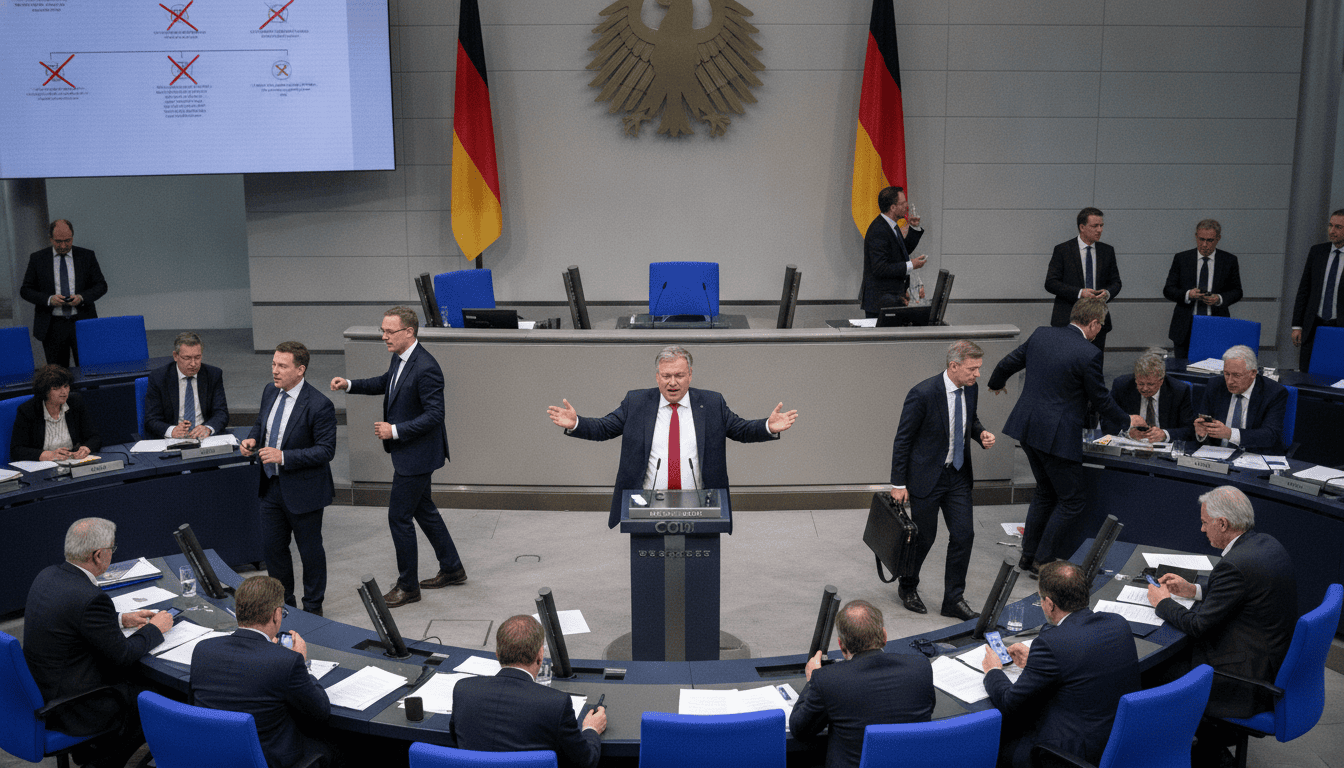
Merz cabinet reshuffle sparks internal revolt after Bremen CDU chief’s public rebuke
Bremen CDU leader publicly accuses Chancellor Friedrich Merz of treating the party like a corporation after a botched Merz cabinet reshuffle, raising concerns about morale and leadership.
Bremen CDU leader confronts Chancellor Merz
Bremen CDU state chair Heiko Strohmann publicly rebuked Chancellor Friedrich Merz during a tense exchange, telling the chancellor that he was treating the party as if it were a company rather than a political organization. The comment, delivered at a party meeting and repeated by attendees, has since circulated through party ranks and the wider political press.
The confrontation crystallizes broader frustration within the CDU over recent personnel moves and the way the cabinet reshuffle was handled, with critics arguing that the process lacked transparency and strategic planning. Strohmann’s outburst has turned private discontent into a visible public dispute that party managers must now manage.
Removal of Transport Minister raises procedural questions
The removal of Transport Minister Patrick Schnieder, described by some insiders as abrupt and poorly coordinated, has become the focal point of criticism over the reshuffle. Observers say the minister’s ouster was executed without a clear successor or coherent public explanation, creating the impression of ad-hoc decision-making.
Party members compare the handling to an internal purge rather than a considered transition, noting that the apparent sidelining of Schnieder occurred while other underperforming officials remained in place. That selective approach has fuelled accusations that political loyalty, not competence, is guiding personnel choices.
Corporate analogies sharpen criticism but miss some realities
Critics have leaned on a corporate analogy—saying Merz runs the CDU as if it were the “Deutschland AG”—to frame their objections, and that metaphor has gained traction partly because of the chancellor’s business background. Detractors argue the reshuffle style reflects a CEO mindset more comfortable with hierarchical, top-down decisions than with party consultation and coalition management.
At the same time, several party figures caution that the comparison to corporate governance is not entirely fair; politics operates under different incentives and constraints, including public accountability and electoral consequence. Nonetheless, many agree that the minimum standard—professionalism in personnel decisions and clear communication—applies in both sectors.
Damage to party morale and internal cohesion
Multiple CDU insiders warn that the mishandled reshuffle has sown distrust between the leadership and rank-and-file officials, contributing to a “chilly” atmosphere across regional offices. That drop in morale, they say, risks further erosion of cooperation when unity will be crucial for upcoming legislative and local campaigns.
Sources inside the party contend that perceived arbitrariness in promotions and dismissals undermines credibility and drives promising local politicians to question long-term commitment. Party strategists worry the fallout could translate into weaker voter mobilization and poorer coordination with coalition partners.
Strategic missteps and the risk of voter backlash
Political analysts argue that the optics of a chaotic reshuffle could have electoral consequences, especially if voters perceive the CDU as internally fractured or detached from ordinary concerns. The perception of a leadership more focused on corporate-style control than political consensus may alienate centrist and swing voters.
The chancellor’s office faces a balancing act: reassert control and present a competent governing team while repairing relationships within the party and with coalition allies. How Merz responds in the coming days—through conciliatory appointments, clearer communications, or renewed consultation—will be closely watched by both supporters and rivals.
Calls for professionalized decision-making and clearer communication
Across the party, calls are growing for more systematic personnel processes, including the routine consultation of independent experts and a transparent rationale for appointments. Advocates of reform argue that treating political leadership like professional management does not mean imposing corporate values, but it does require discipline, careful sequencing of moves, and honest explanations for change.
Those pushing for reform say that rebuilding trust will require not only different procedures but also a change in tone from the top, with the chancellor engaging critics and demonstrating that strategic choices are rooted in policy priorities rather than personal preference. Concrete signals—such as a public review of the reshuffle process or the appointment of respected mediators—could help calm internal tensions.
The party now confronts a simple political reality: personnel decisions that appear sloppy or selective risk amplifying internal dissent and weakening public confidence, while a measured, transparent approach could restore stability and focus on governance. The next steps taken by Chancellor Merz and his senior advisers will determine whether the CDU can close ranks and move past the controversy or whether the reshuffle will remain a defining fault line for weeks to come.
