
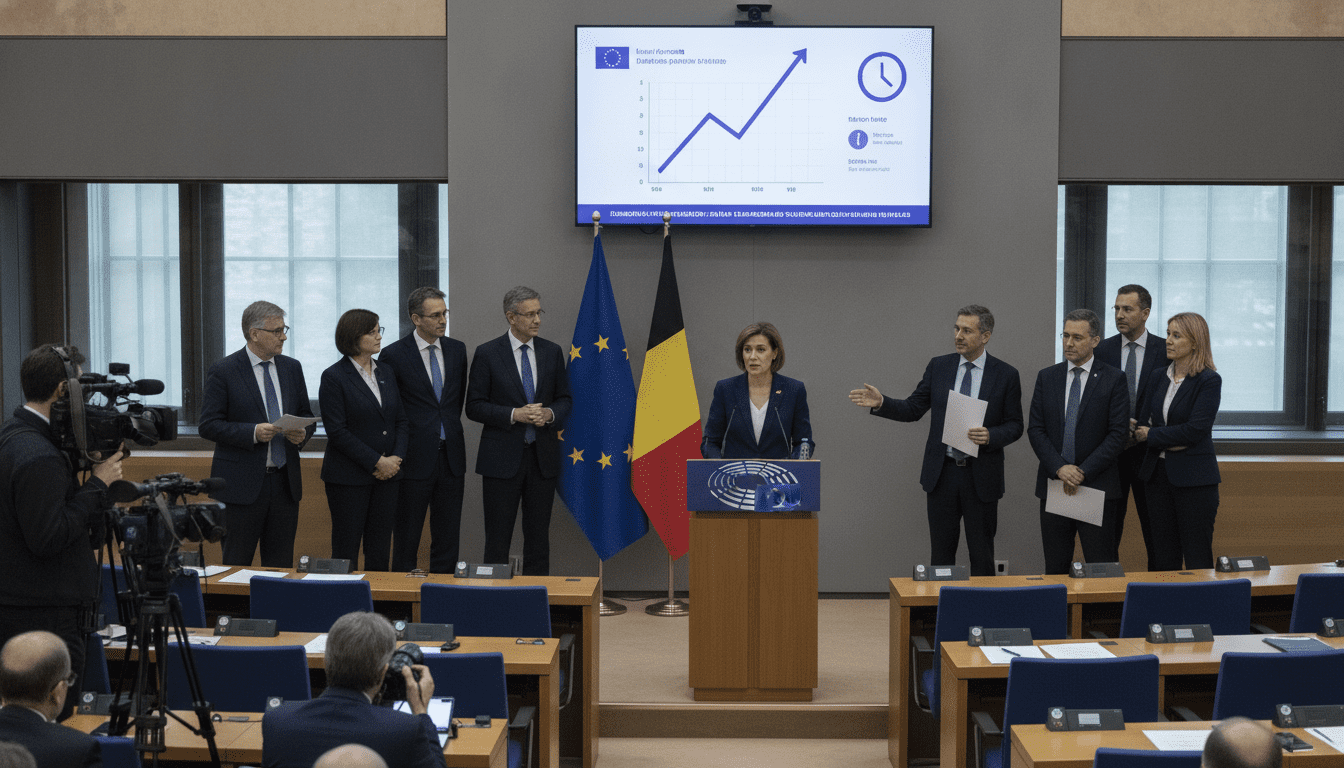
EU passenger rights preserved as Parliament secures three‑hour compensation and tighter fare transparency
EU lawmakers keep three‑hour delay compensation, require clearer claims rules and strengthen rights on hand luggage, seating and vouchers.
EU Parliament secures three‑hour compensation safeguard
The European Parliament and member states have reached a provisional deal that preserves the right to claim compensation for flight delays of more than three hours under the revised rules on EU passenger rights. The agreement maintains the long‑standing delay threshold and aims to prevent a rollback that some member states and the Commission had proposed. (europarl.europa.eu)
Negotiators insisted the three‑hour threshold remain a central protection for travellers, arguing it is key to ensuring effective redress for the millions of passengers affected by disruptions each year. The compromise was driven by intense talks in the conciliation committee ahead of a hard deadline set for 15 June 2026. (agenceurope.eu)
Compensation amounts and timeframes left intact
Under the provisional text, compensation amounts tied to flight distance remain unchanged and continue to range from €250 to €600 per passenger, depending on the journey length. These fixed tiers have been a core element of the EU framework for decades. (legalclarity.org)
The deal also sets clearer deadlines for carriers to process claims and establishes more transparent handling of reimbursement requests, a response to chronic under‑payment and low claim rates across the bloc. Lawmakers say the measures should make it easier for passengers to obtain payments without resorting to third‑party claim agencies. (elpais.com)
New rules on fare transparency and cabin baggage display
Negotiators agreed that prices shown on comparison websites and booking platforms should reflect a single, all‑in price that includes an allowance for hand luggage where applicable. The change is intended to stop misleading advertising of base fares that exclude essential carry‑on allowances. (europarl.europa.eu)
Parliament had pushed for a clear right to carry a personal item free of charge and for automatic inclusion of at least one small personal item in the displayed price, aiming to make fares more comparable for consumers. The provisional compromise enshrines stronger transparency obligations for airlines and platforms, while leaving some technical details for regulatory follow‑up. (europarl.europa.eu)
Simpler claims process and stricter voucher rules
One of Parliament’s priorities was to simplify compensation claims and reduce dependence on paid claim intermediaries. The draft text favoured by MEPs envisaged pre‑filled claim forms and fast, standardised procedures; the final compromise requires carriers to provide clearer instructions and defined processing times for claims. Lawmakers said these steps should increase uptake of rightful compensation. (europarl.europa.eu)
The provisional agreement also tightens rules on vouchers and travel credits that airlines offer as alternatives to cash refunds. Negotiators signalled that vouchers must be issued and managed in ways that protect travellers, and that replacements or automatic reimbursement mechanisms should be available where vouchers cannot be redeemed. The measures respond to lessons learned during the pandemic and to consumer pressure across member states. (elpais.com)
Protections for families and passengers with reduced mobility
The compromise includes explicit protections aimed at keeping families and vulnerable passengers together on flights and improving boarding assistance for travellers with reduced mobility. Parliament’s text had demanded that children and accompanying adults be seated together without being forced into special “family” tariffs; the provisional wording strengthens those guarantees while giving regulators room to specify implementation. (europarl.europa.eu)
Transport ministers and MEPs framed these provisions as practical fixes to everyday problems reported at EU airports, from separated families to inadequate support for passengers who need help to reach gates and board aircraft. The negotiators said the changes are intended to reduce the need for litigation and to make rights easier to use in practice. (europarl.europa.eu)
The agreement comes after more than a decade of stalled attempts to update the EU’s air passenger regime, which the Commission first tabled in 2013. The text now moves to a formal parliamentary vote scheduled for Monday, 15 June 2026, after which member states and airlines will have a transition period to adapt to the new obligations. (agenceurope.eu)
The outcome represents a political balancing act: consumer groups hailed the preservation of the three‑hour threshold and compensation levels, while industry representatives welcomed clearer, harmonised rules that provide legal certainty for carriers. Enforcement and practical application will now determine whether the revised EU passenger rights deliver the improved protection and clarity that negotiators promised. (europarl.europa.eu)
Passengers impacted by delays and cancellations should watch for the final vote on 15 June 2026 and check national enforcement guidance once the text is formally adopted. The new rules are expected to come into force after a staged implementation period, during which regulators will issue further guidance on how the obligations should be applied at airports and by online booking platforms.
