
Germany to Cap Advance Child Support at Age 15 After €2.7bn Shortfall
Germany will limit advance child support to children up to 15 after the state absorbed a €2.7bn shortfall in 2024, prompting debate over enforcement and social impact.
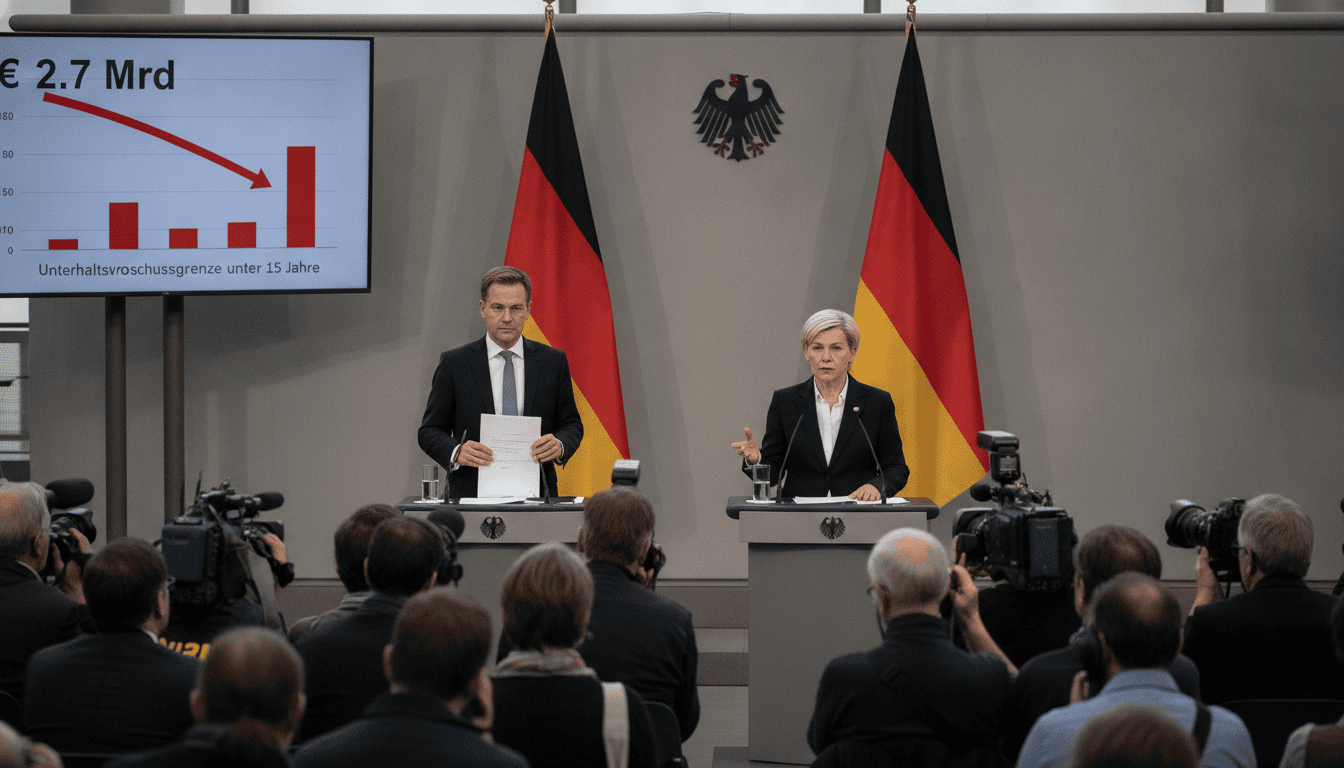
The federal government and state premiers agreed at the end of June 2024 to restrict advance child support — known in Germany as Unterhaltsvorschuss — to children who have not yet turned 16. The move follows official figures showing the state recovered only about 17 percent of advances in 2024 and remained out of pocket roughly €2.7bn. Families Minister Karin Prien (CDU) has proposed implementation plans that have met criticism from advocacy groups and some municipalities.
How the Advance Child Support System Works
Under current rules, the state pays a maintenance advance when a parent fails to provide child support and then seeks to recover that money from the absent parent. Responsibility for processing claims and recovering funds falls largely to municipal youth welfare offices (Jugendämter), which operate special recovery units. Those offices issue notices, assess ability to pay and, where possible, pursue collection through enforcement measures or court proceedings.
Municipal officials report four common responses from absent parents: voluntary payment, legal challenge to the assessment, disappearance or failure to respond, and claims of personal insolvency. Working payers retain a protected income floor — typically at least €1,450 — while recipients of unemployment benefits or basic social assistance keep around €1,200, limits that often leave little or nothing available for repayment.
Why Recovery Rates Are So Low
Local authorities and youth welfare staff say much of the €2.7bn hole stems from simply having nothing to collect. Many maintenance debtors lack assets, shift employers frequently, move without registering or relocate abroad. In such cases the Jugendämter can spend years attempting to trace a debtor with limited success, according to officials contacted by regional authorities.
Legal and international barriers further limit enforcement. Even when a debtor is identified abroad, Germany does not always have reciprocal enforcement agreements with the country in question. Prosecutors say intentional non-payment is punishable, but criminal proceedings are often discontinued for first-time offenders if arrears are subsequently repaid, reducing the deterrent effect.
Administrative Fragmentation and Digital Shortcomings
Officials describe the recovery process as an “administrative heavyweight” that requires coordination with courts, job centres and enforcement agencies. Many Jugendämter still rely on paper correspondence and manual case files, which slows searches and complicates cross-agency information sharing. The dual calculation of entitlement — performed both by job centres and youth offices — adds duplication and confusion, staff say.
Local leaders call for more digital integration and clearer legal assignment of responsibilities. Some experts argue that concentrating under the responsibility of a single authority could produce efficiency gains, but such structural change would require federal legislation and sustained investment.
Centralisation Trials Deliver Mixed Results
Several states have experimented with centralised recovery units to professionalise the collection function. North Rhine-Westphalia and Schleswig-Holstein moved to centralised “Rückgriffs”-teams with the aim of improving recovery rates. North Rhine-Westphalia saw an improvement over several years, only to see rates fall back recently to roughly 16 percent, illustrating the difficulty of achieving durable gains.
Conversely, some federal states that keep recovery at municipal level — including Bavaria, Baden-Württemberg and Rhineland-Palatinate — report comparatively higher returns. City-states such as Berlin, Hamburg and Bremen show the lowest recovery percentages, around 10–12 percent, a gap officials attribute in part to the higher share of low-income or transient populations in urban centres.
Debate Over Enforcement Options and Penalties
Policymakers are debating tougher enforcement tools used abroad, including measures that courts in the United States and United Kingdom can employ such as suspending driving licences for serious arrears. Supporters argue such sanctions create leverage; critics, including some within the SPD, caution that removing a debtor’s licence could undermine his or her ability to work and thereby reduce future compliance.
Criminal penalties already exist under German law, with potential prison terms up to three years for intentional, sustained refusal to pay. Yet prosecutors and judges frequently weigh proportionality and the prospects of actual recovery when deciding whether to pursue incarceration.
Projected Social Effects of the Age Cap
Limiting state advance child support to children under 16 would reduce payments for 16- to 18-year-olds and ease some administrative burdens for youth offices. Authorities estimate the cut would lower caseloads and associated costs, but critics warn the policy will shift financial strain onto nearly adult children and their custodial parents, who may rely more heavily on other social benefits.
Single parents and their teenage children could see a fiscal gap just as young people transition toward independent lives or continued education. Advocates urge compensatory measures — increased targeted support, better enforcement tools and investments in digital case management — to avoid leaving families more exposed.
The government’s decision to cap advance child support opens a contentious debate over fiscal responsibility, enforcement capacity and the social protection needs of families left without a paying co‑parent.
