
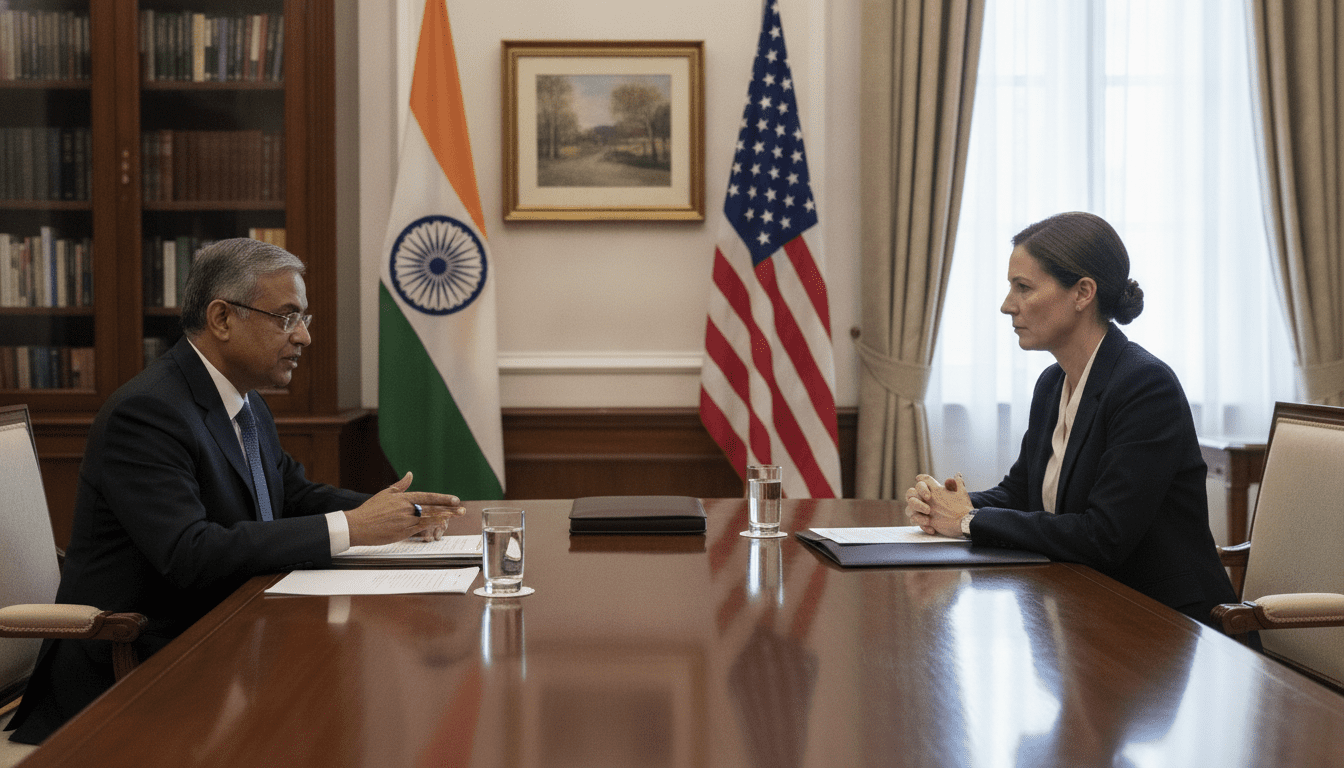
India’s MEA summons U.S. chargé after Gulf of Oman attacks that killed three Indian sailors
India’s Ministry of External Affairs summoned U.S. Chargé d’Affaires Jason Meeks on June 12, 2026 after what it called “continuing attacks by US naval forces on commercial vessels” in the Gulf of Oman, an incident New Delhi says killed three Indian sailors and requires immediate measures to protect civilian shipping.
Strong diplomatic protest lodged in New Delhi
The Ministry of External Affairs (MEA) announced the summons on X on June 12, 2026, attributing the message to its official account and posting by a ministry official. The MEA said it had conveyed “deep concern over the use of lethal and deadly force against civilian shipping” and formally summoned the U.S. chargé to explain the events.
The MEA’s post framed the action as a direct and urgent diplomatic protest, stressing that attacks on commercial vessels carrying Indian mariners are unacceptable. New Delhi’s demand included a call for U.S. forces in the region to “take all necessary measures to prevent the loss of civilian life,” language the ministry said reflected the gravity of the incident.
Details the MEA provided about the Gulf of Oman attacks
In its announcement, the MEA described the incidents as “continuing attacks by US naval forces on commercial vessels carrying Indian mariners in the Gulf of Oman.” The statement said these actions had “resulted in the killing of three Indian sailors,” presenting the casualties as the central factual claim behind the diplomatic démarche.
The ministry did not supply vessel names, timestamps, or independent verification in the initial post, limiting the public account to the core allegation and the resulting fatalities. New Delhi’s message, shared publicly on the government’s social media channel, set the immediate agenda for diplomatic clarification and potential follow-up inquiries.
Casualties and impact on seafarers
The MEA’s statement identified three Indian nationals as killed in the attacks it described, and it framed the loss as part of a broader concern over the safety of civilian crews. The ministry’s language emphasized that the victims were mariners on commercial vessels, underscoring the distinction between civilian shipping and military targets.
Indian authorities have not, in the MEA post, released further details on the identities of the deceased, the number of crew affected, or whether survivors were evacuated or received medical treatment. The lack of additional operational detail means inquiries will likely focus on corroboration of the incidents and the humanitarian response for any remaining crew members.
Diplomatic and security implications
Summoning the U.S. Chargé d’Affaires is a formal diplomatic protest that signals New Delhi’s expectation of an explanation and possible remedial measures. Such démarches are often the first step in bilateral exchanges that can lead to further diplomatic notes, requests for investigations, or higher-level consultations if initial answers are unsatisfactory.
Beyond bilateral channels, the incident could influence discussions on maritime rules of engagement and the protection of commercial shipping in contested waterways. The MEA’s public framing and the decision to escalate the matter indicate New Delhi views the events as having broader implications for the safety of its nationals at sea.
Regional maritime context and strategic stakes
The Gulf of Oman is a critical maritime corridor linking the Arabian Sea and the Strait of Hormuz, carrying a large volume of global commercial shipping and energy exports. Naval forces from a range of countries operate in and near these waters, where commercial traffic and military activity can intersect and complicate incident response.
Any accusation involving naval forces and civilian vessels raises complex legal and operational questions about identification, rules of engagement, and maritime law. Governments typically seek prompt incident reports, evidence, and transparent investigations when civilian lives are lost in such contexts.
What New Delhi has asked for and next steps
The MEA asked U.S. forces in the region to take “all necessary measures to prevent the loss of civilian life,” framing its demand as immediate and operational in scope. New Delhi’s summons of Chargé d’Affaires Jason Meeks opens a channel for formal explanations and may be followed by requests for documentation, enquiries, or cooperative investigations depending on the U.S. response.
At the time of the ministry’s post on X, no public reply from the U.S. embassy or Department of State was included in the announcement. Indian officials and international stakeholders will be watching for further clarification, independent verification of the incidents, and any steps taken by U.S. forces to prevent future harm to civilian shipping.
The MEA statement posted on June 12, 2026 has set in motion a diplomatic exchange focused on the Gulf of Oman attacks, and both governments are likely to provide more details as official inquiries proceed.
