
Tunisia crisis deepens as protests, blackouts and questions over President Kais Saied’s health escalate
Reports of President Kais Saied’s health and widespread blackouts have fueled mass protests, deepening the Tunisia crisis and exposing institutional failures.
Tunisia is facing a converging political and social emergency as reports about President Kais Saied’s health circulate amid widespread water and electricity outages and renewed street protests. The Tunisia crisis has entered a new phase of volatility: mounting public anger over service failures is colliding with political fragmentation and concerns about concentrated presidential power. Observers say the combination of summer blackouts, economic strain and unclear leadership has intensified calls for change across the country.
Protests escalate amid heat and blackouts
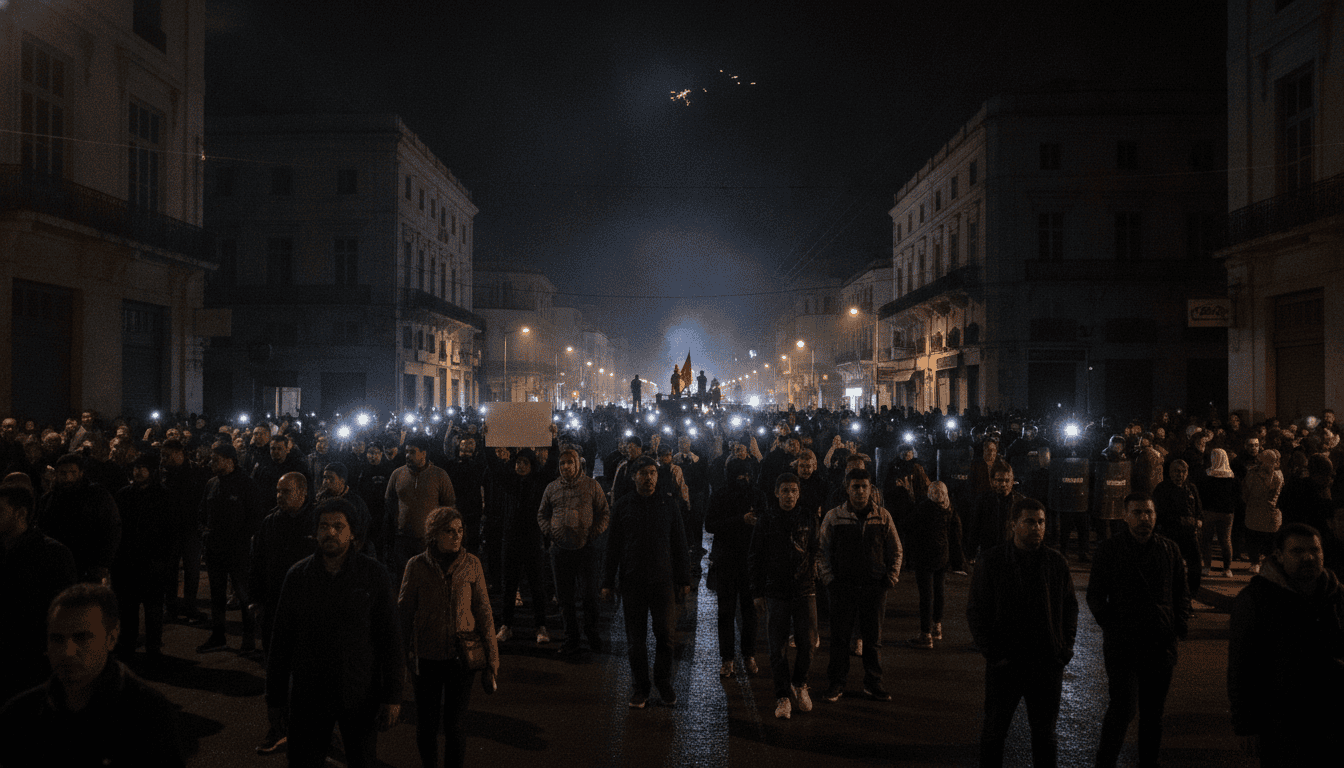
Protest movements have surged in towns and cities where residents, confronted with prolonged power cuts and water shortages, have taken to the streets demanding accountability. Demonstrators have waved “Degage!” banners and other slogans calling for leadership change, signaling a rare and vocal rejection of the current administration.
The timing — a summer of intense heat and infrastructure failures — has amplified the immediacy of grievances. In several regions outages and rationing have lasted for days or weeks, turning basic service disruptions into flashpoints for broader political mobilisation.
Utilities collapse and economic strain
Tunisia’s state utilities have long struggled under mounting debt and operational weaknesses, a situation now manifesting in frequent interruptions to electricity and water supplies. The financial precariousness of state-owned firms has limited the government’s ability to respond quickly to surging summer demand and to fund repairs or upgrades.
Households and small businesses are bearing the brunt as higher import bills, sluggish growth in value-added sectors and volatile remittances erode living standards. For many citizens, protests are not solely about politics but about recovering reliable services and basic economic dignity.
Energy reform promises and implementation gaps
Legislation passed in 2015 opened Tunisia’s energy sector to private and renewable producers, and subsequent plans envisioned expanding solar power and exploring green hydrogen. Yet progress on those initiatives has been slow, leaving renewables a limited share of the energy mix and the country still heavily dependent on imported fossil gas.
Planned projects in regions such as Gafsa, Tozeur and Sidi Bouzid have yet to materialize at scale, and state energy operator capacity has not kept pace with annual consumption growth or seasonal demand peaks. Analysts argue that accelerating project approvals and private-sector participation is essential, but they caution that such measures will not immediately resolve the acute outages now driving public unrest.
Institutional shift since July 2021 and political fragmentation
President Saied’s move on July 25, 2021, to assume exceptional powers and reconfigure Tunisia’s political framework changed the country’s trajectory, concentrating authority in the presidency and undermining some democratic checks. That institutional realignment initially drew support from disparate groups frustrated with political gridlock and corruption, but support has eroded as day-to-day conditions have failed to improve.
Many of the political figures and civil society actors who once backed the consolidation of power are now among those urging a return to pluralism and accountability. The fragmentation of the political class — and the shifting loyalties within it — has made consensus more elusive at a moment when coordinated public policy action is urgently needed.
Human rights concerns and prison health risks
Human rights organisations and legal advocates have raised alarms about detention conditions and the treatment of opposition figures, arguing that political prisoners and prominent opponents face heightened health and safety risks. Reports of deteriorating conditions in facilities such as Mornaguia prison have intensified calls from families and rights groups for immediate medical access and transparent oversight.
The detention of high-profile leaders has become a focal point for broader concerns about rule of law and civic space, with advocates demanding releases for prisoners of conscience and urging authorities to prioritise humane treatment regardless of political affiliation.
Domestic reform versus foreign intervention risks
Tunisia’s deepening instability has prompted debate over the role of external actors: while some international proposals suggest sanctions or conditional aid, domestic voices emphasise the risks of outside measures that could further harm vulnerable populations. Critics argue that punitive foreign policies risk undermining sovereignty and complicating avenues for negotiated reform.
Many Tunisian stakeholders insist that a sustainable path forward must be led internally, through an inclusive national dialogue that addresses economic grievances, institutional reform and transitional justice measures. They urge immediate steps such as accelerating energy projects, disbursing targeted social support and releasing prisoners of conscience to reduce tensions.
The unfolding Tunisia crisis leaves the country at a precarious crossroads as institutions, public trust and basic services strain under multiple pressures. Whether President Saied can convene inclusive political solutions, or whether Tunisia will see deeper polarisation and external pressure, will depend in large part on whether short-term relief measures are paired with credible commitments to institutional reform and economic stabilization.
