
Ebola outbreak in eastern Congo escalates as violence, mistrust and misinformation hamper response
Ebola outbreak in eastern Congo fuels attacks, mistrust and misinformation, overwhelming local health services; WHO declared a PHEIC after cases rose in mid-May.
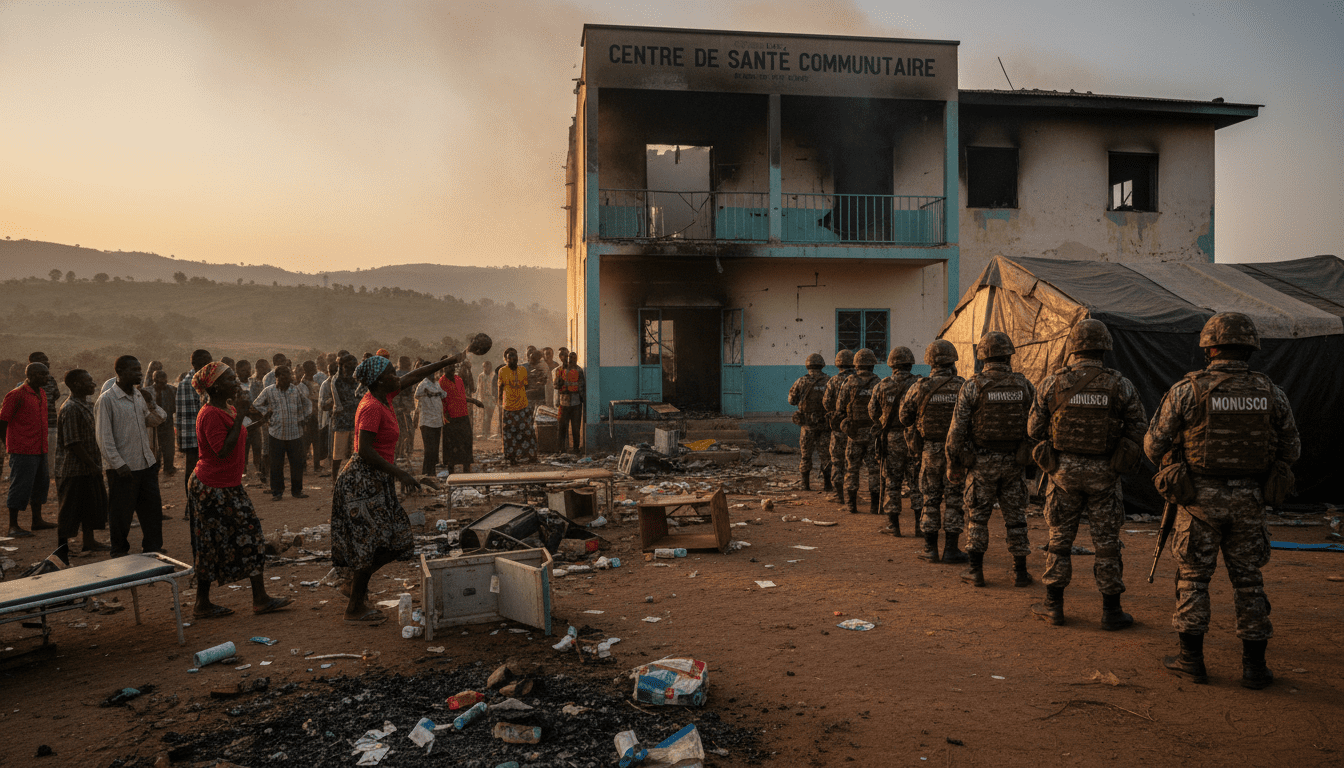
The Ebola outbreak in eastern Congo has intensified community tensions after isolation tents near Rwampara General Hospital were set on fire and a corpse suspected of Ebola was seized by relatives, officials say. The incident followed the hospital’s refusal to hand over the body, as families sought traditional burial rites without the safety measures required for Ebola. Health workers and aid groups report growing obstacles to patient care as fear, tradition and rumors spread through affected provinces.
Isolation tents torched and corpse taken from hospital
Witnesses and hospital staff describe how makeshift isolation shelters erected for suspected Ebola patients were burned in Rwampara after relatives attempted to remove a deceased man. Family members resisted public-health protocols that require supervised burials, and resorted to force to take the body for a community funeral. Medical personnel report that the attack prompted patients and some staff to flee in panic, complicating immediate care and containment efforts.
Reports from the ground indicate the episode is part of a pattern in which traditional burial practices clash with infection-control rules. Local leaders and health teams face the dual task of protecting communities from contagion while respecting cultural norms, a balance that has repeatedly sparked confrontation during past outbreaks.
WHO declaration and the challenges of the Bundibugyo strain
The national government confirmed the outbreak on May 15, and the World Health Organization classified it as a public health emergency of international concern two days later. Authorities and international agencies say the current wave is caused by the Bundibugyo strain of the Ebola virus, a less common variant for which there is no approved vaccine or targeted antiviral therapy. Latest situation reports indicate more than 300 confirmed infections, roughly 100 suspected cases and 48 deaths, though previous tallies briefly reported significantly higher suspected figures that were later revised.
A small number of infections have been recorded across the border in neighboring Uganda, heightening worries about cross-border transmission. Public-health teams emphasize that case counts remain fluid while testing and surveillance are scaled up to clarify the outbreak’s true scope.
Health workers under attack and patients presenting late
Medical staff in Ituri and surrounding areas warn that distrust and attacks are costing time that could save lives. Doctors report patients often arrive at treatment centers only when severely ill, with symptoms such as bleeding, dehydration and persistent vomiting. In several facilities, security incidents have forced evacuations or interrupted care; staff recount at least one death that occurred when a patient attempted to flee a hospital during unrest.
Health organizations that managed previous Ebola responses warn that community hostility can turn containment into a race against time. In the 2018–2020 eastern Congo outbreak, similar assaults on treatment centers and personnel contributed to delays and a tragic toll among healthcare workers.
Misinformation and local skepticism undercut response efforts
Surveys and field research reveal deep skepticism about the outbreak in many communities. A study by a humanitarian organization in three health zones of Ituri found roughly one in three respondents doubted Ebola’s existence, and only a minority could accurately identify multiple transmission routes. Social media has amplified unverified remedies and conspiracy theories, including claims that the virus was engineered or that outside actors seek to exploit the crisis.
Analysts note that some disinformation posts originated abroad, and were amplified by anti-vaccine influencers and commercial actors. Still, local mistrust is rooted in long-standing grievances and a history of weak governance that leaves many hesitant to accept official messages from Kinshasa or unfamiliar international responders.
Security environment and humanitarian needs compound the crisis
The outbreak occurs against a backdrop of chronic insecurity in eastern Congo, where dozens of armed groups operate and millions are displaced. Conflict and displacement have weakened local health systems and eroded public confidence in state institutions, complicating contact tracing, safe burials and community outreach. Residents in urban centers and remote villages alike say they feel abandoned by the national government, a sentiment that undermines cooperation with outbreak teams.
Humanitarian experts warn that if Ebola responses do not account for the broader protection and livelihood needs of affected populations, containment measures will be less effective. Coordinating health interventions with security and humanitarian assistance is now a stated priority for aid agencies working in the region.
Calls for international support and local engagement
Former operators with on-the-ground Ebola experience urge a two-track approach: increase international support while investing in locally led communication and care. Observers say the most persuasive advocates in past outbreaks were local survivors, community elders and trusted national media rather than distant international spokespeople. International officials have mobilized funds and technical assistance, but responders stress that building trust must accompany any increase in resources.
Experts also caution that vaccine development and deployment for the Bundibugyo strain will take time, making non-pharmaceutical measures and community cooperation essential in the near term. Health teams emphasize outreach that listens to local concerns and involves traditional leaders to reduce resistance to safe burials and timely treatment.
The outbreak’s trajectory remains uncertain as health authorities work to expand testing, secure treatment spaces and counter false information. Containing the Ebola outbreak in eastern Congo will depend as much on winning community confidence as on medical interventions, and experts warn delays in either domain will allow the virus to spread further.
