
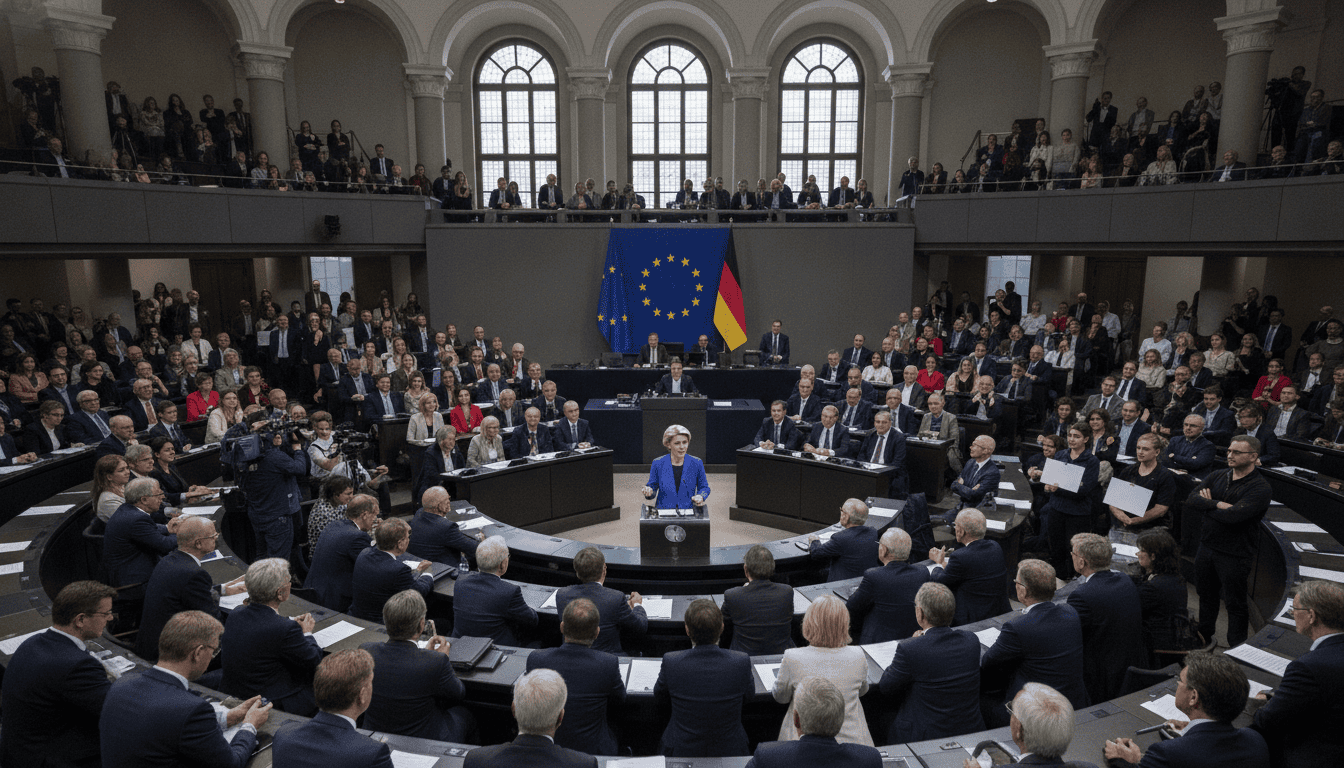
Political Communication at the Forefront as German Leaders Face a Credibility Test
Debate in Germany on political communication sharpens as leaders seek credibility, clear messaging and strategies against extremism with lessons from Zelenskyy.
Political communication has moved from a campaign tool to a core metric of governing success, with public perception now shaping which policies gain traction and which fade into obscurity. The recent discussions in Berlin underscore that convincing presentation can determine whether effective policies are noticed, accepted and sustained by the electorate. As parties and ministers navigate scandals, reforms and security concerns, message control and consistent framing have become as consequential as legislative substance.
Communication as Political Currency
Good work does not automatically translate into public recognition or political reward, and many competent officials operate without fanfare. In modern democracies, visibility and narrative often determine whether achievements enter public consciousness, sometimes elevating brand over substance. Policymakers therefore face the practical challenge of ensuring that results are communicated clearly and repeatedly to citizens and stakeholders.
That dynamic can reshape political fortunes: a well-packaged idea gains momentum, while technically sound initiatives stagnate if they never reach key audiences. The interplay between policy success and public storytelling means governments must pair implementation with sustained outreach to secure durable support.
Zelenskyy’s Public Diplomacy Model
The international example frequently cited in these debates is Ukraine’s president, whose constant communication has been central to his country’s diplomatic success. His speeches, media presence and personal appeals have repeatedly reframed the conflict for foreign publics and decision-makers, reinforcing the case for continued support. This form of direct, visible leadership illustrates how narrative and personality can mobilize resources and sympathy in situations of existential threat.
The lesson for domestic politics is not imitation of style alone but recognition of the strategic value of sustained messaging. When leaders articulate clear stakes and practical outcomes, publics are more likely to accept difficult policies and to remain engaged over time.
Messaging and the German Political Moment
Germany’s political class has grappled with similar choices since the pivot described as the “Zeitenwende,” when initial consensus and urgency allowed swift action. Early momentum, however, proved difficult to convert into long-term political advantage for the governing coalition. Crafting a durable public case for reform and burden-sharing requires both clarity and follow-through, qualities that were unevenly applied in the months that followed the initial mobilization.
Current opposition and government leaders alike face scrutiny over credibility after episodes that tested public trust. Declarations that label credibility as the “highest good” raise expectations for coherence and consistency, and political actors are being judged on whether their rhetoric matches policy delivery.
Countering Extremism Through Argument, Not Only Bans
A core element of the debate concerns how democracies should respond to extremist movements that exploit anger and misinformation. Legal instruments are available to confront explicitly anti-constitutional actors, and naming threats remains essential to protect liberal institutions. Yet a reflex toward sweeping bans or disenfranchisement risks reinforcing narratives of victimhood and can play into the hands of those who thrive on confrontation.
Many analysts argue that a more effective strategy combines firm legal action where warranted with sustained public persuasion about the consequences of extremist governance. Emphasizing equal treatment under the law while exposing anti-democratic aims can undermine extremist appeal without ceding the moral high ground or alienating undecided voters.
Media Changes, Credibility and the Art of Leadership
The media environment has shifted dramatically, increasing the speed at which messages spread and shortening public attention spans. This intensifies the premium on precise language and rapid, consistent clarification when mistakes occur. Leaders who acknowledge errors but maintain a clear compass are often better positioned to weather controversy than those who oscillate between positions or retreat into silence.
Inner composure and independence from transient media cycles enable institutions to present coherent long-term plans. Whether communicating economic reforms, security measures or social policies, credibility depends on transparent reasoning, visible competence and a willingness to engage citizens persistently.
Public discourse may reward spectacle, but governance ultimately depends on the steady translation of decisions into measurable improvement. In that sense, political communication is not mere decoration; it is a governing tool that shapes consent, accountability and political resilience.
The immediate test for Germany will be whether its political actors can transform short-term narratives into lasting understanding and support, and whether they can counter extremism through argument and legal clarity rather than through punitive gestures that risk amplifying the very forces they seek to diminish.
