
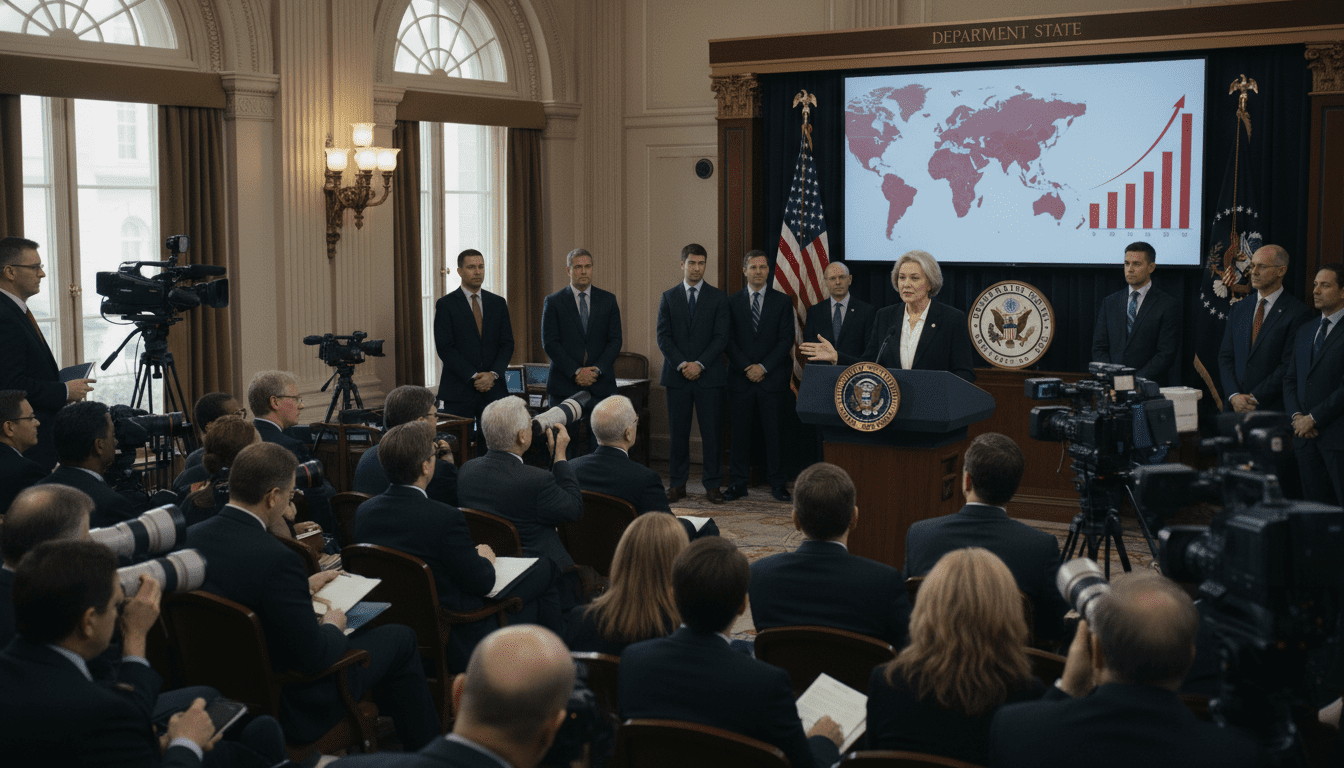
U.S. Threatens Tariffs Over Imports Linked to Forced Labor, Targets 60 Countries
U.S. warns 60 countries — including the EU, UK and China — of 10–12.5% tariffs on imports linked to forced labor; objections open until July 6. Hearings follow.
The United States has formally warned 60 economies that it may impose tariffs on imports it says are linked to forced labor, a move announced by U.S. Trade Representative Jamieson Greer that the administration framed as necessary to protect American workers and supply chain integrity. The U.S. threatens tariffs over imports linked to forced labor in a broad list that includes the European Union, the United Kingdom, Switzerland, Canada, China and multiple countries across Africa, Asia and Latin America. The proposed duties, set in the range of 10 to 12.5 percent, will not take immediate effect while governments are allowed to submit objections and prepare for scheduled hearings.
U.S. trade representative singles out 60 countries
Jamieson Greer said the step responds to what his office described as failures by many trading partners to prevent or screen imports produced with forced labor, which he described as unacceptable. Greer framed the action as leveling the playing field for U.S. workers, saying American labor should not be forced to compete against goods produced under coercive conditions. The list of 60 countries represents a wide geographic sweep, reflecting USTR’s view that the problem is global rather than confined to a single region.
Tariff levels and the objection period
The tariffs under consideration would range from 10 to 12.5 percent and are intended as targeted trade measures rather than an immediate blanket tax on imports. The U.S. has opened a formal period for objections that runs through July 6, after which hearings are scheduled to begin on July 7 to consider the arguments of affected governments and firms. USTR officials said the pause before implementation is intended to allow diplomatic engagement and legal challenges to be aired before any duties are imposed.
Legal context and temporary enforcement
The administration’s move follows a recent legal contest over the broader tariff policy that has shaped enforcement options, with an appeals court in May granting a temporary suspension of a lower court’s decision that had ruled such global temporary tariffs unlawful. That ruling means importers continue to pay the assessed duties — including a standing 10 percent charge on many imports — while the legal process proceeds. Officials and trade lawyers say the judicial developments will be a key factor in how aggressively the United States can apply its new forced-labor tariff framework.
China and other partners publicly reject the measure
Beijing has already voiced opposition to the U.S. announcement, with a Foreign Ministry spokesperson in Beijing stating that China rejects tariff measures that could spark trade or tariff wars and denying the existence of so-called forced labor in the country. Other governments named on the U.S. list are expected to raise similar objections during the open period, arguing either that they are addressing labor concerns or that Washington’s approach overreaches. Diplomats in capitals across Europe and Asia are now preparing submissions and evidence for the U.S.-scheduled hearings.
Human rights organizations warn of rising forced labor risks
Human rights groups and international data cited by USTR and others underscore why forced labor has become a central trade and human rights issue: estimates indicate millions remain in coercive work arrangements, and recent reports have flagged increases in specific regions. Data referenced in recent coverage point to roughly 27.6 million people in 2021 estimated to be in situations of forced labor, and organizations such as Amnesty International have warned of growing risk areas in the Asia-Pacific region. Those reports highlight particular concerns around sectors like certain manufacturing hubs, call-center scams, and alleged forced labor in some supply chains for solar-panel components.
Economic and supply chain implications for exporters
If implemented, the tariffs could reshape sourcing decisions for multinational buyers and increase compliance costs for exporters who must document labor standards in their supply chains more rigorously. Companies that rely on suppliers in countries named by the U.S. may face new certification requirements, increased customs scrutiny, and potential duty exposure until disputes are settled. Economists caution that while the measures aim to deter forced labor, they could also complicate trade relations and prompt retaliatory steps unless paired with intensified international cooperation and capacity building to eliminate exploitative practices.
The coming weeks will test whether the combination of legal maneuvering, diplomatic engagement and civil-society pressure yields concrete changes in how trading partners prevent goods made with forced labor from reaching global markets. Objections must be filed by July 6, and hearings begin on July 7, marking a defined window in which governments and businesses can press for adjustments or concessions before any tariff measures are finalized.
