
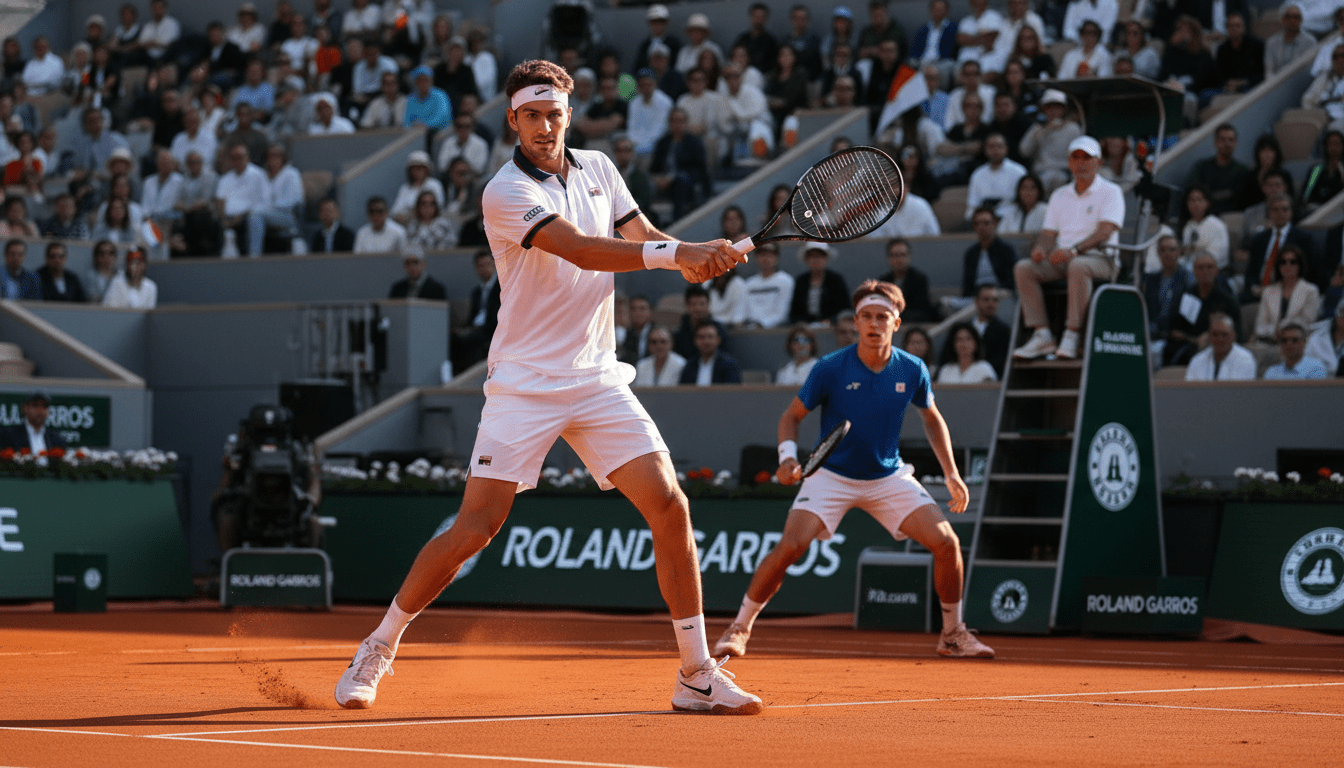
Zverev vs Menšík: Zverev named favorite as Menšík’s run sets up French Open semifinal showdown
Zverev vs Menšík preview: Alexander Zverev will face Jakub Menšík in the French Open semifinal, a clash that pits Paris experience against rising talent on clay.
Zverev now the heavy favorite in Paris
Alexander Zverev advanced to the French Open semifinal and is widely regarded as the tournament favorite after other top contenders fell earlier in the week. The matchup against Jakub Menšík, scheduled for Friday, frames Zverev as the experienced contender chasing his first Grand Slam title. Zverev’s status has shifted from challenger to frontrunner, increasing both expectation and scrutiny around his performance at Roland-Garros.
Zverev has described his routine with a measure of understatement, downplaying the buildup and treating key days as business as usual. That composure will be tested against a young opponent who has shown remarkable poise on big stages.
Menšík’s breakthrough and recent momentum
Jakub Menšík announced himself on the biggest stages this season and carried that momentum into Paris with decisive wins. The 20-year-old Czech moved into the semifinal after a straight-sets victory over João Fonseca, signaling that his game translates well to Grand Slam pressure. Menšík’s recent form suggests he has added consistency to a naturally aggressive style.
Observers point to Menšík’s run at high-profile hard-court events earlier this year as an indicator of his adaptability, and his clay-court results in Paris underscore an improving all-court repertoire.
Head-to-head and tactical match-up
Zverev and Menšík met for the first time this season in Madrid, a match Zverev won in three tight sets, but the Madrid result no longer guarantees the same outcome. Menšík appears to have tightened aspects of his game since that meeting, while Zverev arrives with deeper Grand Slam experience and a proven record of adjusting tactics mid-match. The duel will likely revolve around Zverev’s ability to dictate with depth and court craft against Menšík’s timing, forehand aggression and service potency.
On clay, points are often extended and movement becomes decisive; both players will need to manage momentum and convert key opportunities to swing the match.
How Menšík manages pressure
What distinguishes Menšík is his apparent ability to detach from the crowd and remain inwardly focused during tight passages. After surviving a tense tiebreak in the quarterfinal, he described being “in the zone,” a state of concentrated focus that helped him convert crucial points. That mental steadiness masks a reserved public persona that contrasts with more demonstrative young stars.
Menšík’s tendency to keep a low emotional profile on court has been effective in reducing performance swings, but it has also left him without a broad base of vocal support when matches tighten against established names.
Crowd dynamics at Philippe-Chatrier
The atmosphere at Philippe-Chatrier has played a visible role in several matches this fortnight, and the crowd’s allegiance can influence momentum. João Fonseca drew loud backing from traveling Brazilian supporters, turning portions of the stadium into an enthusiastic party. Menšík’s quieter approach, by contrast, has often neutralized that energy; he plays as if crowd noise has little impact on his execution.
For Zverev, the crowd could be a variable both ways. As a German in Paris, he does not command the partisan backing of local favorites, but the expectation that accompanies his status as favorite could morph into external pressure if momentum swings against him.
What each player must do to advance
For Zverev to reach the final he will need to convert a higher proportion of break points and press Menšík’s second serve with depth and variety. His experience in long Grand Slam matches and superior return statistics give him tactical edges, but only if he maintains consistency from the baseline. Zverev’s serve and ability to construct points will be central to stifling Menšík’s rhythm.
Menšík must continue to pick his moments for aggression and resist overplaying in critical games. His forehand and first-strike tennis are weapons, yet they require precise timing and placement to succeed on clay. If he keeps the match compact and remains “in the zone” during decisive stretches, an upset cannot be ruled out.
Zverev vs Menšík will test whether experience outweighs emergent talent on Paris clay, and whether Menšík’s composed efficiency can overcome the weight of expectation now resting on Zverev.
The winner will advance to a final weekend with a chance at a first major for Zverev or a maiden Grand Slam final appearance for Menšík, a result that would mark a major milestone in the young Czech’s rapid ascendancy.
