
Iraq Signs 48 Deals with US Firms, Pushes to Rebuild Iraq-Syria Oil Pipeline
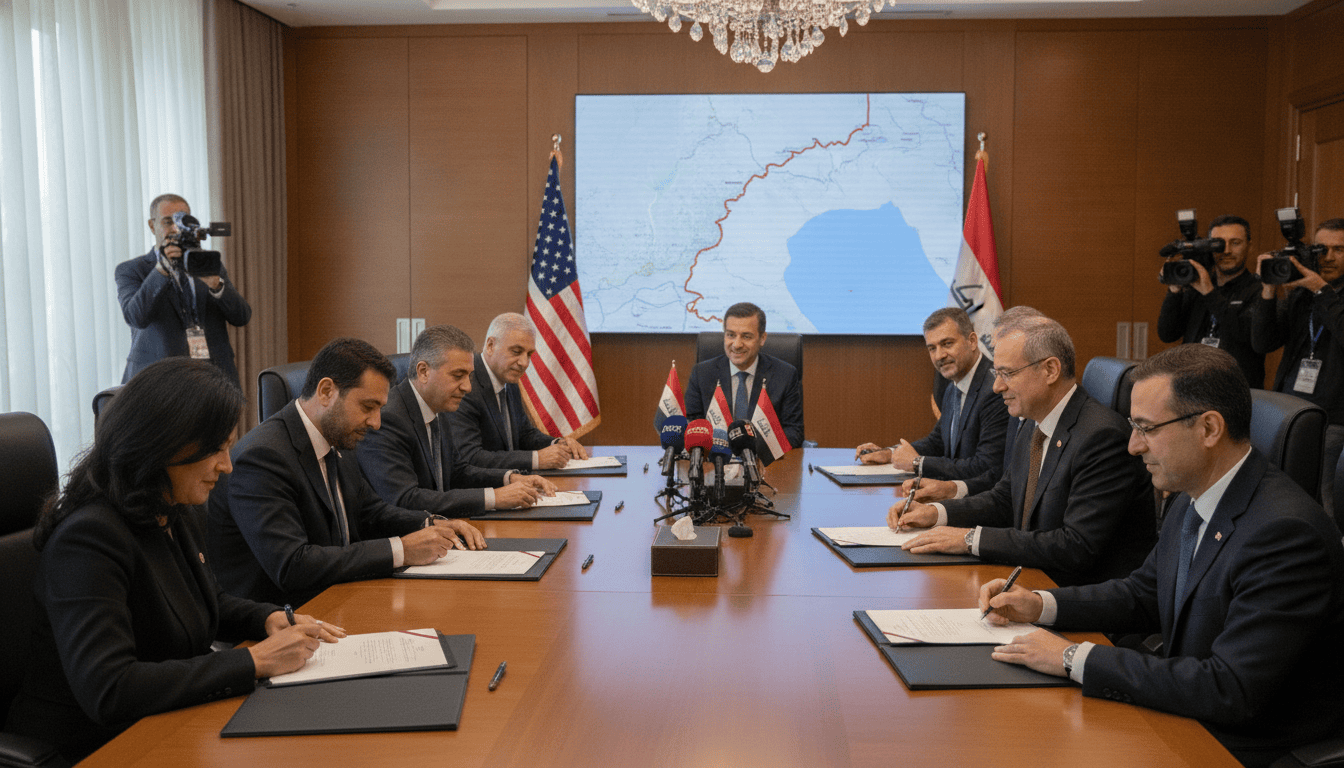
Iraq’s Washington visit produced 48 commercial agreements with US companies, including plans to rehabilitate the Iraq-Syria oil pipeline to expand Mediterranean exports.
Iraq’s prime minister concluded a high-level visit to Washington on July 18, 2026, announcing the signing of 48 agreements and memoranda with American firms across energy, technology and healthcare sectors. The accords include cooperation with majors such as ExxonMobil, Shell, Chevron and Halliburton and explicitly advance plans to reconstruct the Iraq-Syria oil pipeline linking Kirkuk to Syria’s port of Baniyas. Officials said the pipeline project, if completed, could initially move up to two million barrels per day and provide an alternative export route that reduces reliance on the Strait of Hormuz. The deals were formalized at a US-Iraq business summit hosted by the US Chamber of Commerce and publicized by the Iraqi leader’s media office.
Iraq Signs 48 Agreements with US Firms
Iraq’s media office said the package comprises agreements, memoranda of understanding and partnership declarations between public and private Iraqi entities and US companies. The deals cover ministries, state-owned enterprises and private contractors, and were described as preliminary frameworks to accelerate investment and technical cooperation. Prime Minister Ali al-Zaidi framed the outreach as an “open-door policy” aimed at fast-tracking projects and attracting private capital. Officials emphasized that many agreements will move to detailed feasibility, financing and implementation stages.
Energy Majors and Contractors Named in Deals
Among companies cited as participants were ExxonMobil, KBR, GE Vernova, Shell and Halliburton, reflecting broad interest across upstream, midstream and services sectors. Chevron was specifically named in Iraqi state reporting as the lead company poised to carry out pipeline reconstruction work, according to Iraqi media. Several agreements focus on boosting domestic oil production and modernizing infrastructure, including exploration, field development and power generation linkages. Industry sources and government statements indicate a coordinated approach linking production increases with new export capacity.
Pipeline Rehabilitation Targets Kirkuk–Baniyas Route
Iraq and Syria signed a cooperation agreement to rehabilitate the long-dormant crude pipeline that runs from Kirkuk to the Mediterranean port of Baniyas in Syria. Iraqi officials said the restored route would give Baghdad direct access to Mediterranean markets and reduce the volume transiting the Strait of Hormuz. The US Department of State welcomed the plan and indicated a “US-led international consortium” would oversee technical and financial execution of the rehabilitation. Projected initial throughput under the agreements was cited at roughly two million barrels per day, a figure that would significantly reshape regional export flows if realized.
US Officials Describe Strategic Implications
US diplomatic commentary framed the pipeline as a strategic energy corridor with geopolitical benefits for both Iraq and its partners. The US ambassador to Turkiye, Tom Barrack, said the initiative would create options that could make the Strait of Hormuz “an afterthought” for Iraqi exports, signaling a desire to diversify transit routes amid regional tensions. The State Department’s public remarks stressed multilateral management and oversight by an international consortium for transparency and financing. Washington’s engagement appears intended to align economic incentives with broader security and stability priorities in the region.
Technology and Services Deals Complement Energy Plans
Beyond hydrocarbons, Baghdad signed accords in telecommunications, healthcare and power systems, including a deal with satellite operator Starlink to expand communications services in Iraq. Officials described the technology agreements as critical to modernizing service delivery, strengthening digital infrastructure and supporting remote operations for energy and public services. Healthcare and power partnerships were pitched as part of a package to boost economic resilience and facilitate foreign direct investment. Together with energy contracts, those arrangements are intended to present a comprehensive development agenda to investors.
Scale of Investment and Next Steps for Implementation
Iraqi authorities and media cited an aggregate value for the initial set of accords that exceeds $60 billion, a figure reported by international news agencies and framed as a headline estimate rather than final contract values. Many of the signed instruments are memoranda of understanding that will require detailed engineering studies, financing commitments, environmental assessments and host-country approvals before work can begin. Officials said a combination of private financing, international lenders and state-backed arrangements would be explored to underwrite the projects. The timeline for the Iraq-Syria pipeline restoration and related production expansions remains contingent on technical studies, regional security conditions and partner commitments.
The agreements mark a major diplomatic and economic push by Baghdad to diversify export routes and deepen commercial ties with US industry, but analysts caution that preliminary signatures are only the first step in complex, capital-intensive projects that will need sustained political support and stable security conditions to reach completion.
