
German Health Insurance Contributions Under Threat Despite Q1 Surpluses
German health insurers posted Q1 surpluses but warn of rising health insurance contributions as costs climb and political disputes threaten Warken’s savings law.
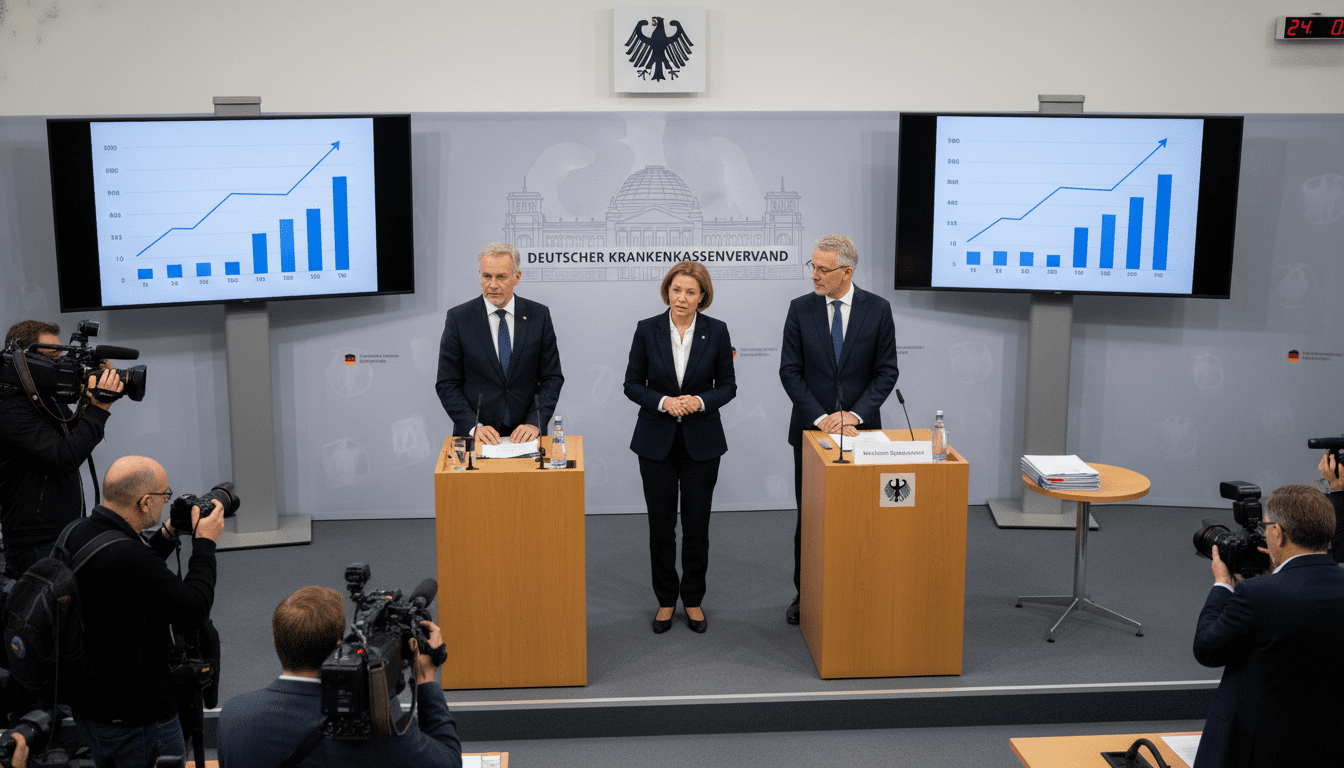
In the first quarter of 2026 Germany’s largest statutory health insurers reported combined surpluses but cautioned that health insurance contributions may still rise next year. The Ersatzkassen reported a €567 million surplus and the AOK group posted €206 million, together amounting to about €773 million for January–March. Officials said these gains are largely earmarked for mandatory reserves and do not remove pressure from growing expenditures.
Insurers report quarter-one balances and reserve needs
The Ersatzkassen’ umbrella group VDEK disclosed the €567 million excess and said the funds are needed to refill legally required reserves. VDEK chair Ulrike Elsner emphasized that spending continues to outpace revenues despite the nominal surplus. The AOK-Bundesverband confirmed its €206 million surplus and said the increase derived largely from higher contribution rates at the turn of the year rather than structural savings.
Two-thirds of the Ersatzkassen raised their individual supplementary contribution (Zusatzbeitrag) at the start of 2026 to rebuild buffers, industry representatives noted. The sector-wide average Zusatzbeitrag rose on paper from 2.5% to 2.9% in January, a move that translated into an estimated €7.9 billion additional revenue. Insurers insist that the one-off revenue boost is not an alternative to measures that curb long-term cost growth.
Warken’s savings draft and the narrow margin for 2027
Health Minister Nina Warken’s draft Contribution-Rate Stabilization Act aims to secure roughly €16 billion in savings for 2027 to prevent higher contributions. The ministry’s finance commission for the statutory health system currently expects a financing shortfall of about €15.3 billion next year, a gap the draft seeks to close. Insurers warn that the planned savings are already tightly calculated and leave little room for concessions.
Jens Hoyer, vice-chair of the AOK-Bundesverband, said political moves to dilute the package would jeopardize the law’s ability to stabilize contribution rates. He singled out recent suggestions from some state and parliamentary actors to peel back parts of the draft as particularly worrying. If further measures are removed, insurers say the law will no longer be sufficient to prevent contribution increases in 2027.
Parliamentary debate and Bundesrat review scheduled in June
Warken’s bill is scheduled for its first Bundestag debate on June 11, 2026, followed by discussion in the Bundesrat on June 12, 2026, although the Bundesrat’s approval is not required. The health committee of the Länder chamber has already recommended trimming several elements of the savings package. CDU/CSU health policy speaker Simone Borchardt indicated the parliamentary process could still alter the draft, prompting concern among insurers.
Insurer leaders called on lawmakers and state authorities to present concrete alternatives rather than seeking to roll back measures. They characterized calls for weakening the package without replacement proposals as unserious and potentially damaging to long-term financing. The debate this month will test whether the government can hold the savings plan together amid competing regional and party interests.
Daily expenditures highlight scale of the challenge
Despite the headline surpluses, all 93 statutory health insurers together spend almost €1 billion every day, underscoring the scale of the financing challenge. AOK spending alone runs at more than €300 million per day, a figure that dwarfs quarterly surpluses for some insurer groups. Insurers say the modest Q1 gains cannot compensate for the pace at which costs are rising across services.
The AOK reported that its expenditures rose 7.9% in the first quarter, while the VDEK cited an average increase of 7.5% across its member funds. Revenues per insured rose by roughly 6.5% in the same period, leaving a structural mismatch that insurers say must be addressed by systemic measures, not temporary accounting effects. The routine daily outflow illustrates how quickly reserves can be eroded if underlying trends continue.
Hospitals, outpatient care and medicines drive cost growth
Insurer data identify hospitals as the largest single cost driver, with hospital-related spending rising by 9.2% per insured in Q1. Physician services followed with a 6.9% increase, and drug expenditures rose by 5.5% year-on-year. Spending on remedies and therapeutic supplies showed the steepest jump at 9.6%, reflecting broad pressures across the care chain.
VDEK officials pointed to higher physician fees, the removal of budget caps for primary care, and new entitlements such as services tied to the electronic patient record as contributors to growth. For medicines, insurers emphasised the sharp price development of new, patent-protected therapies as a key factor. Together, these elements make sustained cost control difficult without targeted reforms.
State subsidies and federal budget measures under scrutiny
Insurers are also critical of planned federal budget moves that they say reduce the state’s contribution to the health system at a time of rising costs. Under Warken’s draft the federal subsidy to the statutory health insurance, currently around €14.5 billion, would not increase and is slated to decline in some proposals. Ulrike Elsner urged the state to properly finance “insurance-external” obligations such as coverage for people receiving social benefits.
Finance Minister Lars Klingbeil’s proposal to cut roughly €2 billion in reimbursements for family-related payments that the GKV carries has drawn particular criticism. Insurers argue that shifting or shrinking federal support would increase the pressure on contribution rates and on the system’s financial stability. They called on the government to ensure stable and adequate federal financing rather than ad hoc reductions.
The insurers’ message is clear: the Q1 surpluses provide temporary breathing room but do not eliminate the fundamental financing gap facing the statutory health system. Lawmakers heading into the mid-June debates will need to decide whether the draft savings measures remain intact or are reshaped, and those decisions will determine whether contribution rates can realistically be kept stable into 2027.
