
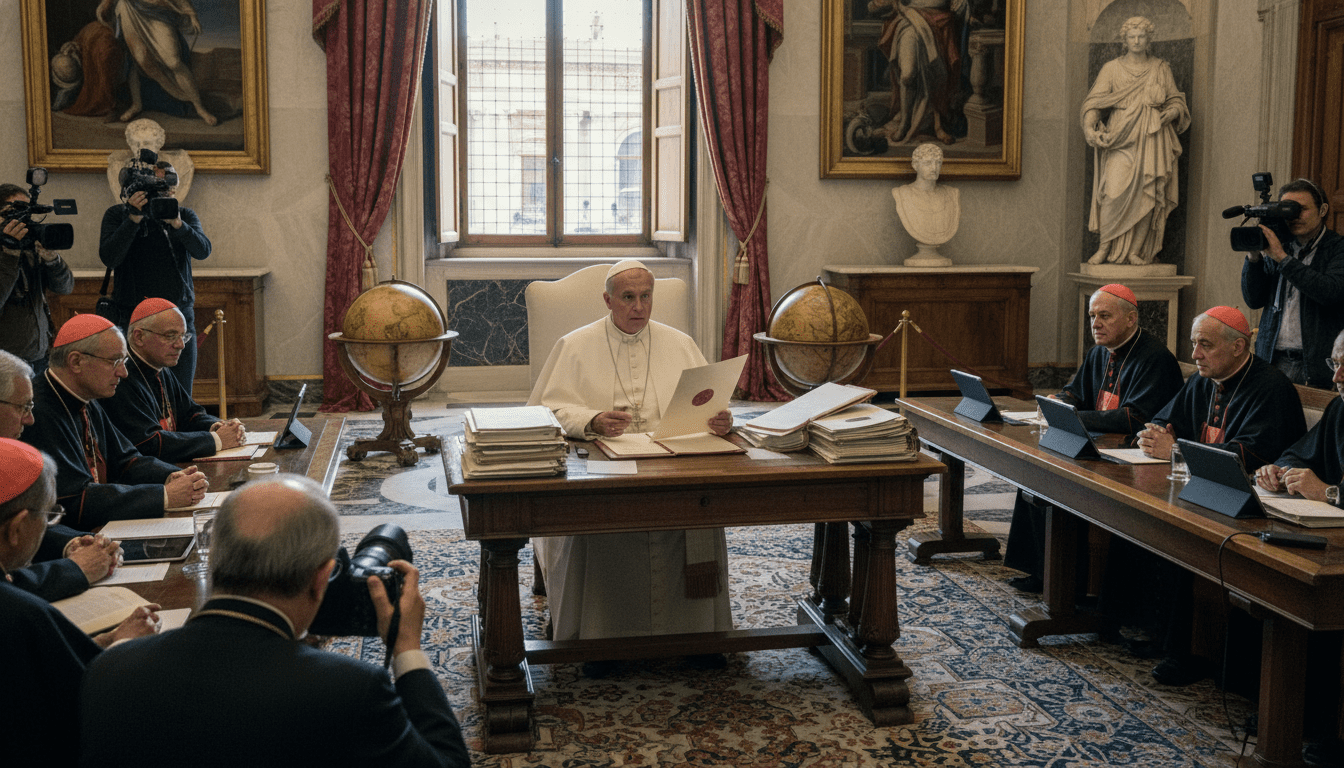
Pope Leo XIV’s AI encyclical ‘Magnifica Humanitas’ reframes Catholic social teaching for the tech era
Pope Leo XIV’s AI encyclical ‘Magnifica Humanitas’ updates Catholic social teaching on artificial intelligence, urging human dignity, fairness, and limits on algorithmic power.
Pope Leo XIV on Friday released an encyclical titled Magnifica Humanitas that places artificial intelligence at the center of Catholic social teaching and public debate. The document, framed as guidance “to all people of good will,” argues that AI presents both opportunities and grave moral risks and calls for rules that preserve human dignity and social justice. Pope Leo XIV’s AI encyclical is being read as an effort to adapt the Church’s social doctrine to a technological transformation that political institutions have struggled to govern.
Historic comparison to Leo XIII
The Vatican itself presents the encyclical as part of a lineage of papal engagement with social change, invoking the memory of Leo XIII’s Rerum Novarum on industrialization. Observers note the parallel: both popes addressed epochal economic and technological shifts from the vantage of Catholic social teaching. In contrast to debates that sometimes accuse the Church of reacting late, this encyclical signals an attempt to act early in shaping moral frameworks for a new era.
This historical framing gives the document rhetorical weight beyond its immediate content. By linking contemporary digital challenges to established doctrines on labor, solidarity and the common good, the pope seeks to translate long-standing principles into practical guidance for the algorithmic age.
Main moral priorities and concrete concerns
At the core of Magnifica Humanitas are three intertwined priorities: protecting human dignity, ensuring social justice, and restraining concentrations of informational power. The encyclical warns against leaving life-altering decisions to opaque algorithms and stresses that markets and technologies must serve people, not the other way around. It urges limits on corporate control of digital information and calls for policies that prevent algorithms from determining access to vital resources, such as medical treatment.
While many of the moral admonitions echo existing arguments from ethicists and policymakers, the papal text brings institutional authority to these concerns. It stops short of prescribing detailed regulatory regimes, favoring principle-based guidance that can inform law and public debate rather than offering a technical rulebook for governance.
Audience limits and interfaith reach
Although addressed “to all people of good will,” the encyclical is rooted in specifically Christian assumptions about human nature and the image of God. That theological foundation may limit how persuasive the text is to secular audiences or those of other faiths. The document acknowledges a universal moral horizon but also presumes theological premises that nonbelievers may not share.
The pope’s appeal is therefore both broad and conditional: broad in its attempt to speak into global ethical debates, conditional in the sense that its ultimate authority rests with those who accept Catholic doctrinal foundations. Some commentators suggest the letter will prompt dialogue across traditions, while others predict its theological framing will make uptake outside the Church more contested.
Work, dignity and implications for social policy
A notable emphasis in the encyclical is the treatment of work as a source of dignity rather than merely an economic variable. The text revisits labor’s moral centrality at a moment when public policy debates often prioritize unemployment benefits, retirement systems and social insurance. By highlighting work’s intrinsic value, the pope revives themes that historically shaped social market models and labor policy in parts of Europe.
That focus carries policy implications: lawmakers and unions may find in the encyclical an ethical rationale for interventions that preserve meaningful employment and protect worker autonomy from automation-driven displacement. At the same time, the document challenges both Church-linked organizations and secular social advocates to rethink strategies that have narrowed conversations about labor to benefits rather than purpose.
Reception inside the Church and in public life
Initial reactions to Magnifica Humanitas have been broadly favorable across diverse constituencies, in part because the document avoids highly polarizing doctrinal flashpoints while addressing a widely shared anxiety. Many within and beyond the Catholic community welcomed the pope’s call for age limits on social platforms and for stronger checks on tech giants. That cross-spectrum approval has had a calming effect on internal Church debates around other contentious issues.
Nevertheless, the encyclical has not silenced critics. Some conservative clerics, especially in the United States, voiced reservations about certain pastoral or doctrinal emphases, and secular critics argue the text lacks the technical specificity needed to guide regulation. Still, the pope’s moral authority makes the encyclical influential in framing public expectations of governments and corporations.
The document also illustrates the limits of moral pronouncements in the face of technological complexity. It sets ethical boundaries and priorities but intentionally leaves implementation to political institutions, civil society and expert bodies. This choice both broadens the encyclical’s diplomatic reach and places the burden of action on plural forums beyond Rome.
Pope Leo XIV has positioned the Church as a moral interlocutor in the governance of artificial intelligence, updating a tradition of social teaching to address contemporary technological risks. Magnifica Humanitas is unlikely to settle debates about regulation or convert secular audiences by itself, but it will shape the language and priorities of public discussion by insisting that human dignity, fair work and democratic oversight remain central as societies adapt to powerful new technologies.
