
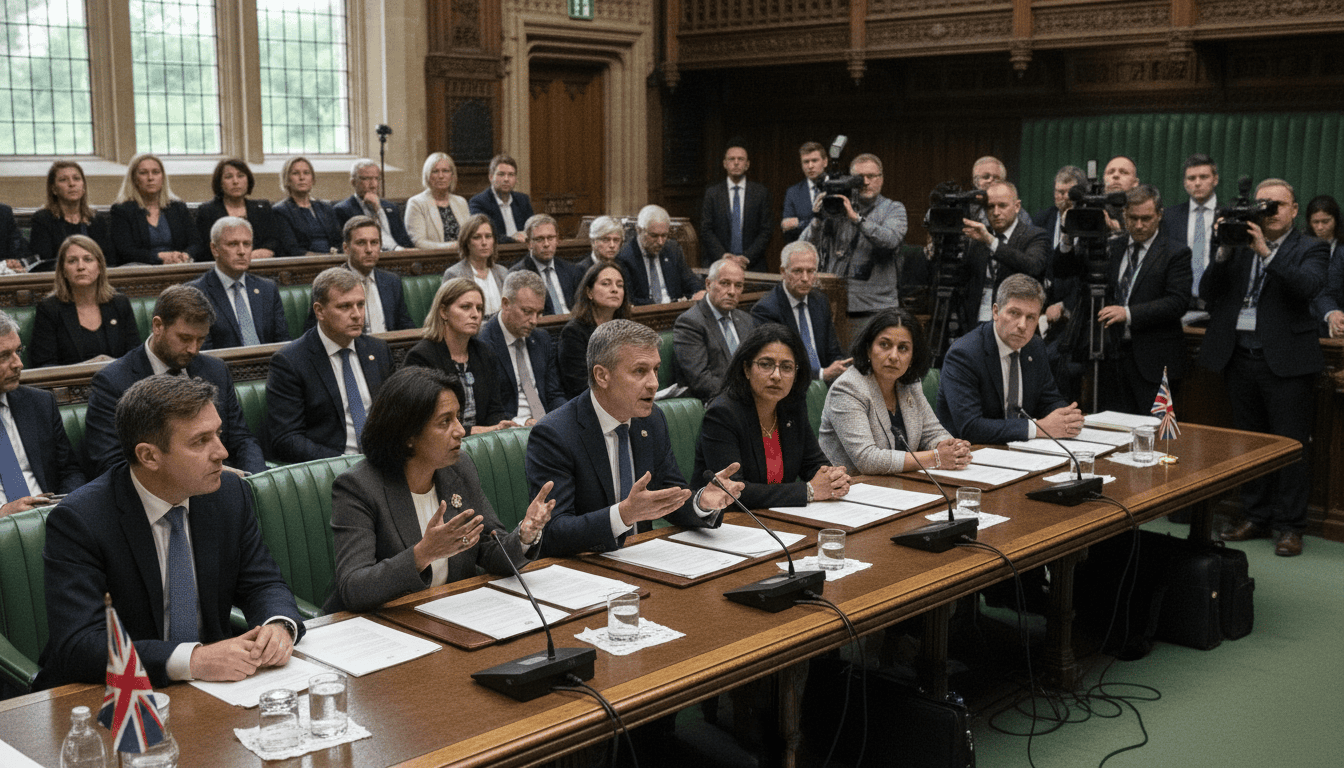
UK MPs and peers demand comprehensive sanctions on Israel ahead of ICJ anniversary
More than 80 British MPs and peers urge the government to impose sanctions on Israel in line with the ICJ advisory opinion, ahead of the July anniversary.
Britain’s parliamentarians and peers have delivered a coordinated call for the UK to impose comprehensive sanctions on Israel, arguing action is required to comply with the International Court of Justice’s advisory opinion. The demand, contained in a letter to foreign secretary Yvette Cooper and signed by more than 80 MPs and lords, singles out sanctions and other concrete measures as necessary to uphold international law. The letter, led by Labour MPs Imran Hussain and Richard Burgon, frames the move as a legal and moral imperative two years after the ICJ’s ruling.
Parliamentary letter cites ICJ advisory opinion
The crossbench and party-affiliated signatories urged immediate steps “in line with the International Court of Justice’s advisory opinion on Israel,” the letter states. The opinion, issued on 19 July 2024, concluded that Israel’s long-running occupation of Palestinian territories was unlawful and identified practices amounting to racial segregation and apartheid.
The MPs and peers called on the government to adopt targeted economic and diplomatic measures they say are consistent with the UK’s legal obligations under that advisory opinion. The appeal frames sanctions as a proportionate response to uphold international norms and to exert pressure for changes in Israeli policy toward Palestinians.
Labour MPs lead the parliamentary push
Labour MPs Imran Hussain and Richard Burgon emerged as lead signatories, drawing support from colleagues across the House of Commons and House of Lords. The grouping includes veterans of human rights campaigns and younger MPs who have pressed party leadership for stronger positions on Gaza.
Signatories emphasized that the appeal is rooted in legal findings rather than solely political preference, intending to frame sanctions as compliance with international judicial guidance. Their intervention marks a rare public rebuke aimed at broader government policy on the Palestinian conflict.
Charities press incoming prime minister Andy Burnham
Separately, 17 British charities issued an open appeal to Andy Burnham, who is set to take over as prime minister from Keir Starmer, urging urgent action to “end Israel’s atrocities against Palestinians.” The charities called for measures that would halt what they described as civilian harm and sustained restrictions in the occupied territories.
The charities’ statement underscores growing civil society pressure alongside parliamentary voices, urging the next prime minister to adopt concrete steps including trade restrictions and targeted diplomatic measures. Their public appeal is timed to coincide with the ICJ anniversary and to influence the incoming administration’s earliest decisions.
Criticism of Keir Starmer’s Gaza legacy
The coordinated letters and charitable appeals also serve as a stinging critique of outgoing prime minister Keir Starmer’s record on Palestine. Campaigners and signatories contend that Starmer’s tenure failed to move the UK sufficiently toward enforcing the ICJ’s guidance or holding Israel to account.
While Starmer maintained close ties with NATO partners and pursued a broadly pro-alliance foreign policy, critics say his government stopped short of imposing measures that could have altered Israel’s actions in the occupied territories. Supporters of the outgoing prime minister argue that diplomatic engagement and humanitarian aid were prioritised, but opponents characterise that approach as inadequate in the face of the ICJ’s findings.
Timing tied to ICJ anniversary and international law
The push for sanctions is explicitly timed to coincide with Sunday, 19 July 2026, which will mark two years since the ICJ’s advisory opinion was delivered on 19 July 2024. Signatories use the anniversary to reinforce the legal weight of the court’s conclusions and to stress the UK’s obligations under international law.
Parliamentarians argue that failure to act would risk the UK being seen as out of step with international legal consensus and would complicate Britain’s standing in human rights forums. The letter asks the foreign secretary to outline immediate measures that could be put in place to ensure compliance with the ICJ’s findings.
Political and diplomatic implications for UK foreign policy
If the UK were to move toward sanctions, officials say such a step would carry substantial diplomatic consequences, with potential impacts on bilateral ties, trade relations, and cooperation within multilateral bodies. Supporters of sanctions counter that measures can be targeted to minimise collateral effects while signalling a clear legal and ethical stance.
Opponents within government are likely to warn about the risks of unilateral measures that could isolate the UK from allies who prefer calibrated diplomatic pressure. The coming days will test whether cross-party and civil society pressure translates into policy shifts under the incoming administration.
The parliamentary and charity appeals represent a coordinated attempt to convert the ICJ’s advisory opinion into tangible policy, framing sanctions on Israel as a necessary step to uphold international law and protect civilian rights. Observers say the issue will dominate debate in Westminster as the nation approaches the July anniversary and as the new prime minister prepares to set his foreign policy priorities.
