
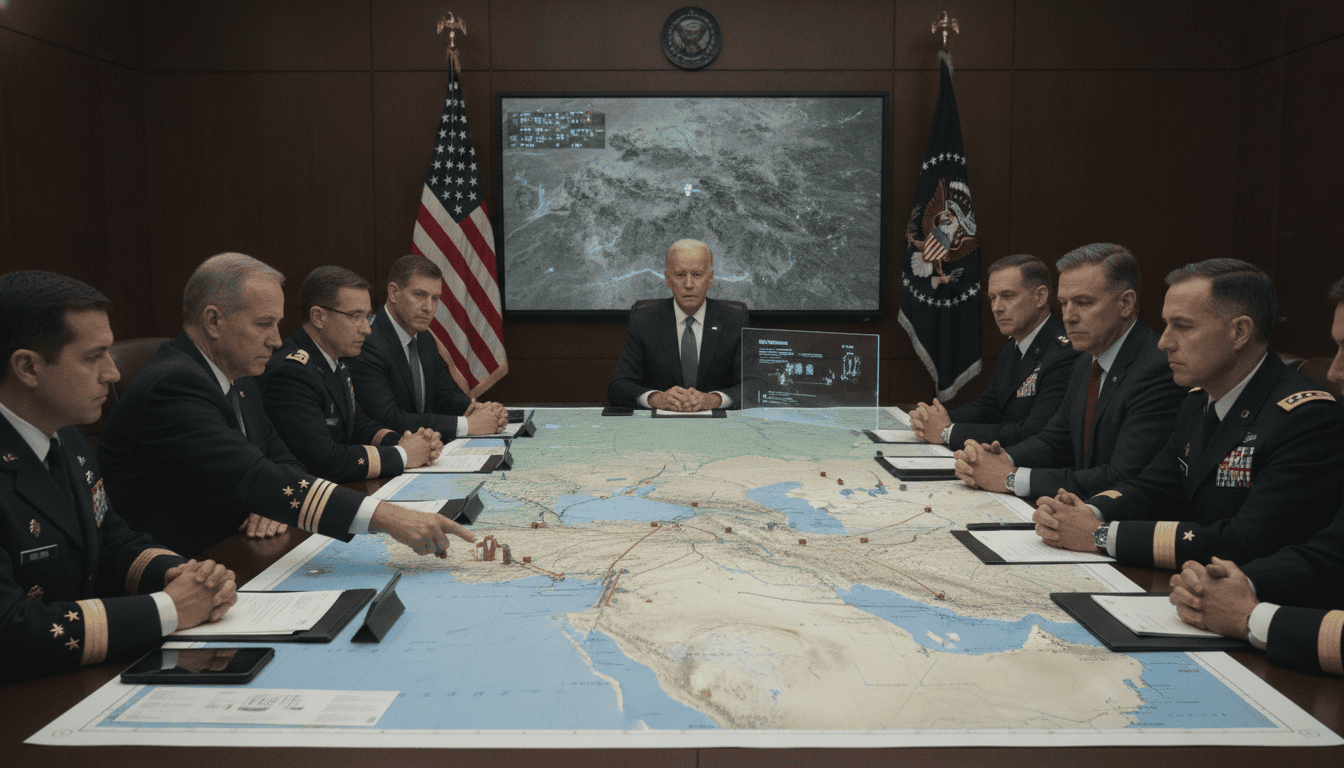
Analyst Warns U.S. Could Fall into an ‘Escalation Trap’ with Ground Assault in Iran
Military analyst Alex Alfirraz Scheers warns a U.S. ground assault in Iran risks spiraling into a wider conflict because Tehran retains a substantial ballistic missile arsenal.
The United States risks falling into an “escalation trap” if it mounts a ground assault in Iran, military and defence analyst Alex Alfirraz Scheers warned on 14 July 2026. Scheers cautioned that Tehran still holds a large and dispersed ballistic missile inventory that could be used to retaliate across the region, complicating any planned campaign. The analyst stressed that the presence of such capabilities raises the cost, unpredictability and potential for conflict expansion if ground operations are pursued.
Analyst Issues Warning on Escalation
Alex Alfirraz Scheers framed his warning around the dynamics that turn limited operations into broader wars, arguing that military actions on Iranian soil would invite countermeasures not easily confined to tactical battlefields. He noted that missile strikes, proxy actions and attacks on regional infrastructure are credible follow-on options for Tehran. Scheers said those responses could produce pressure on U.S. forces, partners and global trade routes, amplifying rather than containing conflict.
Iran’s Ballistic Missile Capability
Iran’s missile forces are widely regarded as a central pillar of its deterrent posture, combining road-mobile launchers with a range of short- and medium-range systems that complicate targeting. Analysts say mobility, dispersal and concealment increase survivability and make pre-emptive neutralisation difficult without sustained operations. That resilience means a strike force could face recurrent missile barrages and the attendant demands of missile defense and logistics management.
Military Challenges for a Ground Operation
A ground assault in Iran would confront substantial operational hurdles, from complex terrain to the need for sustained supply lines across hostile airspace. Urban combat and asymmetric resistance would likely increase casualty risks and lengthen timelines, raising questions about achievable objectives. Those on-the-ground difficulties would be compounded by the need to defend bases and allied assets against missile and drone attacks that could come from inside Iran or via proxy actors.
Regional Fallout and Allied Concerns
A campaign inside Iran would reverberate across the Gulf and Levant, prompting immediate concern among regional partners over spillover risks and retaliation. Key transit chokepoints and energy infrastructure could face interruptions, creating economic and security shocks beyond the battlefield. Allies in Europe and the Middle East would be pressured to clarify support, potentially exposing fractures in diplomatic coalitions and complicating multilateral efforts to manage escalation.
Alternatives to a Full-Scale Invasion
Policymakers weighing options short of a ground assault typically consider a mix of targeted strikes, sanctions, diplomatic isolation and cyber operations to degrade capabilities without occupying territory. Each option carries limitations: targeted campaigns can only partially remove threats, sanctions may take years to bite, and covert measures risk exposure and reciprocal action. The presence of a large missile inventory means that even non-kinetic or limited kinetic measures could prompt escalatory responses if Tehran perceives existential threats.
Washington’s Strategic Calculus and Legal Constraints
Decisions in Washington will hinge on whether political leaders can define clear, attainable objectives and an exit strategy that avoids open-ended commitments. Domestic political pressure, congressional posture and legal frameworks for authorising force will shape any contemplated operations. Military planners must also weigh the burden of defending deployed forces and partners against the strategic aim, knowing that high-intensity operations inside Iran could trigger regional coalitions against U.S. interests.
The warning from Alex Alfirraz Scheers underscores a central strategic dilemma: even a limited ground assault in Iran could cascade into a broader confrontation if Tehran leverages its missile capabilities and regional ties. That reality will force policymakers to balance immediate security imperatives against the long-term risks of escalation, making restraint and careful planning essential to avoid unintended expansion of conflict.
