
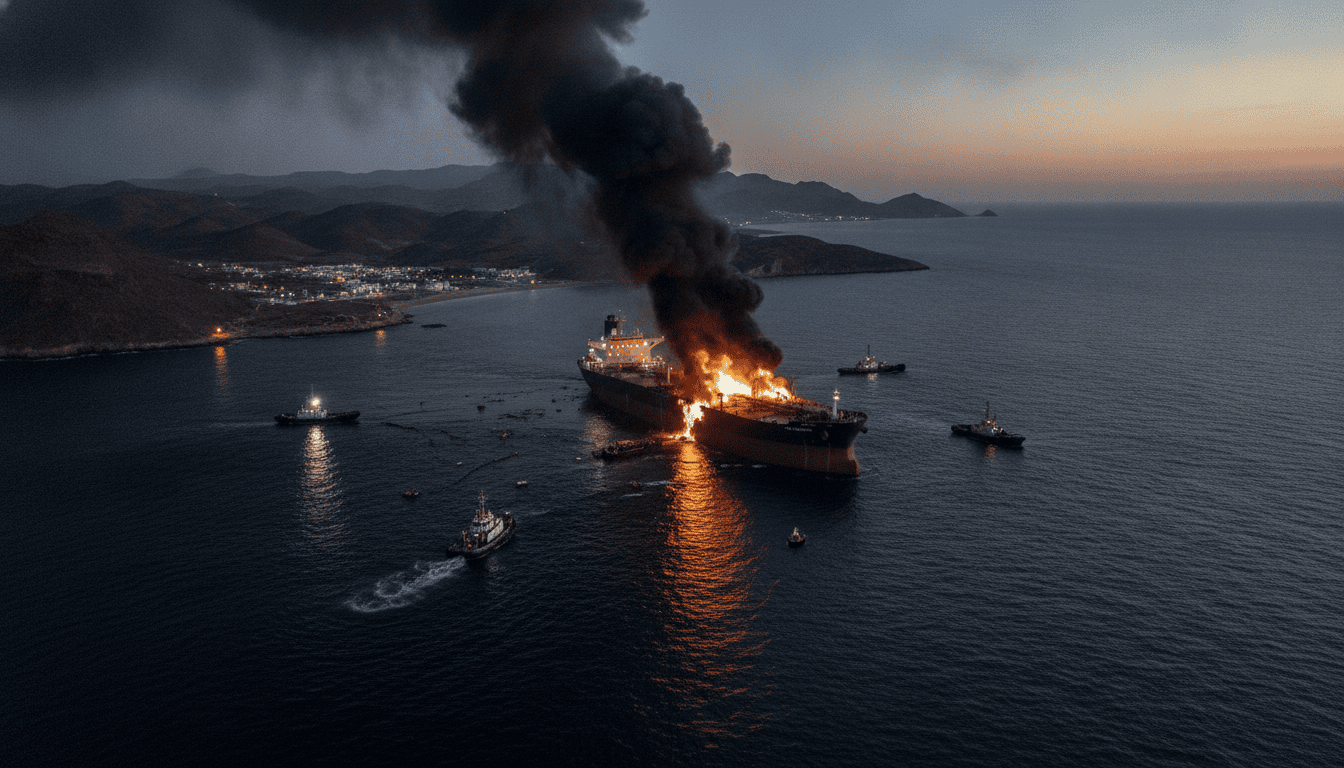
Strait of Hormuz tanker attack: Missile strikes oil tanker 13 nautical miles east of Limah, Oman
Missile strikes an oil tanker near Limah, Oman in the Strait of Hormuz, UKMTO reports; crew uninjured and operators warn of renewed maritime security risks.
A Strait of Hormuz tanker attack was reported on Tuesday when an oil tanker transiting the southern route was struck by a missile, the UK Maritime Trade Operations agency said. The vessel was hit about 13 nautical miles east of Limah, Oman, according to the advisory, and the incident follows another reported attack a day earlier near Qalhat. Officials said crew aboard the earlier-damaged vessel were safe and no environmental harm was observed, while details about casualties or pollution from the latest strike were not released immediately. The UKMTO issued an alert to commercial shipping and maritime authorities as it continued to monitor the situation.
Location and sequence of events
The UKMTO warning placed the most recent strike in the southern approaches to the Strait of Hormuz, a crucial chokepoint for global energy shipments. According to the advisory, the missile impact occurred approximately 13 nautical miles east of the Omani town of Limah, a position that lies along a well-used commercial transit lane. The prior day’s attack, reported near Qalhat, reportedly struck a tanker on the starboard-side engine room but left crew uninjured and caused no recorded environmental damage. Official agencies have provided limited operational detail while maritime authorities work to verify damage and determine the attackers.
Official notices and maritime alerts
The UK Maritime Trade Operations centre issued a formal warning to vessels in the area, identifying the incident as an attack and urging heightened vigilance for all transiting ships. Such advisories are routinely distributed to commercial shipping lines, insurance underwriters and naval forces to coordinate protective measures and response. Regional coastguards and naval authorities typically collaborate with international partners following these alerts to confirm coordinates and to offer assistance if required. At the time of the warning, there were no immediate additional reports from other maritime authorities confirming casualties or pollution from the Limah strike.
Impact on shipping routes and insurance
Attacks in and around the Strait of Hormuz often prompt shipping companies to reassess routing and risk exposure, particularly for tankers carrying crude or refined products. Owners and operators can face higher insurance premiums and increased war-risk surcharges when vessels transit waters perceived as dangerous, and logistics planners may seek alternative corridors or adjust schedules. Even isolated incidents can slow transits, disrupt schedules and raise operating costs, as vessels and charterers weigh the risks of continuing on the traditional southern route versus longer, costlier detours. Port operators and charterers will be watching for subsequent advisories that could affect berth windows and cargo delivery timings.
Security context and historical patterns
The Strait of Hormuz has been a flashpoint for maritime security tensions for years, attracting incidents ranging from seizures and small-boat attacks to the use of projectiles against commercial shipping. While the specifics and perpetrators of each incident vary, the strategic significance of the strait — which funnels a notable share of global oil shipments — makes any attack particularly sensitive for energy markets and international diplomacy. Commercial and naval stakeholders often respond to such incidents by increasing escort activities, tightening transit protocols and sharing intelligence through regional security frameworks. Analysts caution that repeated attacks, even if limited in scale, can have outsized effects on market perceptions and shipping costs.
Industry and naval responses
In response to the UKMTO advisory, shipping operators typically issue internal notices and brief crews on heightened watch procedures, safe routing and emergency communications protocols. Naval assets in the region, including national and coalition patrols, may increase presence along established lanes and coordinate with merchant vessels requesting assistance. Private maritime security firms also advise clients on hardening measures such as speed adjustments, lookout rotations and minimization of vulnerable engine-room exposure. Insurers and shipowners will likely open technical assessments and incident reports to evaluate the damage, trace liabilities and determine claims exposure.
Maritime trade groups and energy market observers said they were monitoring the situation for further developments that might affect tanker availability and freight rates. Any confirmation of cargo loss, severe hull damage or crew casualties would escalate industry concern and could trigger broader commercial responses across the tanker market.
Next steps for investigation and information flow
Investigators will seek to corroborate the strike through on-scene inspection, satellite imagery and survivor or crew accounts once access is secured and safety conditions permit. Regional authorities and international monitoring organizations will compile evidence to assess the type of weapon used, the direction of fire and any pattern linking recent incidents. Until official incident reports are published, shipping interests are expected to rely on alerts from UKMTO and updates from flag-state and classification societies for operational guidance. Timely, corroborated information will be crucial for owners, charterers and insurers to make informed operational and financial decisions.
The UKMTO advisory underscores persistent vulnerabilities in key maritime corridors and the continued importance of coordinated maritime domain awareness. International shipping companies and naval partners are poised to adjust operations as more information becomes available and as local authorities conclude their on-site assessments.
