
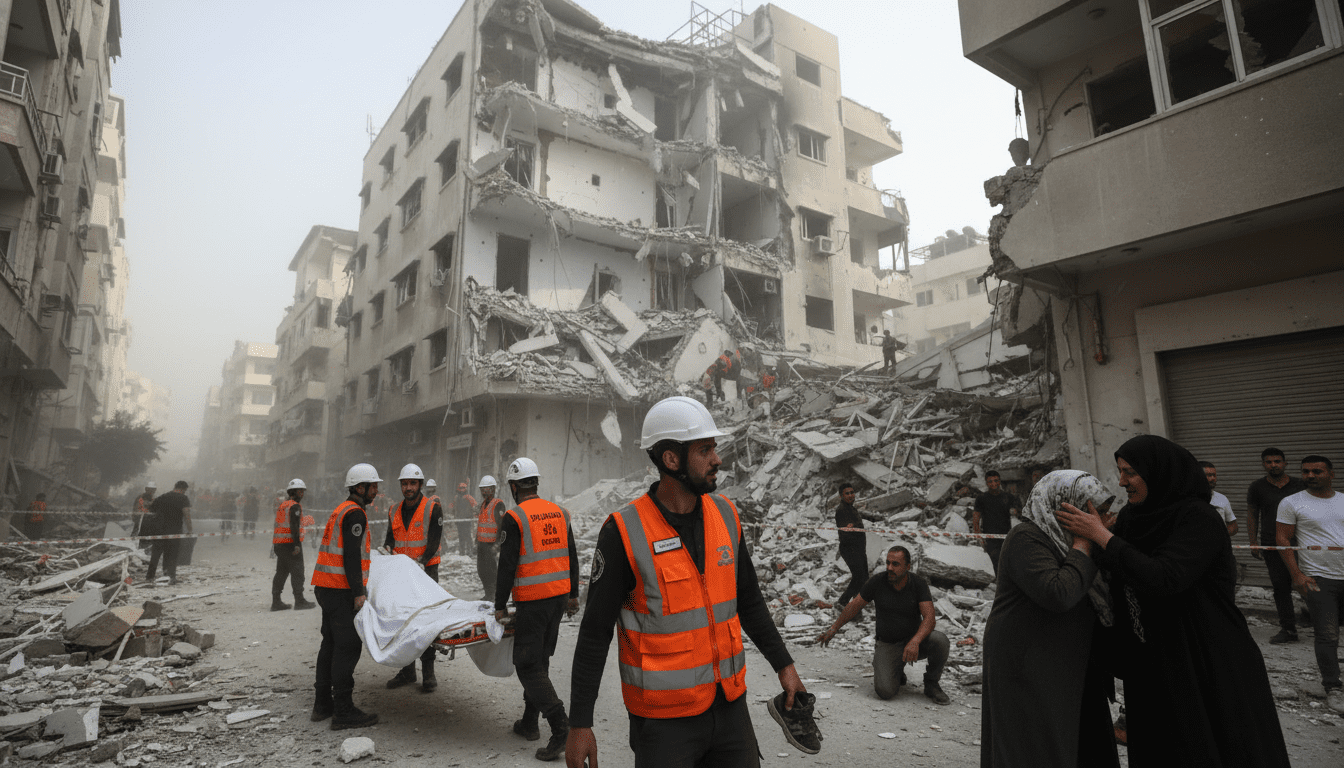
Israeli strike on Choueifat near Beirut kills three and wounds 15, Lebanon ministry says
Lebanon’s health ministry says an Israeli strike on Choueifat south of Beirut killed a woman and two children and wounded 15, deepening tensions along the border.
Lebanese authorities reported that an attack on the southern suburb of Beirut, Choueifat, resulted in three deaths and multiple injuries, according to an official ministry statement. The Israeli military said it had “precisely struck” the Lebanese capital area but did not identify a specific target. Medical teams on the ground and local officials described an urgent response to treat the wounded and secure the scene.
Casualties and immediate toll
The health ministry’s statement said the strike left three people dead: a woman, her baby daughter, and a child of Syrian nationality. Officials added that 15 people were wounded, including three children and five women, and that hospitals were receiving the injured for treatment.
Local sources described victims being transferred to area clinics and larger hospitals in Beirut as emergency personnel worked to clear debris and assist survivors. The identities of those killed were not released immediately, and the nationality of some wounded people was being confirmed by authorities.
Lebanon’s health ministry account
The ministry provided the casualty figures and a brief description of the victims in a public release, characterizing the dead as martyrs and listing the number of women and children among the wounded. Lebanon’s health authorities called for continued medical support for the injured and urged restraint from further escalation.
Health officials said they were coordinating with hospital networks to ensure adequate beds and supplies, while emergency responders monitored the situation for additional casualties. The ministry did not specify the exact time of the strike or offer forensic details about the munitions used.
Israeli military statement
The Israeli military said it had “precisely struck” the Lebanese capital area but did not identify the intended target or offer further operational details. Its brief statement framed the action as a targeted military operation without elaborating on the intelligence or objectives behind the strike.
Military spokespeople in past incidents have argued strikes are aimed at militant infrastructure or specific operatives, yet in this case no confirmation of that rationale was provided. The absence of a named target raised questions among analysts and diplomats about the strike’s aims and the risk of civilian harm.
Emergency response in Choueifat
Local emergency services reported treating the wounded at the scene and transporting those in serious condition to hospitals in Beirut, where surgical teams prepared for possible operations. Neighbourhood residents described scenes of confusion and distress as ambulances and civil defense teams worked under tense conditions.
Authorities set up temporary triage points to manage the flow of patients and requested additional blood donations and medical supplies. Municipal officials said they were assessing damage to buildings and infrastructure and warned residents to avoid affected areas while clearing efforts continued.
Regional diplomatic and security implications
The strike is likely to reverberate across an already fragile security environment along the Lebanon-Israel frontier, where periodic exchanges have raised concerns of wider escalation. Diplomats in Beirut and regional capitals urged de-escalation and called for clarity over the strike’s target to prevent misunderstandings.
Analysts warned that civilian casualties could inflame public opinion and increase pressure on political and armed actors in Lebanon to respond. International organizations monitoring the situation reiterated the need to protect civilians and to investigate incidents that cause noncombatant harm.
Context of cross-border incidents
Choueifat sits just south of Beirut in an area that has seen sporadic violence tied to broader regional tensions, including past exchanges between Israeli forces and armed groups operating in Lebanon. Recent weeks have seen heightened vigilance after a series of cross-border incidents that officials in both countries have described as dangerous and destabilizing.
Observers noted that the lack of a clear, publicly stated military objective in this incident complicates efforts to assess whether the strike was aimed at a military target or was the result of misidentification. Calls for independent inquiries and transparent reporting have grown louder following attacks that result in civilian deaths.
The situation remains fluid, with Lebanese officials continuing to document casualties and military spokespeople offering limited details; further reporting is expected as hospitals, investigators and diplomatic channels seek to clarify what happened and to assess the wider consequences.
