
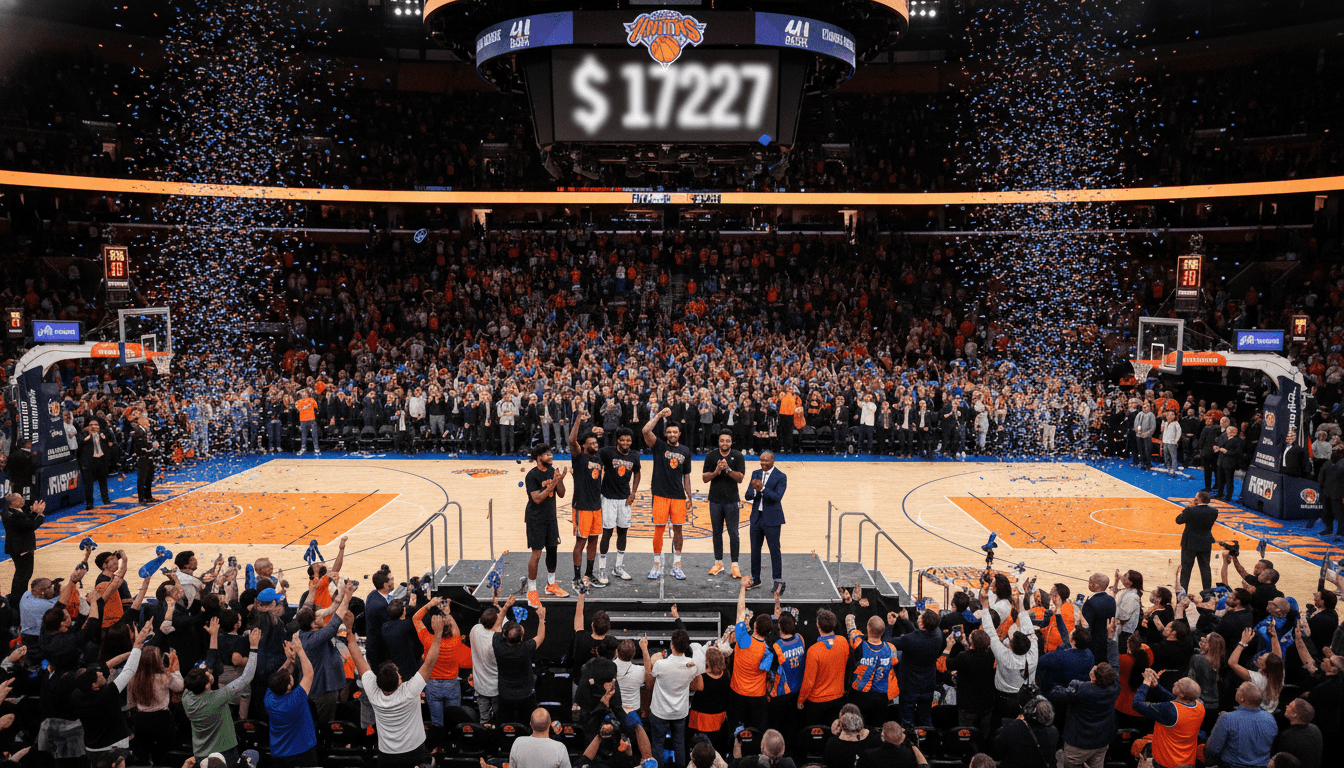
New York Knicks Clinch NBA Finals Berth as Madison Square Garden Ticket Prices Surge
New York Knicks sweep Cavaliers to reach the NBA Finals, driving Madison Square Garden resale prices sharply higher as the city prepares for its first Finals appearance in decades.
Knicks Clinch Eastern Conference with Sweep of Cavaliers
The New York Knicks ended their Eastern Conference semifinal with a decisive sweep of the Cleveland Cavaliers, closing the series with a 130-93 victory in Game 4. The result eliminated the need for Games 5 and 6 and confirmed the Knicks’ passage to the NBA Finals for the first time in decades. Cleveland missed point guard Dennis Schröder for the decisive game due to illness, but New York’s dominance across the series made a comeback unlikely.
The sweep underlined a balance of offense and defense that the Knicks have sustained throughout the postseason. New York’s margin in the clincher reflected both efficient scoring and defensive pressure that repeatedly disrupted Cleveland’s rhythm.
Madison Square Garden Resale Prices Jump Ahead of Finals
Resale markets immediately reflected heightened demand, with seats in the Garden’s upper tiers and courtside sections posted at eye-catching levels. Listings on secondary platforms showed upper-level tickets priced in the low thousands, mid-level seats commanding five-figure sums, and a small number of courtside offers listed above six figures. Marketplace asking prices reached six digits for premium courtside seats, although those sums were not reported as final sale values.
Industry reporting put the season’s average paid playoff ticket at Madison Square Garden around $1,350, a figure that highlights the gulf between typical face values and dynamic resale pricing. With the Knicks advancing, observers expect sustained high demand rather than a rapid price drop, especially for prime matchups in the upcoming Finals.
Jalen Brunson’s Leadership and Contract Sacrifice
Central to New York’s run has been point guard Jalen Brunson, whose scoring and playmaking have positioned him as the team’s on-court leader. Brunson’s playoff output over recent seasons has been among the league’s most prolific, and his presence has become a focal point for the Knicks’ offense. That status carries tangible history: Brunson delayed a potentially lucrative contract structure in 2024, accepting a shorter deal that freed cap space for the franchise to add star pieces.
That roster maneuver helped facilitate the acquisitions of All-Star center Karl-Anthony Towns and elite wing Mikal Bridges, moves that reshaped New York’s championship window. Brunson’s gamble—sacrificing a large guaranteed year to preserve team flexibility—is now being framed as a strategic investment in collective success.
Knicks’ Winning Run and Coaching Impact
New York’s current postseason streak ranks among the longest in recent NBA playoff history, with the team stringing together double-digit consecutive victories. Such momentum followed a regular season and postseason transformation under head coach Mike Brown, whose schemes have combined veteran principles with adjustments tailored to the roster’s strengths. Brown’s approach has been credited with improving defensive cohesion and maximizing spacing around the team’s primary scorers.
The Knicks’ march through the playoffs included lopsided wins over Eastern opponents like Philadelphia and Atlanta, signaling a depth of execution rather than reliance on isolated performances. The team’s array of contributors, from Towns’ interior presence to Bridges’ two-way work and supporting pieces such as Josh Hart and OG Anunoby, has created a multi-dimensional attack.
Finals Opponent and Western Conference Stakes
New York will await the winner of the Western Conference semifinal between the Oklahoma City Thunder and the San Antonio Spurs, a matchup that has produced a more protracted and competitive series. The Thunder, as defending champions, and the Spurs each offer contrasting styles that would shape Finals dynamics differently: Oklahoma City leans on transition and star isolation, while San Antonio emphasizes structure and half-court sets. Matchup permutations will influence tactical planning, rotations, and how the Knicks deploy their defensive schemes.
Scheduling and home-court logistics will be driven by the Western result and the NBA’s playoff calendar, but the narrative heading into the Finals is already clear—New York returns to basketball’s biggest stage with a team built to be resilient and to exploit mismatches.
Economic and Cultural Ripples Across the City
The Knicks’ return to the Finals is already producing broader economic and cultural effects in New York, from hospitality demand to transit patterns on game nights. Dynamic pricing models that govern ticketing and secondary marketplaces have amplified the financial stakes for fans and tourists, translating local enthusiasm into measurable market impact. For many New Yorkers, the playoff run rekindles civic pride and reorients city conversation around basketball rather than other global sporting events.
Observers note that the inflated resale market sits uneasily alongside debates over accessibility for local supporters, but it also promises revenue flows for restaurants, hotels, and vendors near Madison Square Garden. How the city balances fan access with commercial opportunity will be a central theme as the Finals approach.
The Knicks arrive in the NBA Finals after a dominant Eastern Conference performance and amid record-level demand for tickets at Madison Square Garden, with Jalen Brunson’s leadership and a retooled roster at the heart of the campaign. As the league determines the Western opponent and the schedule falls into place, New York braces for a run of high-stakes basketball, elevated citywide attention, and enduring questions about affordability and fan access in one of sports’ most storied markets.
